


Most lists of magnesium glycinate benefits read like a menu: sleep, stress, cramps, PMS, blood sugar, bones. The research is thinner than the menu. The glycinate form has one recent randomised sleep trial with a small effect, and most other claims borrow evidence from trials of magnesium in general. Below, we grade each benefit by the human evidence and say plainly where it is weak, mixed or missing. Disclosure: we make SILT™ Nights, a drink with magnesium bisglycinate, and our magnesium glycinate powder page shows its label maths. Neither changes the grades.

What is magnesium glycinate?
Magnesium glycinate is magnesium bound to the amino acid glycine. Labels also call it magnesium bisglycinate, because each magnesium atom carries two glycine molecules: the formula is C4H8MgN2O4, with a molar mass of 172.42 g/mol (PubChem CID 84645).
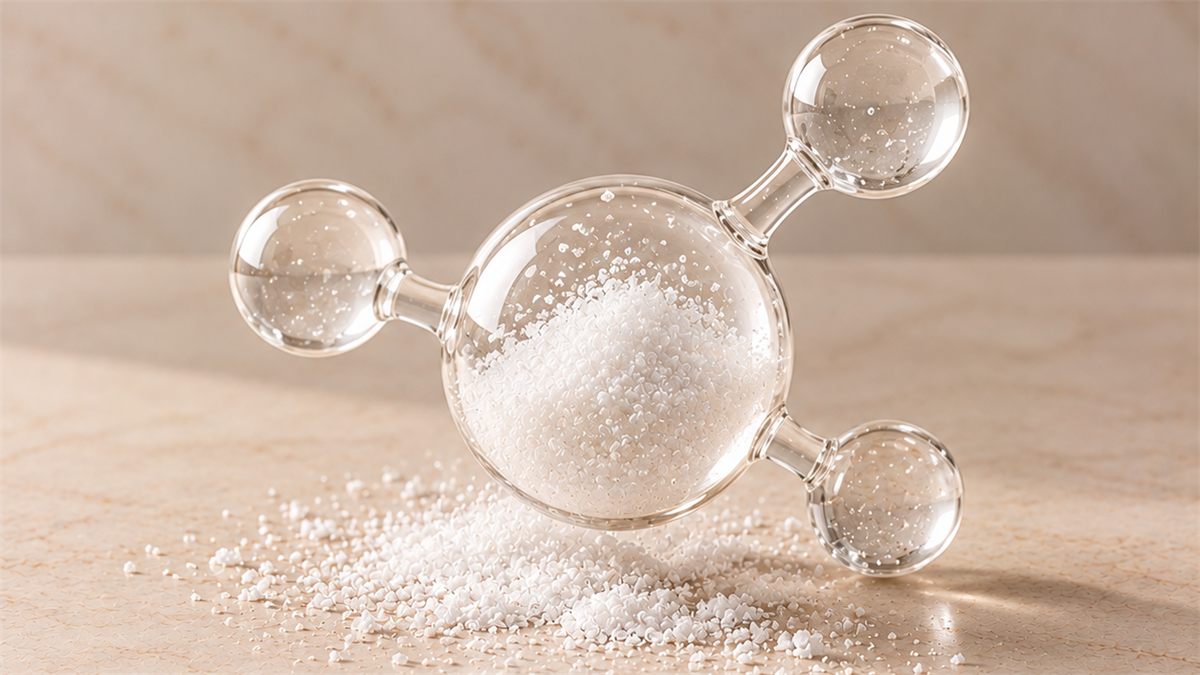
That chemistry matters for your dose. Magnesium is only about 14.1% of the compound's weight (24.305 ÷ 172.42). So "2,000 mg magnesium glycinate" on a pack means at most about 282 mg of actual, elemental magnesium. Trials and recommended intakes use the elemental figure, so that's the one to read. We walk through real label examples on our magnesium glycinate powder page.
So what is magnesium glycinate used for? Mostly sleep, stress and cramps, if you go by the shelf. The evidence below ranks those uses differently.
Magnesium glycinate uses, graded
The best-supported use is correcting a low magnesium intake; after that, the evidence for specific benefits is modest at best. The table grades each claim. "Glycinate-specific" means a randomised human trial used the glycinate form; "general" means the evidence comes from magnesium in other forms. The grades are our editorial reading of the sources cited on this page, not a clinical rating.
| Claimed benefit | Best human evidence | Glycinate-specific? | Our grade |
|---|---|---|---|
| Better sleep | One randomised trial, 155 poor sleepers, 4 weeks | Yes | Limited: small effect |
| Stress and anxiety | Systematic review of 18 studies, poor quality | No | Weak |
| Muscle cramps, older adults | Cochrane review, 5 trials in this group | No | Not supported |
| Leg cramps in pregnancy | Small trials, conflicting | One trial | Mixed |
| PMS | Systematic review of 31 nutrition trials; too little on magnesium | No | Weak |
| Blood pressure | Meta-analyses, 34 and 38 trials | Only combined with vitamin D | Moderate, small effect; mainly with high BP or low magnesium |
| Blood sugar | Meta-analysis in people with or at risk of diabetes | Only combined with vitamin D (no effect) | Moderate in that group |
| Bone | Observational studies only | No | Weak |
| Correcting low intake | Absorption studies | Yes | Reasonable, if you're actually low |
The form on the label isn't the evidence behind the claim.
Sleep: one trial, small effect
Sleep is the one benefit with a recent trial of the glycinate form itself, and the effect was small. In a 2025 double-blind trial, 155 adults aged 18-65 who reported poor sleep took 250 mg elemental magnesium as bisglycinate, or a placebo, every day. After 4 weeks, Insomnia Severity Index scores fell by 3.9 points with magnesium and 2.3 with placebo (p = 0.049). The authors call the effect small (Cohen's d = 0.2) (Schuster et al., 2025).
Two details matter. Exploratory analyses suggested bigger improvements in people who ate less magnesium to begin with, which hints that the benefit may track low intake. And the trial found no significant differences in its other psychological outcomes. One co-author runs a contract research organisation funded by nutraceutical companies.
That's a modest, short-term, self-reported result: worth knowing, not a sleeping pill. We cover the trial, timing and mechanism in magnesium glycinate for sleep.
Magnesium glycinate for anxiety and stress
The evidence for magnesium and anxiety is suggestive but poor, and none of it is specific to glycinate. A 2017 systematic review found 18 studies, all in people already prone to anxiety: mildly anxious adults, people with PMS, postpartum women and people with high blood pressure. Positive effects on self-reported anxiety appeared in 4 of 8 studies of anxious samples and 4 of 7 PMS studies, and none in postpartum women. No study used a validated measure of stress. The authors judged the evidence quality poor and asked for better trials (Boyle et al., 2017).
The one glycinate trial we have, the 2025 sleep study, found no significant difference from placebo on psychological outcomes other than insomnia severity (Schuster et al., 2025).
So "magnesium glycinate for anxiety" is a hope, not a finding. Magnesium is not a treatment for an anxiety disorder. If worry or panic is affecting your work, sleep or relationships, talk to a doctor.
Magnesium glycinate for muscle cramps
For the most common kind of cramp, night-time leg cramps in older adults, magnesium probably doesn't help. A 2020 Cochrane review pooled 11 randomised trials (735 people). For unexplained cramps, mostly in older adults with an average age of 61.6 to 69.3, magnesium made no meaningful difference to cramp frequency: about 0.18 fewer cramps a week than placebo, a gap that wasn't statistically significant (5 trials, 307 people, moderate-certainty evidence). The authors concluded it is unlikely that magnesium gives older adults clinically meaningful cramp prevention (Garrison et al., 2020).
Two other groups are less clear:
- Pregnancy leg cramps. The review called the evidence conflicting and rated every pregnancy trial at high risk of bias. One pregnancy trial did use bisglycinate: 80 pregnant women who completed 4 weeks of 300 mg a day were more likely to halve their cramp frequency than those on placebo (86.0% vs 60.5%) (Supakatisant & Phupong, 2015). That's one small trial, and any supplement in pregnancy is a decision for your doctor.
- Exercise cramps. The Cochrane team found no randomised trials of magnesium for exercise-associated cramps, so claims that it fixes gym or running cramps have no trial behind them (Garrison et al., 2020).
The same review noted mostly digestive side effects, such as diarrhoea, with oral magnesium. If cramps are frequent or severe, ask a doctor to look for a cause.
Benefits of magnesium glycinate for women
The women-specific claims, mainly PMS, rest on small, older trials of other magnesium forms. Here's what each one actually shows.
PMS
A 2025 systematic review of 31 randomised trials (3,254 women) on nutrition and the psychological symptoms of PMS found insufficient evidence for magnesium; only one included trial had a low risk of bias (Robinson et al., 2025). The 2017 anxiety review counted positive results in 4 of 7 PMS studies, but rated the evidence poor overall (Boyle et al., 2017). For physical symptoms, one crossover trial in 38 women found that 200 mg of magnesium a day, as magnesium oxide, reduced a combined score of mild fluid-retention symptoms (weight gain, swelling, breast tenderness, bloating), but only in the second cycle, not the first (Walker et al., 1998). No PMS trial we found used glycinate.
Pregnancy
See the cramps section above: one small bisglycinate trial is positive, and the wider evidence is conflicting. Magnesium antacid labels tell pregnant and breastfeeding women to ask a doctor before use (US OTC magnesium oxide label), and we'd say the same for any magnesium supplement.
Your daily target
India's ICMR-NIN sets the adult women's recommended dietary allowance at 370 mg of magnesium a day, against 440 mg for men (ICMR-NIN, 2020). Bone health, often marketed to women, is covered next.
Blood pressure and blood sugar
Magnesium supplements lower blood pressure slightly and can improve blood sugar in people with or at risk of diabetes. That evidence comes from magnesium in many forms, not from glycinate trials.
Blood pressure. A 2016 meta-analysis of 34 double-blind trials (2,028 adults) found a median 368 mg a day for a median 3 months lowered systolic pressure by 2.00 mmHg and diastolic by 1.78 mmHg (Zhang et al., 2016). A 2025 meta-analysis of 38 trials (2,709 people) found similar average falls of 2.81 and 2.05 mmHg. Reductions were larger in people with hypertension already on medication and in people with low blood magnesium, and not significant in people with normal blood pressure. The authors flag high variation between studies (Argeros et al., 2025).
Blood sugar. A 2021 meta-analysis of double-blind trials found magnesium lowered fasting glucose in people with diabetes and improved glucose and insulin-sensitivity measures in people at high risk of it (Veronese et al., 2021).
The glycinate trials. Two 12-week trials in overweight adults gave 360 mg of magnesium glycinate together with vitamin D, so they can't isolate magnesium. One found no change in glucose, insulin or insulin resistance (Dall et al., 2023). The other found systolic pressure fell by 7.5 mmHg only in participants who started above 132 mmHg (Cheung et al., 2022).
If you have high blood pressure or diabetes, magnesium is not a substitute for your medicines. Tell your doctor before adding it, because your readings may change.
Bone health: association, not proof
Higher magnesium intake is linked to slightly denser hip bones, but no trial has shown that supplements protect bones. A 2022 review of 12 observational studies in adults over 60 found higher intake associated with higher hip bone mineral density, found no associations at other sites or with fractures, and called for long-term randomised trials (Groenendijk et al., 2022). An earlier meta-analysis found a marginal link with hip and femoral-neck density and no link with fracture risk (Farsinejad-Marj et al., 2016). In the glycinate-plus-vitamin-D trial, bone turnover markers didn't change over 12 weeks (Dall et al., 2023).
Correcting low magnesium
Topping up a low magnesium intake is the use with the clearest logic: any absorbable supplement adds magnesium, and glycinate is one absorbable form. True deficiency is rare, though. MedlinePlus says it can occur with alcohol misuse or absorption problems, and lists people with gut disease, older adults and people with type 2 diabetes as at risk. Early signs are loss of appetite, nausea, vomiting, fatigue and weakness (MedlinePlus). Those signs are common and non-specific, so don't self-diagnose. Ask your doctor, who can test for it. More in our guide to magnesium deficiency symptoms.
Low intake is a separate, more common question: whether your diet reaches the ICMR-NIN target. Food comes first; see which foods are high in magnesium below.
For people who absorb magnesium poorly, there's a small glycinate-specific trial. In 12 patients who'd had part of the small intestine removed, absorption from 100 mg of magnesium diglycinate and from magnesium oxide was similar overall (23.5% vs 22.8%). In the four patients who absorbed oxide worst, the glycinate form roughly doubled absorption (23.5% vs 11.8%), and all patients tolerated it better (Schuette et al., 1994).
Glycinate vs other forms
Glycinate is a reasonable, well-tolerated form, but it isn't proven to be the best-absorbed one. In a 60-day randomised trial in 46 healthy adults taking 300 mg elemental magnesium a day, the amino-acid chelate (the family glycinate belongs to) and citrate were both absorbed better than oxide, citrate gave the highest blood levels, and oxide was no different from placebo (Walker et al., 2003).
| Form | Magnesium by weight | Compound for 250 mg elemental | Absorption evidence |
|---|---|---|---|
| Oxide | 60.3% (PubChem) | ~415 mg | No better than placebo at 60 days in one trial |
| Citrate | 16.2% (PubChem) | ~1,550 mg | Highest blood levels in the same trial |
| Glycinate (bisglycinate) | 14.1% (PubChem) | ~1,770 mg | An amino-acid chelate, glycinate's family, beat oxide in the same trial; glycinate was better tolerated after bowel surgery |
Percentages are our calculations from PubChem molar masses for the anhydrous compounds; hydrated forms carry less magnesium per gram. The common claim that glycinate is "gentler on the stomach" has trial support only in that small surgical group; we found no head-to-head tolerability trial in healthy adults. For products, see our guide to the best magnesium supplement in India.
How much: the Indian RDA
India's ICMR-NIN 2020 recommended dietary allowance for magnesium is 440 mg a day for adult men and 370 mg a day for adult women, with an estimated average requirement of 370 mg and 310 mg (ICMR-NIN, 2020). Those targets are for magnesium from all sources, food included.
Supplements have their own ceiling. The US Institute of Medicine set the adult upper limit for magnesium from supplements at 350 mg a day, because some people get diarrhoea above it; the limit doesn't apply to food (Costello et al., 2023). The 2025 sleep trial used 250 mg elemental, inside that limit. Add up every magnesium product you take, antacids and laxatives included. For timing, read when to take magnesium glycinate.
Who should check with a doctor first
Magnesium glycinate isn't for everyone. Talk to a doctor or pharmacist before taking it if any of these apply:
- Kidney disease. MedlinePlus notes side effects from high magnesium intake are uncommon except in people with significantly reduced kidney function (MedlinePlus), and magnesium antacid labels say to ask a doctor first (US OTC magnesium oxide label).
- Pregnancy or breastfeeding. Same label warning.
- Quinolone antibiotics such as ciprofloxacin. The label says to take it at least 2 hours before or 6 hours after magnesium-containing antacids (ciprofloxacin label).
- Tetracycline antibiotics such as doxycycline. Magnesium-containing antacids impair their absorption (doxycycline label).
- Bone medicines such as alendronate. Products containing multivalent cations, which include magnesium, interfere with absorption (alendronate label).
- Any other prescription medicine, or another magnesium supplement, antacid or laxative.
The most common complaint is loose stools. More in magnesium glycinate side effects.
Where SILT Nights fits
We built SILT Nights around the benefit with the most recent glycinate trial behind it: sleep quality. Each stick has 1.8 g magnesium bisglycinate, which is 250 mg elemental magnesium, the same form and elemental dose as the 2025 sleep trial. It also has 3 g glycine, 200 mg L-theanine and 300 mg KSM-66® ashwagandha root extract; every dose is printed on the back of the pack. The pack prints the label maths from the sections above: "Magnesium Bisglycinate (13.8% elemental)", 1.8 g = 250 mg magnesium (SILT pack). That 13.8% sits a touch under the 14.1% ceiling for pure bisglycinate. The pack also says no added sugar, no maltodextrin and no melatonin, and the stick has no caffeine.
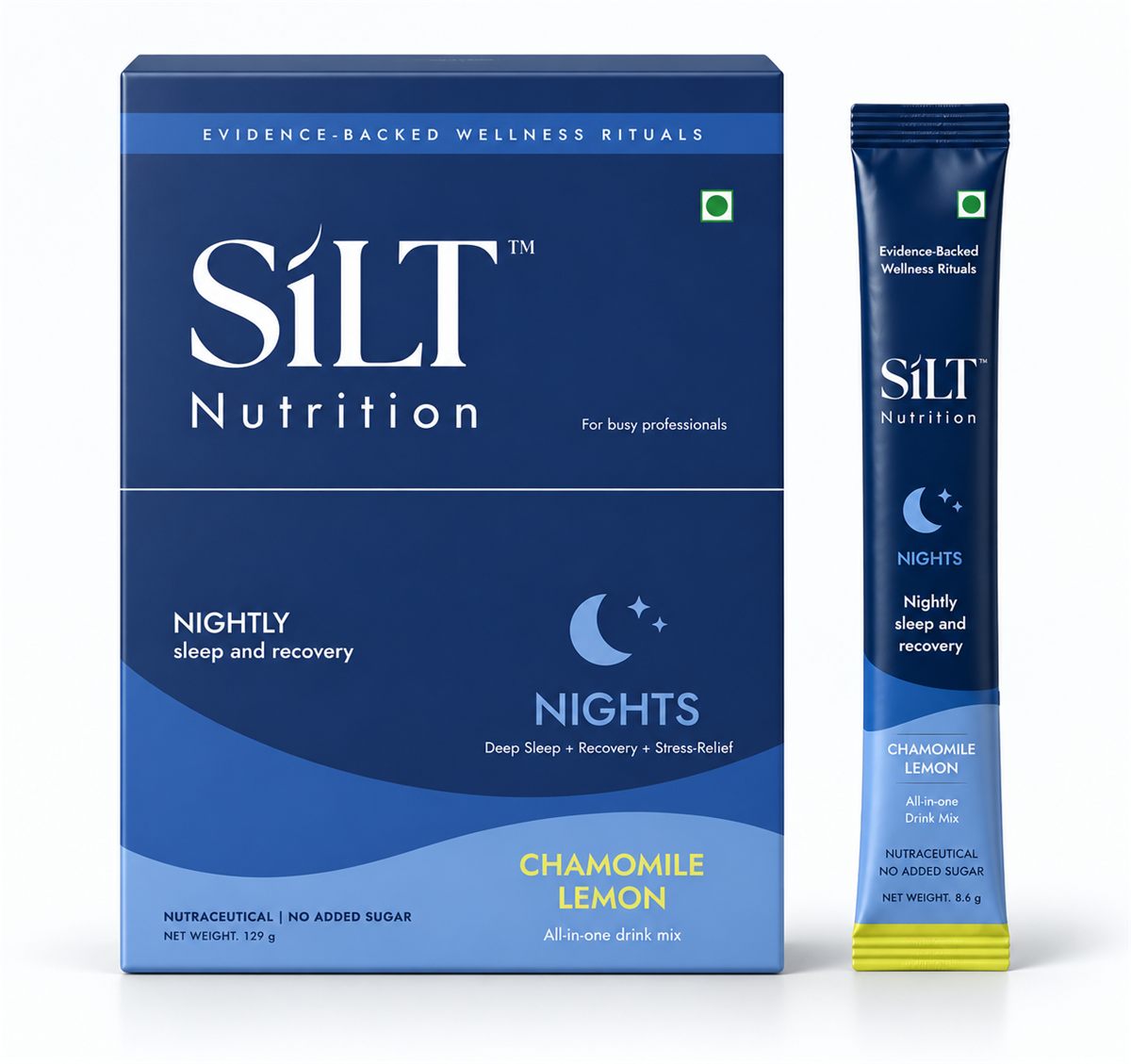
What it isn't: a treatment for insomnia, anxiety, cramps or any condition. One stick's 250 mg is about 57% of the men's RDA and 68% of the women's, and sits under the 350 mg supplement limit. If you have a liver or thyroid condition, are pregnant, or take regular medicines, check with your doctor first; the kidney caution above applies too. Every ingredient comes with a supplier certificate of analysis (on our science page); a finished-product NABL lab report is pending, and we'll publish it when it's ready.
MRP ₹1,125 ₹900 · 15 sticks or ₹1,500 for 30 (MRP ₹2,250)
That's ₹60 a stick, or ₹50 a stick in the 30-pack.
Shop SILT NightsMagnesium glycinate FAQs
What happens if I take magnesium glycinate daily?
In the 2025 trial, healthy adults took 250 mg elemental magnesium as bisglycinate daily for 4 weeks and insomnia scores improved slightly more than with placebo (Schuster et al., 2025). The glycinate trials we found ran 4 to 12 weeks, so there's little data on longer daily use. Keep supplements within 350 mg a day; loose stools become more likely above that.
What foods are high in magnesium?
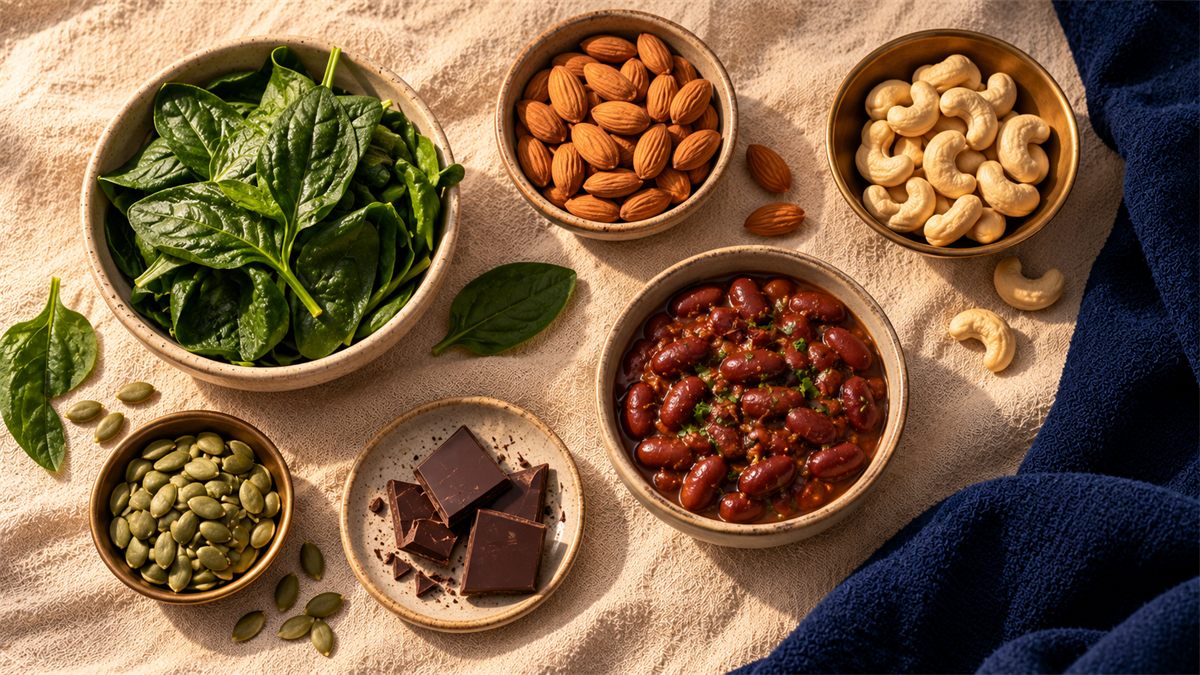
Most dietary magnesium comes from dark leafy greens; other good sources include nuts such as almonds and cashews, legumes, seeds, soy, whole grains, bananas, avocados and milk (MedlinePlus). In an Indian kitchen that means palak, rajma, chana, dals, pumpkin seeds and whole-wheat atta.
The honest verdict
Magnesium glycinate is a sensible way to top up a low magnesium intake, with one small trial suggesting a modest sleep benefit. Blood pressure falls slightly, mostly in people with high blood pressure or low magnesium, and blood sugar can improve in people with or at risk of diabetes; both findings come from magnesium in general. The anxiety, PMS and bone evidence is weak, and for typical cramps in older adults the best review says it probably doesn't help. Start with food and the ICMR-NIN target. If you add a supplement, read the elemental number on the label. Our magnesium glycinate powder page shows how, and SILT Nights is our own bedtime version. Evidence, not hype.
- Schuster et al., 2025. Nat Sci Sleep. pmc.ncbi.nlm.nih.gov/articles/PMC12412596
- PubChem. Magnesium glycinate, CID 84645; magnesium oxide, CID 14792; trimagnesium dicitrate, CID 6099959. pubchem.ncbi.nlm.nih.gov/compound/84645
- Boyle, Lawton & Dye, 2017. Nutrients. pubmed.ncbi.nlm.nih.gov/28445426
- Garrison et al., 2020. Cochrane Database Syst Rev. pubmed.ncbi.nlm.nih.gov/32956536
- Supakatisant & Phupong, 2015. Matern Child Nutr. pubmed.ncbi.nlm.nih.gov/22909270
- Robinson et al., 2025. Nutr Rev. pubmed.ncbi.nlm.nih.gov/38684926
- Walker et al., 1998. J Womens Health. pubmed.ncbi.nlm.nih.gov/9861593
- Zhang et al., 2016. Hypertension. pubmed.ncbi.nlm.nih.gov/27402922
- Argeros et al., 2025. Hypertension. pubmed.ncbi.nlm.nih.gov/41000008
- Veronese et al., 2021. Nutrients. pubmed.ncbi.nlm.nih.gov/34836329
- Dall et al., 2023. Nutr Res. pubmed.ncbi.nlm.nih.gov/36640582
- Cheung et al., 2022. Nutrition. pubmed.ncbi.nlm.nih.gov/35576873
- Groenendijk et al., 2022. Bone. pubmed.ncbi.nlm.nih.gov/34666201
- Farsinejad-Marj et al., 2016. Osteoporos Int. pubmed.ncbi.nlm.nih.gov/26556742
- MedlinePlus. Magnesium in diet. medlineplus.gov/ency/article/002423.htm
- Schuette et al., 1994. JPEN. pubmed.ncbi.nlm.nih.gov/7815675
- Walker et al., 2003. Magnes Res. pubmed.ncbi.nlm.nih.gov/14596323
- ICMR-NIN, 2020. Nutrient Requirements for Indians: brief note, Tables 3 and 4. nin.res.in/rdabook/brief_note.pdf
- Costello et al., 2023. Adv Nutr. europepmc.org/article/PMC/PMC10509448
- US FDA drug labels via openFDA, opened 7 October 2026: magnesium oxide OTC antacid, ciprofloxacin, doxycycline, alendronate. Links in the safety section.