


The common magnesium glycinate side effects are gut-level: loose stools, nausea or cramps, mostly when supplemental magnesium climbs past the 350 mg a day limit. The serious one, too much magnesium in the blood (hypermagnesaemia), is rare and happens almost only when the kidneys can't clear it or intakes are very large. Below: how often each happens, the symptoms that need a doctor, the medicines to space apart, and what to do if your stomach complains. If you're comparing labels, our magnesium glycinate powder guide shows how to read elemental magnesium. Disclosure: SILT™ makes a magnesium bisglycinate drink, covered briefly near the end.

Is magnesium glycinate safe?
For most healthy adults, yes, at sensible doses. The US limit for magnesium from supplements is 350 mg a day, set because higher doses can cause diarrhoea, and it doesn't apply to magnesium in food (Costello et al., 2023). The quick version:
- Most likely: a loose or upset stomach, usually at higher doses.
- Rare but serious: hypermagnesaemia, almost always with poor kidney function plus high magnesium intake (Van Laecke, 2019).
- Check first: kidney disease, pregnancy or breastfeeding, and prescription medicines.
- Space apart: some antibiotics, bone medicines and thyroid tablets. Your pharmacist can set the timing.
- Count every source: antacids, laxatives and multivitamins add magnesium too.
Common side effects vs rare ones
Magnesium side effects split into two very different groups: common, mild and gut-level, or rare, serious and tied to kidney problems or very high intakes. The table puts them side by side.
| Side effect | How often | Usually when | What to do |
|---|---|---|---|
| Loose stools, diarrhoea, cramps, nausea | The most common complaint; varies by form and dose | Supplemental doses above about 350-400 mg/day, or on an empty stomach | Take with food, split the dose, or cut back |
| Dizziness, joint pain | Occasional single reports in trials, at placebo-like rates | No clear pattern | Note it; stop if it persists |
| Hypermagnesaemia (magnesium build-up in the blood) | Rare | Reduced kidney function plus supplements, laxatives or antacids | Stop magnesium and get medical help (see the red flags below) |
Common: your gut
Diarrhoea is the side effect that set the 350 mg limit (Costello et al., 2023). How often it happens depends on the dose and form. In one older crossover trial of 476 mg a day of magnesium oxide, cited in that review, 18 of 50 participants (36%) reported diarrhoea, though the complaints ranged from mild changes in stool consistency upward, and some found that taking it with food helped.
Trials of magnesium bisglycinate at lower doses look calmer. In a 2025 randomised, placebo-controlled trial, 155 adults took 250 mg elemental magnesium as bisglycinate, or a placebo, for 4 weeks. Across both groups, 93% of all participants (both groups together) reported no adverse events. The magnesium group logged 2 events (one case of dizziness and nausea, one of joint pain) against 7 on placebo, and none classed as gastrointestinal issues, against 3 on placebo (Schuster et al., 2025). People with kidney or liver insufficiency or bowel disease weren't enrolled, so the result applies to healthy adults. In a randomised, placebo-controlled trial of 80 pregnant women with leg cramps, those given 300 mg a day of magnesium bisglycinate chelate showed no significant difference from placebo in side effects such as nausea and diarrhoea (Supakatisant & Phupong, 2015).
Rare but serious: hypermagnesaemia
Severe hypermagnesaemia can be life-threatening, but it's seen almost only in people with substantially reduced kidney function who also take in a lot of magnesium from supplements, laxatives or antacids (Van Laecke, 2019). Older adults with constipation or bowel conditions can develop it even with normal kidney function, for example when they also take magnesium laxatives or supplements (Aal-Hamad et al., 2023).
Too much magnesium: the symptoms
Too much magnesium symptoms start vague (nausea, dizziness, weakness) and become dangerous only at blood levels far above normal. Normal serum magnesium is about 0.7-1.0 mmol/L (Cascella & Vaqar, StatPearls). A 2023 clinical review maps symptoms to levels (Aal-Hamad et al., 2023):
| Serum magnesium | What people may notice |
|---|---|
| 1.05-2.2 mmol/L | Can cause no symptoms at all |
| 2.2-3.5 mmol/L | Nausea, dizziness, weakness, confusion |
| Above 3.5 mmol/L | Worsening confusion, drowsiness, weak reflexes, headache, flushing, a mild fall in blood pressure |
| Above 6.5 mmol/L | Muscle paralysis, slowed breathing, low blood pressure (the review separately notes heart-rhythm changes such as a slow pulse) |
Get urgent medical help if you take magnesium and develop marked muscle weakness, confusion, very slow or shallow breathing, fainting or a very slow heartbeat, especially if you have kidney disease or use magnesium laxatives or antacids. Treatment starts with stopping every magnesium source; severe cases are treated in hospital (Aal-Hamad et al., 2023).
Safe dosage: the 350 mg limit
A safe magnesium glycinate dosage, for most healthy adults, keeps elemental magnesium from all supplements at or under 350 mg a day. The US Institute of Medicine set that tolerable upper intake level in 1997, with diarrhoea as the limiting effect, and it covers supplements only, not food (Costello et al., 2023). The authors of that review argue the limit should be re-examined, but it's still the published figure. The NHS puts its line at 400 mg a day from supplements, which it says is unlikely to cause harm (NHS).
Why the RDA is higher than the limit
India's ICMR-NIN recommended dietary allowance is 440 mg a day for adult men and 370 mg for adult women (ICMR-NIN, 2020). That's not a contradiction. The RDA is your total intake, mostly from food; the 350 mg limit counts supplements alone.
Read the elemental number
Labels often print the compound weight. Magnesium bisglycinate (C4H8MgN2O4, 172.42 g/mol) is only about 14.1% magnesium by weight (PubChem). So "2,000 mg magnesium glycinate" carries at most about 282 mg of magnesium, and reaching 350 mg would take roughly 2,480 mg of pure bisglycinate. Our magnesium glycinate powder page walks through the label maths, and our best magnesium supplement in India guide compares products on elemental magnesium.
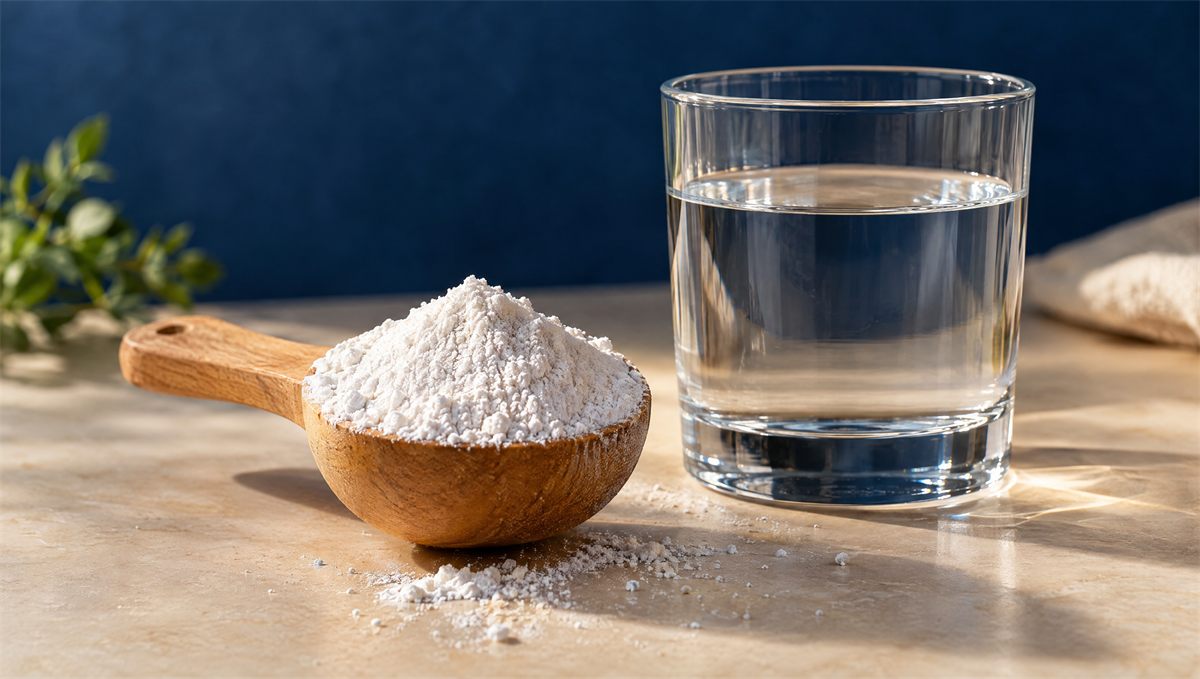
Then add up everything: a multivitamin, an antacid or a magnesium laxative all count toward the same 350 mg.
Read the elemental number. Then add up every source.
Magnesium glycinate and kidneys
Healthy kidneys clear extra magnesium well, so even excessive intake rarely raises blood levels much in healthy people (Costello et al., 2023). MedlinePlus says side effects from high magnesium intake are not common, except in people with significantly reduced kidney function (MedlinePlus).
Reduced kidney function changes the picture. In a retrospective study of 2,176 people taking magnesium oxide daily as a laxative, higher blood magnesium was linked to doses above 1,000 mg a day, stage 4 chronic kidney disease and stimulant laxatives (Aal-Hamad et al., 2023). A US over-the-counter magnesium oxide antacid label carries the same warning: ask a doctor before use if you have kidney disease (magnesium oxide label).
If you have kidney disease, don't start any magnesium supplement without your nephrologist's go-ahead.
Who should avoid it or check first
Most people can take magnesium glycinate, but some should talk to a doctor before starting. Check first if you:
- Have kidney disease or reduced kidney function. This is the main risk factor for magnesium build-up (Van Laecke, 2019).
- Are pregnant or breastfeeding. A US magnesium oxide antacid label asks you to check with a doctor first (magnesium oxide label).
- Take prescription medicines, especially the antibiotics, bone medicines and thyroid tablets in the next section. Banner Health also lists diuretics, blood thinners, and heartburn and blood-pressure medicines as reasons to check (Banner Health, 2026).
- Are older and constipated, or use magnesium laxatives or antacids. That combination features in hypermagnesaemia case reports (Aal-Hamad et al., 2023).
- Have a bowel condition such as ulcerative colitis or Crohn's disease (see the FAQ).
Drug interactions to space out
Magnesium products can bind some medicines in the gut, or change stomach acidity, and reduce how much you absorb, so the fix is usually timing. These are the instructions printed on official US prescribing labels. Spacing rules differ between drugs and brands, so ask your pharmacist to set the timing for your exact prescription.
| Medicine | What the official label says |
|---|---|
| Ciprofloxacin (a quinolone antibiotic) | Take it at least 2 hours before or 6 hours after magnesium/aluminium antacids and other products containing multivalent cations such as magnesium (label) |
| Doxycycline (a tetracycline antibiotic) | Absorption is impaired by antacids containing aluminium, calcium or magnesium (label) |
| Alendronate (a bisphosphonate for bones) | Antacids and products with multivalent cations interfere with absorption; wait at least 30 minutes after the dose before other oral medicines (alendronate label) |
| Levothyroxine (thyroid hormone) | Lists antacids such as aluminium and magnesium hydroxides among products that can reduce its absorption; its general rule is to take it at least 4 hours before or after drugs that interfere with absorption (label) |
Notice the numbers don't match: 2 and 6 hours for one, 30 minutes for another, a general 4 hours for a third, and no figure on doxycycline's antacid warning. A single "take it 2 hours apart" rule doesn't cover all of them. If you take one of these medicines in the evening, read our guide on when to take magnesium glycinate and plan the gap with your pharmacist.
Is it safe to take every day?
Daily use within the limit looks safe for healthy adults, but the long-term evidence is thin. The NHS says 400 mg or less a day of magnesium from supplements is unlikely to cause harm, and that there isn't enough evidence on the effects of high doses taken for a long time (NHS). The bisglycinate trials above lasted 4 weeks.
So is magnesium glycinate safe to take daily? On the evidence, yes, if you stay under 350 mg of supplemental magnesium, your kidneys are healthy, and you've checked any medicines. If you need it for months, or you're taking it for a suspected deficiency, review it with your doctor rather than topping up indefinitely. Food still does most of the work toward the RDA.
Is glycinate easier on the stomach?
Possibly, but we couldn't find a head-to-head trial that proves it, so we won't claim it. Here's what the evidence does say:
- Forms differ. Gastrointestinal symptoms vary with the form, dose, duration, diet and health status. Magnesium gluconate and chloride have been preferred for oral replacement because they cause diarrhoea less often than other salts (Costello et al., 2023).
- Bisglycinate trials report low rates. No events classed as gastrointestinal issues in the magnesium group of the 2025 sleep trial (one report of dizziness and nausea) (Schuster et al., 2025), and no significant difference from placebo in side effects such as nausea and diarrhoea in pregnant women (Supakatisant & Phupong, 2015).
- Dose matters as much as form. The 36% diarrhoea rate above came at 476 mg a day of oxide, well over the 350 mg limit (Costello et al., 2023).
For what the research supports beyond tolerance, see magnesium glycinate benefits.
What to do if you get side effects
Most magnesium side effects settle when you lower or split the dose. Work through these steps:
- Take it with food. Magnesium supplements are best taken with food (Costello et al., 2023).
- Split larger doses across the day instead of taking them at once (same source).
- Add up every source: multivitamins, antacids and laxatives. You may be over 350 mg without realising.
- Cut back or pause. If loose stools continue on a lower dose, stop and talk to your doctor.
- Stop and get urgent help for the red flags above: marked weakness, confusion, slow breathing, fainting or a very slow pulse.
A side effect is information. Adjust, don't push through.
Where SILT Nights fits
SILT Nights is a bedtime drink with 250 mg of elemental magnesium per stick, from 1.8 g of magnesium bisglycinate: under the 350 mg supplemental limit, and the same amount the 2025 trial used. Each stick also has 3 g glycine, 200 mg L-theanine and 300 mg KSM-66® ashwagandha root extract, and every dose is printed on the back of the pack. The pack prints the magnesium as "13.8% elemental" and states 250 mg of magnesium per 1.8 g (SILT pack). Its direction is "1 stick per day. Do not exceed the recommended usage level." It is free from added sugar, maltodextrin and melatonin, as printed, and has no caffeine.

The same rules apply. If you have a liver or thyroid condition, are pregnant, or take regular medicines, check with your doctor first, and the kidney advice above still stands. The pack says the same: if you're pregnant or nursing, taking any medications or have any medical conditions, contact your healthcare practitioner before use (SILT pack). If you already take another magnesium product, count both toward the 350 mg. Every ingredient comes with a supplier certificate of analysis (on our science page); a finished-product NABL lab report is pending, and we'll publish it when it's ready. More on the formula: SILT Nights.
MRP ₹1,125 ₹900 · 15 sticks or ₹1,500 for 30 (MRP ₹2,250)
That's ₹60 a stick, or ₹50 a stick in the 30-pack.
Shop SILT NightsMagnesium glycinate FAQs
Is there anything bad about taking magnesium glycinate?
The realistic downsides are an upset stomach at higher doses, interactions with some antibiotics, bone and thyroid medicines, and a risk of build-up if your kidneys are impaired. The other one is cost: a Banner Health nurse practitioner notes that few people are truly deficient and that a magnesium-rich diet covers most people (Banner Health, 2026).
Can I take magnesium if I have colitis?
Ask your gastroenterologist first. Diarrhoea is magnesium's most common side effect, and a 2023 review lists inflammatory bowel disease in older adults as a risk factor for magnesium build-up even with normal kidneys (Aal-Hamad et al., 2023). The 2025 bisglycinate trial excluded people with ulcerative colitis or Crohn's disease, so it tells us nothing about them.
What are the 7 signs your body needs magnesium?
There's no official list of seven. MedlinePlus lists early signs of deficiency as loss of appetite, nausea, vomiting, fatigue and weakness, and later ones as numbness or tingling, muscle cramps, abnormal heart rhythms and seizures. It also notes true deficiency is rare (MedlinePlus). These signs overlap with many conditions, so see a doctor for a blood test; our guide to magnesium deficiency symptoms goes further.
So, should you worry?
Mostly, no. For a healthy adult, the likely side effect of magnesium glycinate is a loose stomach, and it usually means the dose is too high or taken on an empty stomach. Keep supplemental magnesium under 350 mg, count every source, space it from antibiotics, bone and thyroid medicines, and talk to a doctor first if your kidneys aren't healthy. If you want a measured dose with every number printed, read our magnesium glycinate powder guide or see SILT Nights. Evidence, not hype.
MRP ₹1,125 ₹900 · 15 sticks or ₹1,500 for 30 (MRP ₹2,250)
- Costello et al., 2023. Adv Nutr. pmc.ncbi.nlm.nih.gov/articles/PMC10509448
- Van Laecke, 2019. Acta Clin Belg. pubmed.ncbi.nlm.nih.gov/30220246
- Schuster et al., 2025. Nat Sci Sleep. pmc.ncbi.nlm.nih.gov/articles/PMC12412596
- Supakatisant & Phupong, 2015. Matern Child Nutr. pubmed.ncbi.nlm.nih.gov/22909270
- Aal-Hamad et al., 2023. Hypermagnesemia in clinical practice. Medicina (Kaunas). pmc.ncbi.nlm.nih.gov/articles/PMC10384947
- Cascella & Vaqar. Hypermagnesemia. StatPearls. pubmed.ncbi.nlm.nih.gov/31747218
- NHS. Vitamins and minerals: others (magnesium). nhs.uk/conditions/vitamins-and-minerals/others
- ICMR-NIN, 2020. Nutrient Requirements for Indians: brief note, Tables 3 and 4. nin.res.in/rdabook/brief_note.pdf
- PubChem. Magnesium glycinate, CID 84645. pubchem.ncbi.nlm.nih.gov/compound/84645
- MedlinePlus. Magnesium in diet. medlineplus.gov/ency/article/002423.htm
- US FDA label via openFDA: magnesium oxide OTC antacid. api.fda.gov
- Banner Health, 2026. What is magnesium glycinate? Health benefits and safety guide. bannerhealth.com
- US FDA label via openFDA: ciprofloxacin. api.fda.gov
- US FDA label via openFDA: doxycycline. api.fda.gov
- US FDA label via openFDA: alendronate. api.fda.gov
- US FDA label via openFDA: levothyroxine sodium. api.fda.gov