


How to reduce bloating depends on whether you need relief now or want it to stop coming back. Right now: walk for ten minutes, sip water instead of a fizzy drink, and loosen up. Over weeks: eat smaller meals more slowly, find your trigger foods with a diary, add soluble fibre gradually, and if you have IBS, try a low-FODMAP diet with a dietitian. Below, each fix is graded by its evidence, including saunf, ajwain and jeera. Disclosure: we make a fibre drink and keep it to one short section near the end; our fibre supplement guide covers fibre supplements in full.

Bloated right now? Do this
Most bloating is gas, and gas moves when you do. These steps help within the hour; none of them needs a product.
- Walk for 10-15 minutes. In a lab study of eight people with bloating, gentle pedalling while lying down cut the share of gas retained in the gut from 45% to 24% and eased symptoms (Villoria et al., 2006). The NHS says exercise helps when you're already bloated (NHS, Bloating).
- Massage your stomach from right to left to help release trapped wind (NHS, Bloating).
- Sip plain water. Skip the cola, soda and beer: fizzy drinks tend to bloat the tummy (NHS, Good foods to help your digestion).
- Sit up straight or stand. The NHS lists slouching while eating among things to avoid (NHS, Bloating).
- Ask a pharmacist. Simeticone can ease bloating, and a laxative helps if constipation is behind it (NHS, Bloating). If you have IBS, peppermint oil is another option to ask about (NHS, IBS).
If bloating comes with severe sudden pain, vomiting blood, or a swollen stomach and severe difficulty breathing, skip the list and get emergency help (see When to see a doctor).
Why you feel bloated
The most common reason is a lot of gas in the gut, from certain foods and fizzy drinks or from air swallowed while eating. Less often it's a digestive problem (NHS, Bloating):
- Constipation: stool sitting in the bowel takes up room and keeps fermenting.
- A food intolerance, such as lactose intolerance (below).
- Coeliac disease, a reaction to gluten in wheat, barley and rye.
- Irritable bowel syndrome (IBS).
- Your period: some people feel bloated around it.
The NHS also notes that bloating that doesn't go away can sometimes be a sign of something more serious, such as ovarian cancer. That's rare, but it's why persistent bloating deserves a doctor rather than another home remedy (NHS, Bloating).
Bloating after eating
If you're mostly bloated after eating, look at how much, how fast and what you ate. The NHS advises smaller, more frequent meals instead of large ones, no large meals late at night, chewing with your mouth closed so you swallow less air, and not eating lots of processed, sugary, spicy or fatty food (NHS, Bloating). Its IBS advice adds: don't eat too quickly, and don't skip or delay meals (NHS, IBS).
That describes a lot of Indian working days: a skipped breakfast, a rushed lunch at the desk, then a big, late dinner. Spreading the same food across the day, and putting the phone down so you eat slower, are free experiments.
The usual food suspects
The NHS names cabbage, beans and lentils as foods known to cause gas (NHS, Bloating). For IBS-type bloating it adds broccoli, cauliflower, onions and products sweetened with sorbitol (NHS, IBS). On a thali, that's the rajma, chole, cabbage sabzi and raw onion. You don't need to give up dal; try smaller portions and see what changes.
Milk and lactose
If you can't digest lactose, the sugar in milk, symptoms such as tummy pain, bloating and wind can start a few minutes or a few hours after dairy (NHS, Lactose intolerance). Watch for a pattern after chai, lassi or a milky dessert. Cut dairy only with advice from a doctor or dietitian, so you don't lose calcium without a reason.
Fast relief vs long-term fixes
Not all bloating remedies are equal. "Evidence" is our editorial read of the sources linked on this page, not a clinical grade. Much of the trial evidence comes from people with IBS, not from the occasional heavy-lunch bloat.
| Fix | Works on | Evidence | Source |
|---|---|---|---|
| Low-FODMAP diet (for IBS) | Weeks | Strongest dietary evidence: 13 RCTs; ranked first for bloating; guideline-recommended as a limited trial | Black 2022; Halmos 2014; ACG 2021 |
| Soluble fibre (not bran) | Weeks | Meta-analysis of 14 RCTs in IBS: soluble fibre helped, bran didn't | Moayyedi 2014 |
| PHGG fibre, 6 g a day (for IBS) | Weeks | One RCT, 108 patients analysed: modest drop in bloating scores | Niv 2016 |
| Peppermint oil (for IBS) | Days to weeks | Meta-analysis of 12 RCTs: better global symptoms and pain | Alammar 2019 |
| Gentle exercise | Within the hour | One small lab study (8 people); standard NHS advice | Villoria 2006; NHS |
| Smaller, slower meals; less fizz | Same day | Standard NHS advice | NHS |
| Food diary to find triggers | Weeks | Standard NHS advice | NHS |
| Simeticone | Within the hour | NHS lists it as a pharmacy option | NHS |
| Fennel, ajwain, cumin | Days to weeks | Small trials of extracts and combinations only; no trial of the kitchen versions found | See below |
| Probiotics | Weeks | The AGA advises against them for bloating; the NHS suggests a one-month trial for IBS | AGA 2023; NHS |
Bloating remedies that last
If you're bloated most weeks, the lasting bloating remedies are habits, not a drink or a pill.
- Keep a food diary of what you eat and when symptoms start, then cut back on the triggers (NHS, IBS; NHS, Good foods).
- Exercise regularly. The NHS says it improves digestion (NHS, Bloating).
- Cut down on fizzy drinks, alcohol and caffeine in coffee and tea (NHS, Bloating). For IBS, the NHS sets a ceiling of 3 cups of caffeinated drinks a day (NHS, IBS).
- Drink enough. The NHS suggests about 1.5 litres of fluid a day for IBS, as water or non-caffeinated drinks (NHS, IBS).
What about probiotics?
The evidence is split, so be sceptical of "probiotic for bloating" claims. The American Gastroenterological Association's 2023 expert review advises that probiotics should not be used for abdominal bloating and distension (Moshiree et al., 2023). The NHS, for people diagnosed with IBS, suggests trying one for a month, as it may help symptoms caused by changes in gut bacteria (NHS, IBS). Our guide to probiotics vs prebiotics explains the difference.
Gas moves when you do.
The low-FODMAP diet
FODMAPs are fermentable carbohydrates: oligosaccharides, disaccharides, monosaccharides and polyols. Gut bacteria ferment them and make gas. Cutting them back is the best-tested diet for IBS bloating.
In a cross-over trial, 30 people with IBS ate a low-FODMAP diet or a typical Australian diet for 21 days each, with almost all food provided. On low-FODMAP, overall symptom scores roughly halved, and bloating, pain and wind all fell (Halmos et al., 2014). A network meta-analysis of 13 randomised trials (944 patients) ranked a low-FODMAP diet first for bloating and beat standard UK dietary advice on it. Its caveat: most trials ran in hospital clinics and didn't test the reintroduction phase (Black et al., 2022).
How to do it well:
- Get a diagnosis first. The American College of Gastroenterology recommends a limited trial of low-FODMAP in people with IBS (Lacy et al., 2021). It isn't a general detox.
- Use a dietitian. The AGA advises that a gastroenterology dietitian should preferably supervise (Moshiree et al., 2023). The NHS says to see a GP if you need to avoid lots of foods to control IBS (NHS, IBS).
- Plan the way back. It's a short cut-back, then foods are reintroduced to find your personal triggers. A strict diet kept up indefinitely narrows what you eat for no gain.
Fibre: go slow
Fibre can ease bloating or cause it. The type matters, and so does the speed. Most people need more: the NHS target is 30 g a day, and UK adults average about 20 g (NHS, Fibre). But fibre feeds gut bacteria, and fermentation makes gas.
Soluble beats bran. A meta-analysis of 14 trials (906 people with IBS) found soluble fibre helped symptoms (about one extra person improved for every seven who took it), while bran showed no clear benefit (Moayyedi et al., 2014). The NHS suggests soluble fibre such as oats or linseed if you're constipated (NHS, Bloating), and notes that some people find cereals and grains bring on bloating; if so, get fibre from fruit and vegetables (NHS, Good foods).
Drink with it. Fibre absorbs water; without enough fluid it can't do its job and you can end up constipated (NHS, Good foods).
Go slow. Our practical suggestion, not a trial finding: add one new fibre source at a time, in a small portion, and give it a week or two before adding more, so you can see which one bloats you.
PHGG, a gentler fibre. Partially hydrolysed guar gum (PHGG) is a soluble, low-viscosity fibre. In a 12-week trial in IBS, 6 g a day lowered diary bloating scores more than placebo (a modest difference) with no significant side effects, though it didn't change other IBS symptoms (Niv et al., 2016). In a smaller 90-day study (49 people, 10 g a day), people with IBS whose gut bacteria were more diverse tolerated PHGG better (Zhou & Ho, 2023). For how PHGG compares with isabgol and inulin, read which fibre to choose, our fibre supplement page, or the best fibre supplement in India comparison.
Saunf, ajwain and jeera: honest verdict
A spoon of saunf after a meal, ajwain water, jeera water: long traditions, thin trial evidence. The studies that exist test concentrated extracts or mixtures, not the seeds or water you make at home.
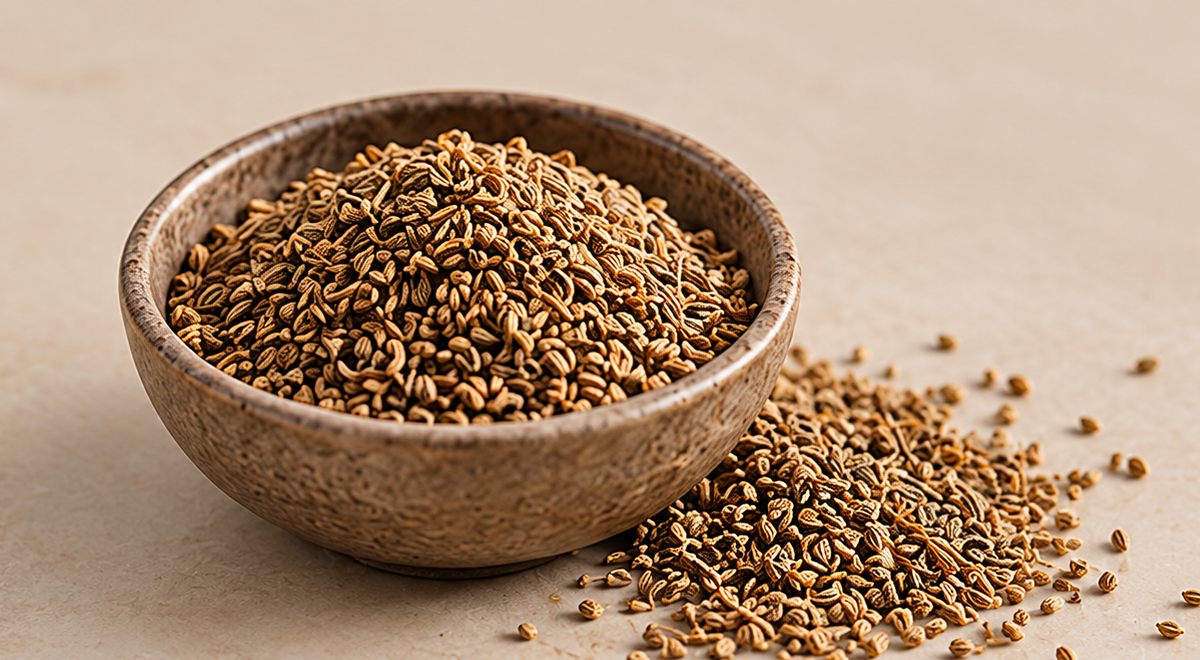
- Saunf (fennel). A PubMed search for randomised trials of fennel and bloating found none (7 October 2026). The closest in an everyday gut condition is a trial of capsules combining curcumin and fennel essential oil in 121 people with IBS: after 30 days symptom scores fell more than with placebo (Portincasa et al., 2016). Two authors worked for a drug company, and the fennel was an oil, not seeds. The other fennel trial we found was in women with wind after a caesarean, where fennel capsules did no better than dimethicone (Jourshari et al., 2024).
- Ajwain. In an Iranian trial of 106 adults with functional bloating, a capsule of ajwain seed, ginger and black pepper beat both placebo and dimethicone over two weeks (84 completed) (Mahmoudpour et al., 2019). It's one trial of a three-herb mix, so ajwain's own share is unknown.
- Jeera (cumin). The one cumin-only trial we found was in 74 patients just after abdominal surgery: cumin-extract capsules shortened the time to passing gas (Amin et al., 2024). That says little about everyday bloating.
- Peppermint oil has the strongest herbal evidence, for IBS: a meta-analysis of 12 trials (835 patients) found better global symptoms and less pain than placebo (Alammar et al., 2019).
Verdict: saunf or ajwain after a heavy meal is low-risk and pleasant, so keep it if it helps you, but don't let it delay a doctor's visit. For trapped wind specifically, see our guide to gas in the stomach.
When to see a doctor
See a doctor if you feel bloated regularly, if diet changes haven't helped, or if bloating comes with unintentional weight loss or blood in your poo (NHS, Bloating).
Get an urgent appointment if bloating comes with vomiting, diarrhoea or constipation, a stomach ache, a fever or shivers, a swelling or lump in your tummy, acid reflux, or if you can't pee, poo or pass wind. Go to emergency care if your stomach is swollen and you have severe pain that came on suddenly, you're vomiting blood or what looks like coffee grounds, or you have severe difficulty breathing (NHS, Bloating).
For women: feeling bloated or having a swollen tummy frequently, roughly 12 or more times a month, is one of the main symptoms of ovarian cancer the NHS asks you to get checked. It's usually something else, but finding cancer early matters (NHS, Ovarian cancer). A doctor may also test for coeliac disease, which a blood test can help rule out (Moshiree et al., 2023).
A fibre habit, not a bloating fix
SILT™ Mornings is a morning drink that makes the "fibre, slowly and daily" habit easy. It isn't a bloating remedy, and we'd rather you knew its limits.
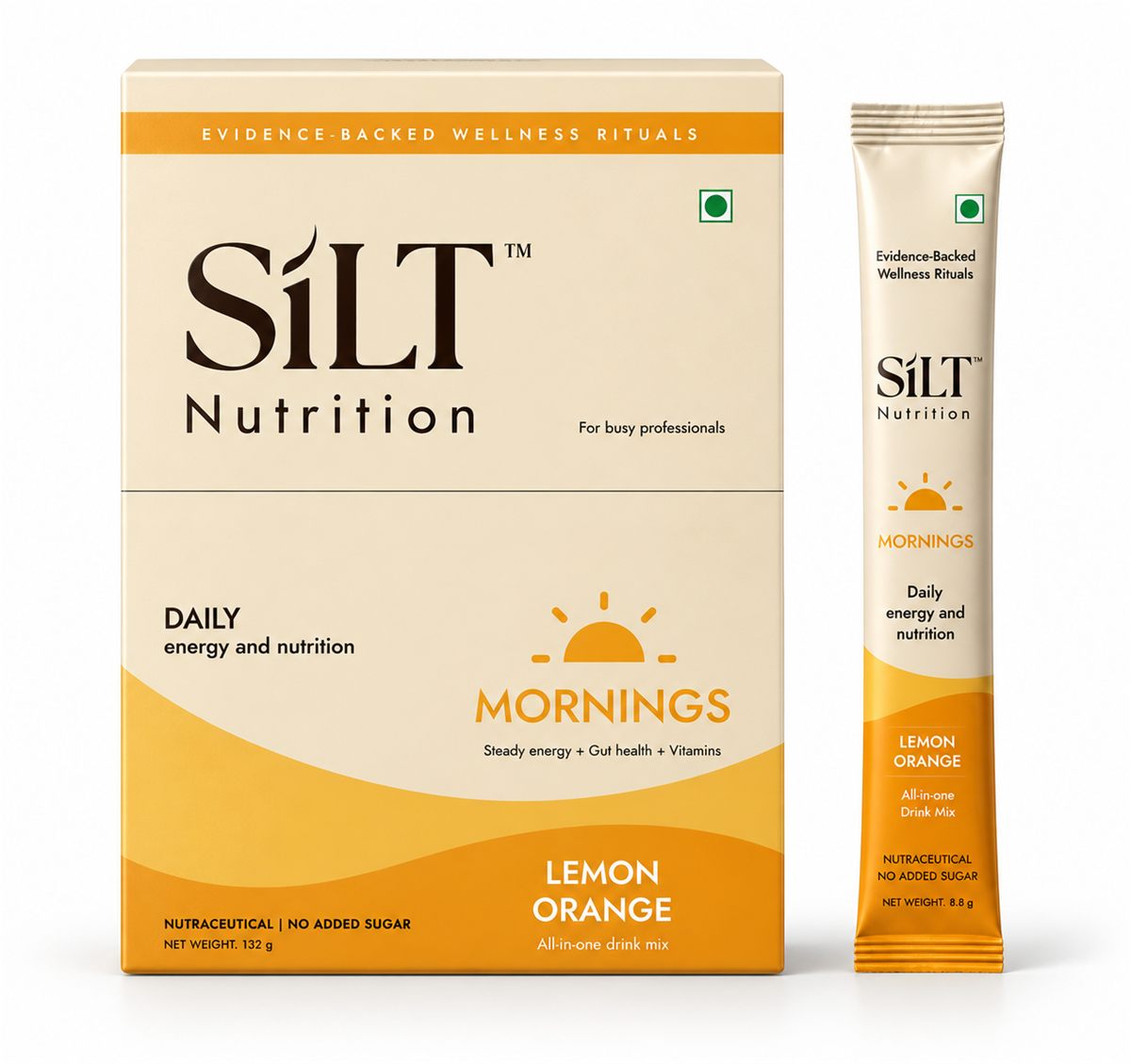
Each 8.8 g stick has 5 g Sunfiber® PHGG, 6 billion CFU of three spore-forming Bacillus species (B. subtilis, B. coagulans and B. clausii, 2 billion each), 550 mg of digestive herb extracts (saunf, jeera, ajwain, amla), 80 mg caffeine, 200 mg L-theanine, 1.4 g taurine, and vitamins D3, K2 (menaquinone), C and B12 at 100% RDA. The pack lists it as no added sugar, no maltodextrin and no gluten, and says it contains a natural sweetener (stevia) and natural colour. Stir one stick into 200-250 ml of room-temperature or cold water (not boiling: the pack says heat degrades sensitive actives), any time in the morning, one stick a day.
The pack's nutrition panel shows 4.95 g of dietary fibre per stick, 16.5% of the ICMR 2020 adequate intake for men, with 1.13 g total sugars and 0 g added sugars (SILT pack). Against the 30 g target above, that is a step, not a jump, which suits the "go slow" advice. The PHGG supplier certificate reads 91.2% dietary fibre (supplier certificate). The herbs are extracts, and as the section above says, the evidence for saunf, jeera and ajwain is thin, so we list them as digestion support, not as a bloating fix.
The honest limits: the PHGG studies above were in people with IBS, and we don't claim a stick reproduces their results. The AGA advises against probiotics for bloating. The pack names the three probiotic species but not their strain codes, so strain-specific probiotic trial results can't be assumed to apply to it. And Mornings has 80 mg caffeine, which the NHS lists as a bloating trigger to cut down on, so if caffeine bloats you, it may not suit you. Supplier certificates of analysis are on our science page; the vitamin blend certificate and a finished-product NABL lab report are pending, and we'll publish them when they're ready. If you have a liver or thyroid condition, are pregnant or nursing, are sensitive to caffeine, or take regular medicines, check with your doctor or healthcare practitioner first. If you take a blood thinner such as warfarin, ask your doctor before using SILT Mornings, because it contains vitamin K2 (55 mcg). More on the fibre in our fibre supplement guide.
MRP ₹1,125 ₹900 · 15 sticks or ₹1,500 for 30 (MRP ₹2,250)
That's ₹60 a stick, or ₹50 in the 30-stick pack.
Shop SILT MorningsLess gas, slower meals
For bloating now: walk, sip water, loosen up. For bloating that keeps coming back: smaller and slower meals, fewer fizzy drinks, a food diary, soluble fibre added slowly, and, if you have IBS, a dietitian-led low-FODMAP trial. See a doctor if it's frequent or comes with any red flag. For the bigger picture, read how to improve gut health and what your gut bacteria do with fibre, or our fibre supplement guide. Evidence, not hype.
- NHS. Bloating. nhs.uk/conditions/bloating
- NHS. Diet, lifestyle and medicines for IBS. nhs.uk/conditions/irritable-bowel-syndrome-ibs
- NHS. Good foods to help your digestion. nhs.uk/live-well/eat-well/digestive-health
- NHS. How to get more fibre into your diet. nhs.uk/live-well/eat-well/digestive-health
- NHS. Lactose intolerance. nhs.uk/conditions/lactose-intolerance
- NHS. Ovarian cancer: symptoms. nhs.uk/conditions/ovarian-cancer/symptoms
- Moshiree et al., 2023. AGA Clinical Practice Update on belching, abdominal bloating and distention. Gastroenterology. pubmed.ncbi.nlm.nih.gov/37452811
- Lacy et al., 2021. ACG Clinical Guideline: management of irritable bowel syndrome. Am J Gastroenterol. pubmed.ncbi.nlm.nih.gov/33315591
- Halmos et al., 2014. Gastroenterology. pubmed.ncbi.nlm.nih.gov/24076059
- Black et al., 2022. Gut. pubmed.ncbi.nlm.nih.gov/34376515
- Villoria et al., 2006. Am J Gastroenterol. pubmed.ncbi.nlm.nih.gov/17029608
- Moayyedi et al., 2014. Am J Gastroenterol. pubmed.ncbi.nlm.nih.gov/25070054
- Niv et al., 2016. Nutr Metab (Lond). pubmed.ncbi.nlm.nih.gov/26855665
- Zhou & Ho, 2023. Nutrients. pubmed.ncbi.nlm.nih.gov/38004180
- Portincasa et al., 2016. J Gastrointestin Liver Dis. pubmed.ncbi.nlm.nih.gov/27308645
- Mahmoudpour et al., 2019. J Integr Med. pubmed.ncbi.nlm.nih.gov/31201146
- Amin et al., 2024. BMC Complement Med Ther. pubmed.ncbi.nlm.nih.gov/38965524
- Alammar et al., 2019. BMC Complement Altern Med. pubmed.ncbi.nlm.nih.gov/30654773
- Jourshari et al., 2024. J Educ Health Promot. pubmed.ncbi.nlm.nih.gov/39309989
- PubMed search, 7 October 2026: (fennel seed OR Foeniculum vulgare) AND bloating AND randomized, 0 results. pubmed.ncbi.nlm.nih.gov