


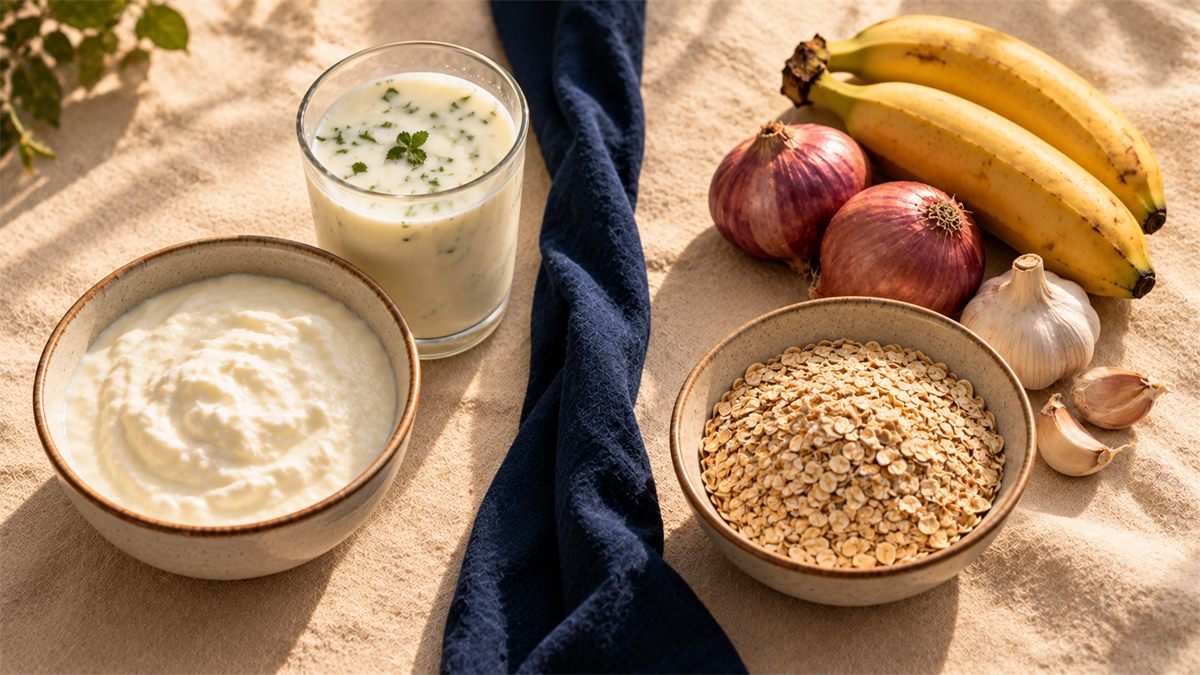
Probiotics vs prebiotics, in one line: probiotics are live microbes that give a health benefit in the right amount; prebiotics are what the microbes already in your gut feed on, selectively, to give a benefit. Curd with live cultures is the everyday Indian route to the first (close to a probiotic, though not automatically one). Onions, garlic and bananas carry small amounts of the second. Below: the official definitions, which Indian foods count, synbiotics, spore-forming Bacillus vs Lactobacillus, PHGG fibre, and who should be careful. Disclosure: we make a drink with prebiotic fibre and spore probiotics, kept to one short section near the end; the details are on our fibre supplement page.
Prebiotics vs probiotics: the table
Probiotics are alive; prebiotics are not. A synbiotic combines the two. All three terms have consensus definitions from the International Scientific Association for Probiotics and Prebiotics (ISAPP), and all three require a proven health benefit, not just the right ingredients (Hill et al., 2014; Gibson et al., 2017; Swanson et al., 2020).
| Probiotics | Prebiotics | Synbiotics | |
|---|---|---|---|
| What it is | Live microorganisms | A substrate, usually a fibre, that your gut microbes use selectively | Live microorganisms plus a substrate they or your gut microbes use |
| Alive? | Yes | No | Partly |
| Benefit must be shown? | Yes (ISAPP 2014) | Yes (ISAPP 2017) | Yes (ISAPP 2020) |
| Indian food examples | Curd, buttermilk or lassi with live cultures: close, but not automatically probiotic | Onions, garlic, bananas, at low levels | No everyday food qualifies by default |
| What to check on a label | Genus, species and strain, and the count until the end of shelf life | The named fibre and grams per serving | Both, plus evidence for the mix |
What counts as a probiotic
The FAO/WHO definition of a probiotic is "live microorganisms which when administered in adequate amounts confer a health benefit on the host". ISAPP kept that wording in 2014 and asked for more precise use of the term, so that "contains bacteria" isn't confused with "proven probiotic" (Hill et al., 2014).
The benefit belongs to the strain, not the category. A meta-analysis of 53 trials in 5,545 adults with IBS found some combinations, species and strains looked helpful, but couldn't say which ones reliably work (Ford et al., 2018). So "probiotic" on a pack tells you little; the strain name tells you more.
Labels have also changed. In 2020, taxonomists split the genus Lactobacillus into 25 genera, adding names such as Lacticaseibacillus and Lactiplantibacillus; "lactobacilli" remains the umbrella term (Zheng et al., 2020). A new name on a familiar product usually means reclassification, not a new microbe.
Is curd a probiotic?
Not automatically. ISAPP separates fermented foods from probiotics: fermented foods are "foods made through desired microbial growth and enzymatic conversions of food components", and one only becomes a "probiotic fermented food" if it carries a defined strain with shown benefits, at an effective dose, until the end of shelf life. The panel expects most fermented foods sold today don't meet that bar (Marco et al., 2021).
What that means in an Indian kitchen:
- Curd, buttermilk, lassi: live and active cultures, unless heat-treated after fermenting. Yoghurt cultures carry the enzyme lactase, and EFSA accepts a claim that live yoghurt cultures improve lactose digestion (Marco et al., 2021).
- Idli and dosa: fermented, then cooked. ISAPP notes that baking bread after fermentation kills its microbes (Marco et al., 2021); steaming or griddling a batter is also cooking, so expect few live microbes.
- Achaar in vinegar or brine alone: ISAPP lists vegetables pickled in brine and/or vinegar as not fermented (Marco et al., 2021). Traditionally sun-fermented pickles are a different case.
Fermented is not the same as probiotic.
What counts as a prebiotic
A prebiotic is "a substrate that is selectively utilized by host microorganisms conferring a health benefit" (Gibson et al., 2017). Two words do the work: selectively (it feeds particular microbes, not everything) and benefit (it has to be shown).
That's why not every fibre is a prebiotic. ISAPP says different fibres may or may not meet the criteria, and that onions, garlic, bananas, chicory root and Jerusalem artichokes contain prebiotics, though typically at low levels (ISAPP, Prebiotics). Dal, sabzi and whole grains still matter for fibre; the prebiotic label is narrower.
Prebiotics are fermented by gut microbes, so gas is the usual first side effect. In a crossover trial in 26 healthy adults, chicory inulin and oligofructose mildly increased symptoms, mostly flatulence and then bloating; up to 10 g a day of native inulin and 5 g of oligofructose were well tolerated, while 10 g of oligofructose was not (Bonnema et al., 2010). Start low and build up over a couple of weeks.
Synbiotics: both together
Yes, you can take prebiotics and probiotics together; that pairing has a name. ISAPP defines a synbiotic as "a mixture comprising live microorganisms and substrate(s) selectively utilized by host microorganisms that confers a health benefit on the host" (Swanson et al., 2020). There are two kinds:
- Complementary: a probiotic plus a prebiotic, each meeting its own criteria, not designed to work together.
- Synergistic: the substrate is designed to be selectively used by the microbes it's packed with. Neither part has to qualify on its own, but the mix must show a benefit.
The honest caveat: the human evidence is thin. In IBS, data for prebiotics and synbiotics were "sparse" in a 2018 meta-analysis (Ford et al., 2018), and a 2024 network meta-analysis found that, unlike probiotics, prebiotics and synbiotics did not significantly improve symptoms (Wu et al., 2024). Curd with a banana is a good snack; it isn't a tested synbiotic.
Spore probiotics vs lactobacilli
The most commonly used probiotics are Lactobacillus-type: live, active cells. Spore-forming Bacillus probiotics, such as B. clausii, B. coagulans and B. subtilis, arrive as dormant spores instead (Casula & Cutting, 2002). Spores are heat-stable and can survive the stomach's acid barrier, which is why they're used in supplements and registered medicines (Cutting, 2011).
| Spore-forming Bacillus | Lactobacilli and bifidobacteria | |
|---|---|---|
| Form | Dormant spores | Live, active cells |
| Heat and stomach acid | Heat-stable; can survive the gastric barrier (Cutting 2011) | Not dormant spores, so the spore advantage doesn't apply (Casula 2002) |
| What happens in the gut | Spores germinated in the small intestine of mice and may colonise it briefly (Casula 2002) | Not tested in the studies above |
| IBS trial data | Less; a B. clausii review calls for more robust trials (Acosta-Rodríguez-Bueno 2022) | Most of it; Bifidobacterium and Lactobacillus strains dominate (Wu 2024) |
That germination finding is from mice, not people. A 2022 review of B. clausii across gut conditions in children and adults concluded that more robust, diverse clinical evidence is still needed (Acosta-Rodríguez-Bueno et al., 2022). For each strain's human trials, see our guide to Bacillus probiotics, strain by strain; to compare products on shelves here, see the best probiotic in India.
PHGG: a prebiotic fibre
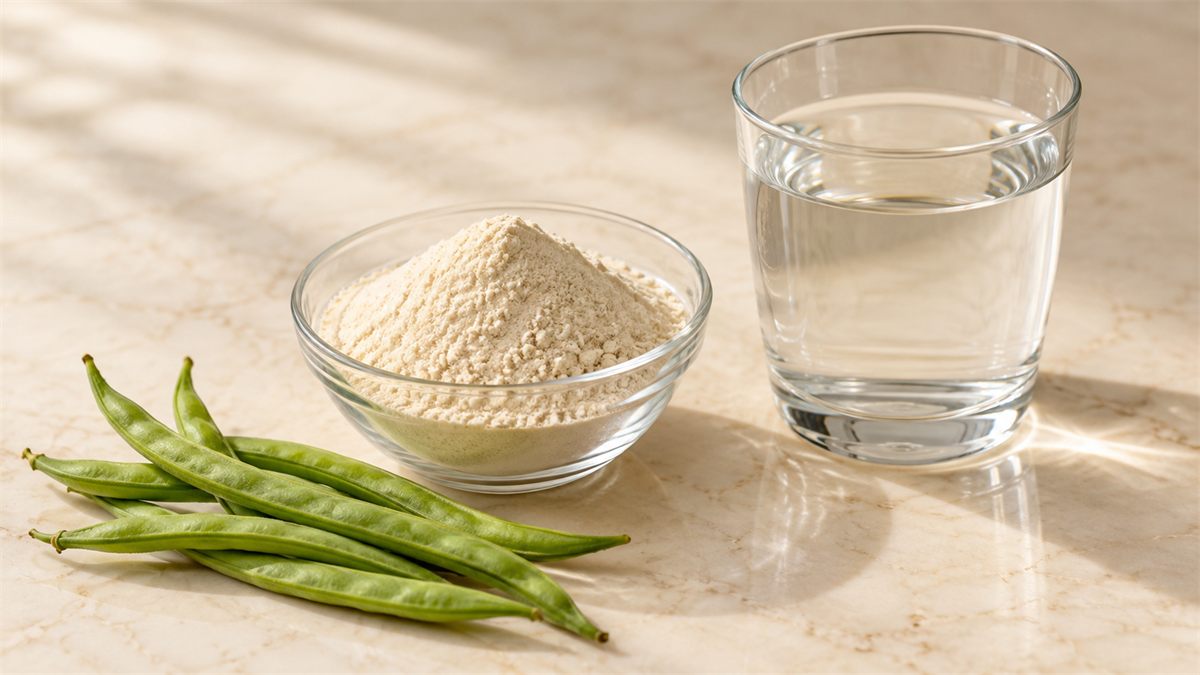
Partially hydrolysed guar gum (PHGG) is a water-soluble fibre made by partly breaking down guar gum, and its prebiotic effects have been studied in human trials, including these two small ones in healthy adults.
- PAGODA (2020): 20 healthy adults took 5 g of PHGG up to three times a day for three weeks. Stool frequency and consistency changed, microbial diversity shifted and butyrate and acetate rose; most effects faded after stopping (Reider et al., 2020).
- Yasukawa (2019): 44 healthy adults with frequent loose stools took PHGG for three months. Stool form moved towards normal versus placebo, frequency didn't change, and Bifidobacterium increased. The trial tested Sunfiber® PHGG and was funded by its maker; three authors are the maker's employees, and the funding companies had final approval of the manuscript (Yasukawa et al., 2019).
Small and short, and one was funded by the fibre's maker, but human trials all the same. For how PHGG compares with psyllium (isabgol), read PHGG vs psyllium.
Do you need a supplement?
Most people don't need one to start. Fibre-rich meals and fermented foods with live cultures come first; our guide on how to improve gut health covers the basics. Supplements have their clearest case in specific situations:
- During antibiotics (children): in a Cochrane review of 33 trials in 6,352 children, diarrhoea linked to antibiotics occurred in 8% of those given probiotics vs 19% of controls, with doses of 5 billion CFU a day or more looking more effective (Guo et al., 2019). Ask the prescribing doctor first.
- IBS: the NHS suggests trying probiotics for a month (NHS, IBS), but which strain helps is still unclear (Ford et al., 2018).
- Low-fibre diets: a fibre supplement can top up intake; it doesn't replace vegetables, dal and whole grains.
Who should be careful
Probiotics are generally safe for most people, but not for everyone. NCCIH says the risk of harm is greater in people with severe illnesses or compromised immune systems, and names premature infants and seriously ill hospital patients as high-risk. Severe or fatal infections have been reported in premature infants given probiotics, and the US FDA has warned health care providers about this risk (NCCIH, Probiotics). Theoretical risks described include systemic infections, excessive immune stimulation in susceptible people and gene transfer, and safety outcomes in trials are inconsistently reported (Doron & Snydman, 2015).
For everyone else, side effects tend to be mild: in the Cochrane review in children, adverse events were 4% with probiotics vs 6% with controls, most often rash, nausea, gas, bloating and constipation (Guo et al., 2019). With prebiotics, expect gas first (Bonnema 2010). If you have IBS, onions and beans can add to bloating (NHS, IBS); see how to reduce bloating. Pregnant, on regular medicines, or with a long-standing gut condition? Check with your doctor first.
Fibre and spores, one stick
SILT™ Mornings puts a prebiotic fibre and spore probiotics in one morning drink. Each 8.8 g stick has 5 g Sunfiber® PHGG, three spore-forming species (Bacillus subtilis, B. coagulans and B. clausii, 2 billion CFU each, 6 billion CFU in total) and 550 mg of digestive herb extracts (saunf, jeera, ajwain, amla).
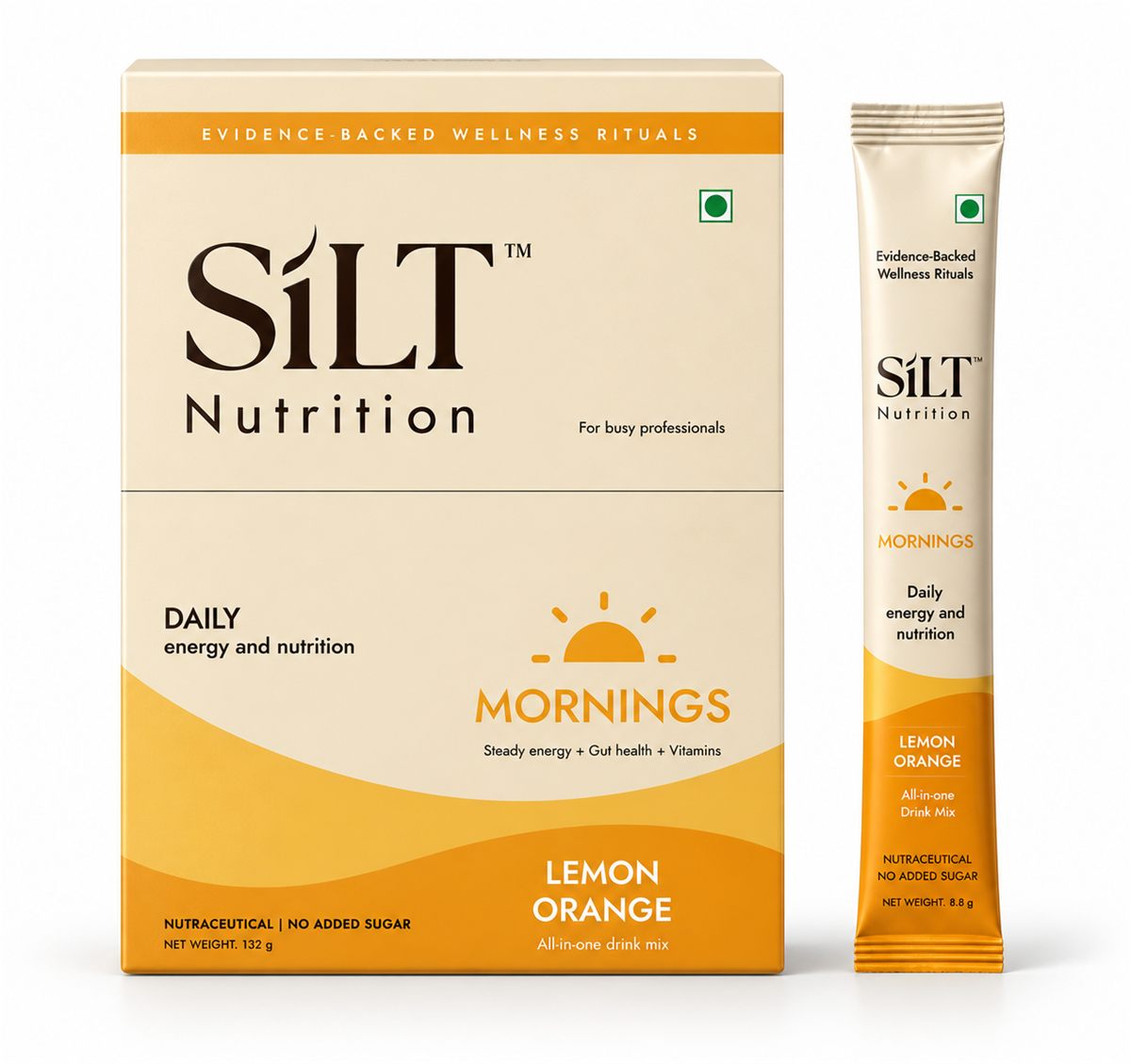
It also has 80 mg caffeine, 200 mg L-theanine, 1.4 g taurine and vitamins D3, K2 (menaquinone), C and B12 at 100% RDA, so it's a morning drink, not one for evenings or for anyone avoiding caffeine. We don't call it a synbiotic: ISAPP reserves that word for a mix shown to confer a benefit, and the finished drink hasn't been tested in a trial. Run this page's label checklist on the pack: it names the genus and species and the count (2 billion CFU each, 6 billion CFU in total), and it names the fibre with its grams (Sunfiber® PHGG, 5 g; the nutrition panel shows 4.95 g dietary fibre per stick, 16.5% of the ICMR 2020 adequate intake for men, and the PHGG supplier certificate reads 91.2% dietary fibre). It does not print strain codes, so strain-specific probiotic trial results can't be assumed to apply to it, and we make no strain-level claim (SILT pack; supplier certificate). Its Sunfiber® is the PHGG brand tested in the Yasukawa trial above, which Sunfiber's maker funded, and the trial results can't be assumed to apply to the drink either. The pack lists no added sugar, no maltodextrin and no gluten, and says it contains a natural sweetener (stevia) and natural colour. Stir one stick into 200-250 ml of room-temperature or cold water (not boiling: the pack says heat degrades sensitive actives), any time in the morning, one stick a day. Supplier certificates of analysis are on our science page; the vitamin blend certificate and a finished-product NABL lab report are pending. The pack says it contains caffeine; if you are pregnant or nursing, or sensitive to caffeine, check with your healthcare practitioner. If you have a liver or thyroid condition, are pregnant, or take regular medicines, check with your doctor first. If you take a blood thinner such as warfarin, ask your doctor before using SILT Mornings, because it contains vitamin K2 (55 mcg). More on the fibre on our fibre supplement page.
MRP ₹1,125 ₹900 · 15 sticks or ₹1,500 for 30 (MRP ₹2,250)
Live microbes, and their food
Probiotics are specific live strains with shown benefits; prebiotics are specific fibres your own microbes use. Curd with live cultures and everyday onions, garlic and bananas are a sensible start, and neither needs a label. If you want a measured dose of fibre, start with our fibre supplement guide. Evidence, not hype.
- Hill et al., 2014. ISAPP consensus statement on the term probiotic. Nat Rev Gastroenterol Hepatol. pubmed.ncbi.nlm.nih.gov/24912386
- Gibson et al., 2017. ISAPP consensus statement on prebiotics. Nat Rev Gastroenterol Hepatol. pubmed.ncbi.nlm.nih.gov/28611480
- Swanson et al., 2020. ISAPP consensus statement on synbiotics. Nat Rev Gastroenterol Hepatol. pubmed.ncbi.nlm.nih.gov/32826966
- Marco et al., 2021. ISAPP consensus statement on fermented foods. Nat Rev Gastroenterol Hepatol. pubmed.ncbi.nlm.nih.gov/33398112
- ISAPP. Prebiotics (resource page). isappscience.org
- Ford et al., 2018. Prebiotics, probiotics, synbiotics and antibiotics in IBS: meta-analysis. Aliment Pharmacol Ther. pubmed.ncbi.nlm.nih.gov/30294792
- Wu et al., 2024. Network meta-analysis in IBS. Nutrients. pubmed.ncbi.nlm.nih.gov/38999862
- Zheng et al., 2020. A taxonomic note on the genus Lactobacillus. Int J Syst Evol Microbiol. pubmed.ncbi.nlm.nih.gov/32293557
- Bonnema et al., 2010. Gastrointestinal tolerance of chicory inulin products. J Am Diet Assoc. pubmed.ncbi.nlm.nih.gov/20497775
- Casula & Cutting, 2002. Bacillus probiotics: spore germination in the gastrointestinal tract. Appl Environ Microbiol. pubmed.ncbi.nlm.nih.gov/11976107
- Cutting, 2011. Bacillus probiotics. Food Microbiol. pubmed.ncbi.nlm.nih.gov/21315976
- Acosta-Rodríguez-Bueno et al., 2022. Bacillus clausii for gastrointestinal disorders: narrative review. Adv Ther. pubmed.ncbi.nlm.nih.gov/36018495
- Reider et al., 2020. Partially hydrolyzed guar gum: the PAGODA trial. Nutrients. pubmed.ncbi.nlm.nih.gov/32354152
- Yasukawa et al., 2019. Partially hydrolyzed guar gum, fecal characteristics and gut microbiota: randomised trial. Nutrients. pubmed.ncbi.nlm.nih.gov/31509971
- Guo et al., 2019. Cochrane review: probiotics alongside antibiotics in children. Cochrane Database Syst Rev. pubmed.ncbi.nlm.nih.gov/31039287
- NHS. IBS: diet, lifestyle and medicines. nhs.uk/conditions/irritable-bowel-syndrome-ibs
- NCCIH. Probiotics: what you need to know. nccih.nih.gov/health/probiotics-what-you-need-to-know
- Doron & Snydman, 2015. Risk and safety of probiotics. Clin Infect Dis. pubmed.ncbi.nlm.nih.gov/25922398