


There's no single best ashwagandha brand in India, but there is a best label: the one that tells you what you're actually swallowing. Ashwagandha products differ in extract type, plant part, withanolide content, dose and price per day, and many Indian product pages don't state half of these. This guide gives you six things to check, maps each branded extract to the trial it was studied in, then reads eight labels you can buy in India as of October 2026. Disclosure: we make one of the eight, SILT™ Nights, and our ashwagandha supplement page explains why we chose KSM-66. Below, we say plainly where it fits and where a plain capsule is the better buy.
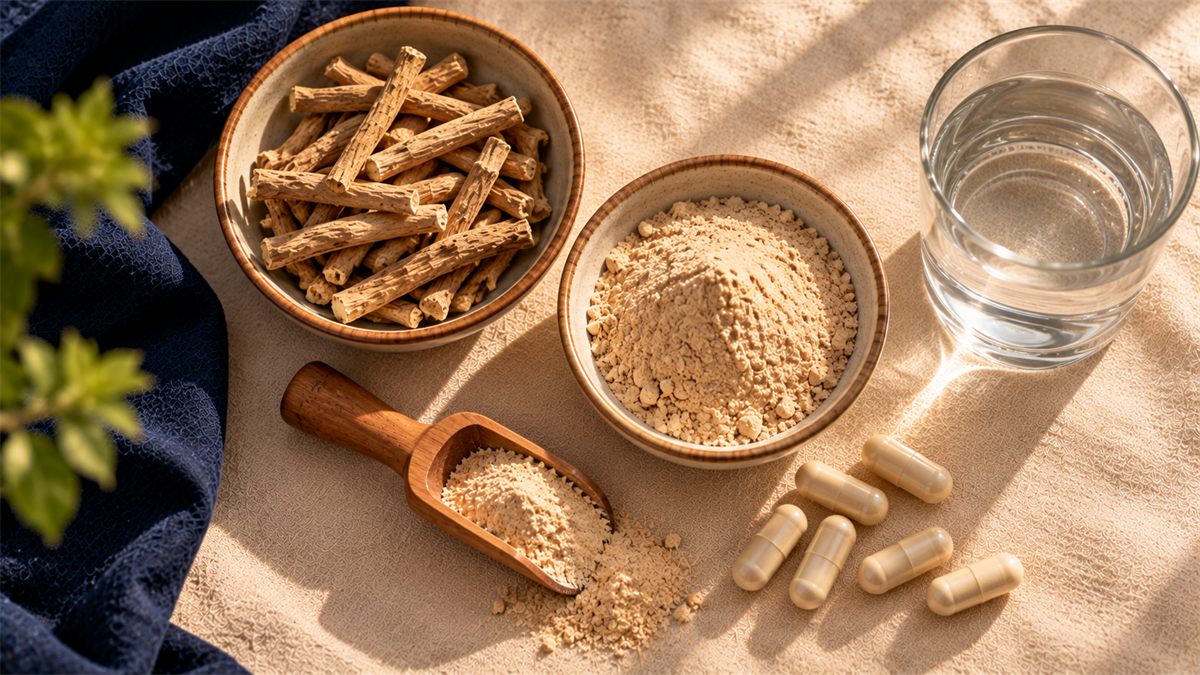
Which ashwagandha brand is best?
Pick the label, not the logo. On the sources cited below:
- You want the version most trials used: a root extract that names its extract (KSM-66, Sensoril or Shoden) and its withanolide content. Every stress trial we cite used one of these three.
- You want the cheapest daily ashwagandha: a plain tablet or capsule with a stated dose. The two cheapest tablets we read work out at about ₹7-9 a day on their own pages.
- You want churna (root powder): fine for traditional use, but the placebo-controlled trials below used extracts, not powder, so you can't match a spoonful to a trial.
- You're pregnant, breastfeeding, have a thyroid, liver or autoimmune condition, or have surgery coming up: skip it, or ask your doctor first (NCCIH).
How to pick the best ashwagandha supplement
The best ashwagandha supplement for you is the one whose label answers these six questions. If a page can't answer most of them, move on.
- Extract type. "Ashwagandha 500 mg" can mean dried root powder or a concentrated extract. Branded extracts (KSM-66, Sensoril, Shoden) are the ones with published human trials under their own names. An unnamed "root extract" may be good, but you can't tell which trial it resembles.
- Plant part. KSM-66 is made only from the root, with no leaves (Chandrasekhar et al., 2012). Sensoril is a water extract of root and leaf (Pandit et al., 2024). A label should say which.
- Withanolides, and how they were measured. Withanolides are the compounds extracts are standardised to. KSM-66 is standardised to at least 5% withanolides by HPLC (Chandrasekhar et al., 2012); Shoden to 35% withanolide glycosides (Lopresti et al., 2019). Those measure different things, so a bigger number on one label doesn't make it the stronger product.
- Dose per day, not per capsule. Multiply by the label's directions. "One tablet twice daily" doubles the number on the front.
- Testing. Ask for a certificate of analysis (CoA) that shows the withanolide result for the batch, plus heavy metals and microbes. "Lab tested" without a document is a claim, not proof.
- Price per day. Divide the pack price by the days it lasts at the label dose. We've done it in the table below.
For how dose ranges and timing compare across trials, see our ashwagandha dosage guide.
KSM-66, Sensoril, Shoden or churna?
Most Indian labels fall into one of four types. The branded extracts each have their own trials, mostly small, mostly in India, and mostly supported by the extract's maker. That doesn't make them wrong, but you should know it.
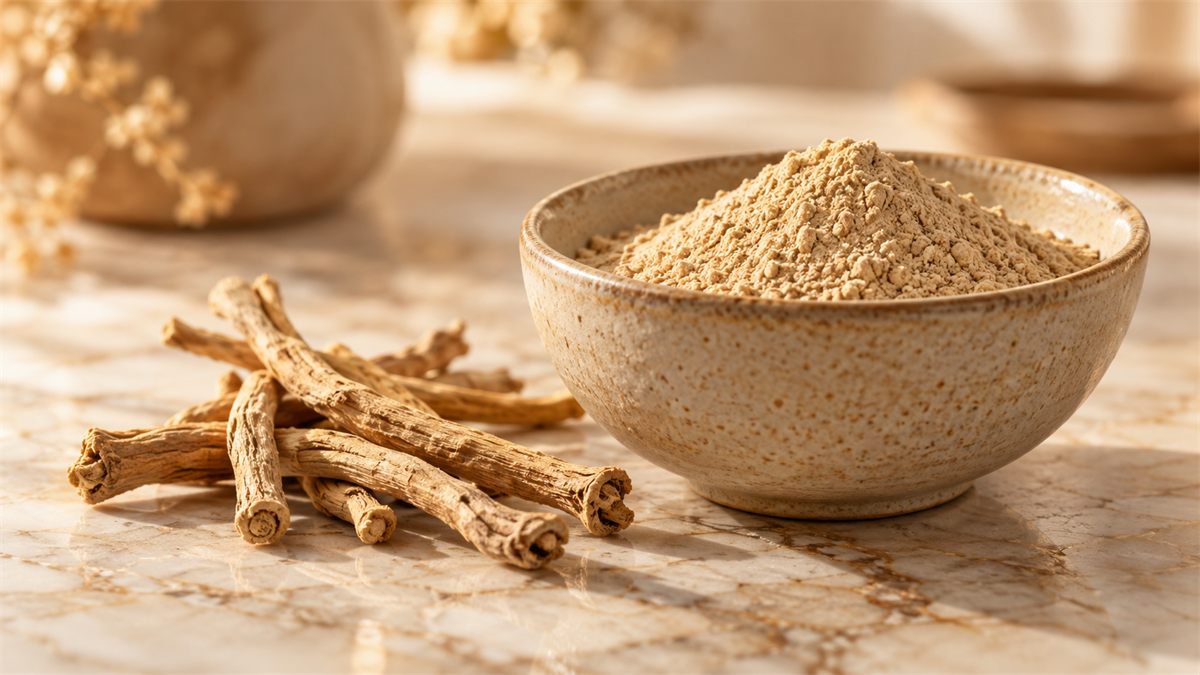
| Type | Plant part | Standardised to | A trial it was studied in | Who supported the trial |
|---|---|---|---|---|
| KSM-66 | Root only | ≥5% withanolides (HPLC) | 64 adults with chronic stress, 300 mg twice daily for 60 days: lower stress-scale scores and serum cortisol than placebo (Chandrasekhar et al., 2012) | Extract provided by its maker; "Source of Support: Nil"; no conflicts declared |
| Sensoril | Root and leaf (water extract) | Ten marker compounds at 0.4-1% each | 131 adults with self-reported high stress (98 analysed), 125, 250 or 500 mg/day for 8 weeks: lower stress scores at all three doses (Pandit et al., 2024) | Funded by the extract's maker |
| Shoden | Root (as described in the trial) | 35% withanolide glycosides | 60 adults with self-reported high stress, 240 mg once daily for 60 days: lower anxiety (HAM-A) scores than placebo; the DASS-21 difference wasn't significant (Lopresti et al., 2019) | Funded by the extract's maker |
| Churna (root powder) | Root | Usually not stated | None of the placebo-controlled trials cited on this page | - |
Two more notes. First, the KSM-66 trial by Salve and colleagues gave 60 adults with high perceived stress 125 mg or 300 mg twice daily for 8 weeks; both groups had lower stress scores and cortisol than placebo, and better sleep quality. The KSM-66 maker manufactured and gifted the extract; the authors declared no competing interests (Salve et al., 2019). Second, nobody has tested these extracts against each other: a PubMed search on 8 October 2026 for KSM-66 together with Sensoril or Shoden returned no records. So "the best extract" isn't something the evidence can answer yet.
Name the extract, or it's just a powder with a price.
What the trials show, and don't
Pooled, the trials point the same way but aren't strong. A 2022 meta-analysis of 12 randomised trials (1,002 participants aged 25-48) found lower anxiety and stress scores with ashwagandha than placebo, and rated the certainty of that evidence as low (Akhgarjand et al., 2022). A 2026 dose-response meta-analysis of 22 trials reached a similar conclusion and called for better-designed trials to settle doses and durations (Alsanie et al., 2026).
For sleep, a 2021 meta-analysis of 5 trials (400 adults) found a small but significant effect on overall sleep. The effect was larger in people diagnosed with insomnia, at 600 mg a day or more, and over 8 weeks or more. The authors note that data on serious side effects are limited (Cheah et al., 2021). We cover those trials in ashwagandha for sleep.
What this means for buying: a brand can say its ingredient was studied. It can't honestly say its product reproduces a trial result unless it ran that trial. Read any "X% less stress" line on a product page as the extract maker's trial result, not a promise.
Best ashwagandha supplement in India: the labels
We read eight labels on the brands' own pages on 8 October 2026. "As stated" means what the page says; "price per day" is our maths from the listed price and the label's directions. Prices change often, so check before you buy. Where a page didn't state something, we say so.
| Product type (as of October 2026) | Form and type | Ashwagandha per unit, as stated | Withanolides stated | Directions on the page | Listed price (brand page) | Price per day |
|---|---|---|---|---|---|---|
| Root-extract tablet, 250 mg | Tablet; root extract (extract not named) | 250 mg root extract | Not stated | 1 tablet twice daily | ₹260 for 60 (₹480 for 120) | About ₹8.70 (₹8 with the 120 pack) |
| Ashwagandha tablet, dose not stated | Tablet; form not stated ("as mentioned on the pack") | Not stated | Not stated | 1 tablet twice daily | ₹220 for 60 (MRP ₹223) | About ₹7.30 |
| Whole-root powder capsule | Capsule; whole sun-dried root (powder, not an extract) | Not stated in the page text | Not stated | Not stated in the page text | ₹225 for 60 (MRP ₹265) | ₹3.75 a capsule |
| Extract capsule, 500 mg | Capsule; "pure extracts" (extract not named) | 500 mg (product name) | Not stated | 1 capsule twice daily | ₹399 for 90 (MRP ₹655) | About ₹8.90 |
| KSM-66 tablet, 600 mg | Tablet; KSM-66 root extract | 600 mg | Not stated | Not stated in the page text | ₹615 for 60 (MRP ₹1,225) | ₹10.25 a tablet |
| KSM-66 oral strip | Oral strip; KSM-66 | Not stated per strip | 5% | 2 strips a day (FAQ; "1-2" elsewhere on the page) | ₹649 for 30 strips | About ₹43 (₹22 at one strip) |
| Organic root powder, 100 g | Root powder (churna-style), certified organic | Not applicable | Not stated | Not stated in the page text | ₹199 for 100 g (MRP ₹305) | ₹1.99 a gram |
| SILT Nights | Drink mix; KSM-66 root extract plus three other actives | 300 mg KSM-66 per stick | 5.3% on the supplier certificate (spec ≥5%) | 1 stick a day, 30-60 minutes before bed | ₹900 for 15 (MRP ₹1,125) or ₹1,500 for 30 (MRP ₹2,250) | ₹60 or ₹50 a stick |
How to read this table: if you want ashwagandha and nothing else, the two plain tablets cost a fraction of anything else per day, and the 250 mg root-extract tablet states its dose; the other tablet's page doesn't. Only two of the seven non-SILT pages name KSM-66, and only one states a withanolide figure. The whole-root capsule and organic powder pages leave you to find the dose on the pack. SILT Nights costs the most per day because you're also paying for glycine, magnesium and L-theanine, so judge it as a sleep drink, not as ashwagandha.
Is ashwagandha safe?
For most adults, short-term use looks reasonable; for some people, it doesn't. The US National Center for Complementary and Integrative Health (NCCIH) says ashwagandha may be safe for up to 3 months, and that long-term safety isn't known. Reported side effects include drowsiness, stomach upset, diarrhoea and vomiting (NCCIH).
Who should avoid it or ask a doctor first. NCCIH says to avoid it in pregnancy and not to use it while breastfeeding. It isn't recommended before surgery, or for people with autoimmune or thyroid disorders or hormone-sensitive prostate cancer. It may interact with medicines for diabetes and blood pressure, immunosuppressants, sedatives, anticonvulsants and thyroid hormone (NCCIH).
Liver injury is rare but real.
- A case series described 5 people (3 in Iceland, 2 from the US Drug-Induced Liver Injury Network) who developed jaundice 2-12 weeks after starting ashwagandha supplements. None had liver failure, and liver tests returned to normal within 1-5 months in four; four of the five were also taking other supplements. The authors declared no conflicts (Björnsson et al., 2020).
- An Indian multi-centre series found 23 patients with ashwagandha-related liver injury between 2019 and 2022 and reported 8 who took single-ingredient products. Five of the eight had existing chronic liver disease; 3 developed acute-on-chronic liver failure and died. The authors declared no conflicts (Philips et al., 2023).
If you notice yellow eyes or skin, dark urine, itching or nausea, stop and see a doctor.
Regulators are looking. The UK Food Standards Agency ran a call for evidence on ashwagandha supplements in 2024 and passed the 19 responses to its Committee on Toxicity for a risk assessment, with the outcome to be published (UK FSA, 2026). In Denmark, the Veterinary and Food Administration says it is illegal to sell products containing ashwagandha, following a risk assessment by the Technical University of Denmark (Fødevarestyrelsen).
Our full guide to ashwagandha side effects covers interactions in more detail. If you take regular medicines, talk to your doctor before starting any ashwagandha product.
Where SILT Nights fits
SILT Nights isn't a standalone ashwagandha supplement, and it isn't the best overall pick for someone who only wants ashwagandha. It's a bedtime drink mix with four actives, one of which is 300 mg of KSM-66 ashwagandha root extract. If ashwagandha alone is what you're after, a plain tablet costs a fraction of the price.
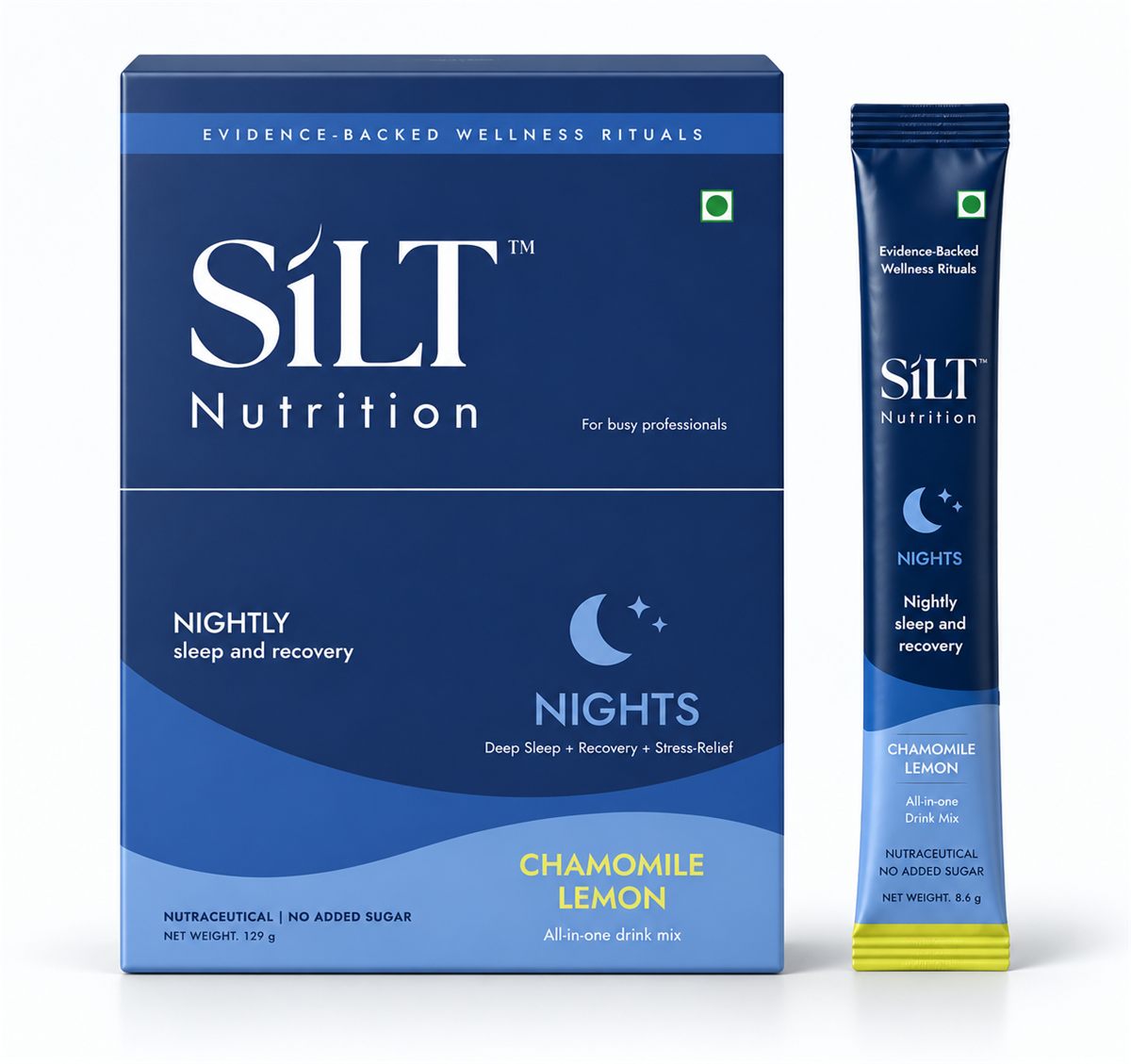
Each 8.6 g Chamomile Lemon stick has 3 g glycine, 1.8 g magnesium bisglycinate (250 mg elemental magnesium), 300 mg KSM-66 ashwagandha root extract and 200 mg L-theanine. There's no melatonin, no caffeine and no maltodextrin, it's sweetened with stevia (steviol glycosides) with no added sugar, and the chamomile is flavour only. The full ingredient list also names the taste and processing ingredients, none of them actives: natural flavouring, citric and malic acid, cumin powder, black salt, iodised salt and silicon dioxide as an anti-caking agent (SILT pack). KSM-66 has been studied on its own in the trials above; we don't claim a stick reproduces any of their results. If you're comparing it with other sleep products, see our best sleep supplements in India guide.
Testing. Every ingredient has a supplier certificate of analysis (13 ingredients, 198 checks, none failed). The KSM-66 supplier certificate (ingredient batch KSM/VG/FG/25/1011, made January 2025, expiry December 2027) lists the plant part as roots and shows 5.3% withanolides against a specification of at least 5%. That is the document behind check 5 above. The finished-drink NABL lab test is pending, and we'll publish it when it's ready. The certificates are on our science page. SILT is FSSAI compliant (FSSAI Lic. No. 12826999000631), vegetarian and made in India, and the stick is made by I Dreamz Health Care in Harohalli, Karnataka (FSSAI Lic. No. 11216325000322).
Who should check first. If you have a liver or thyroid condition, are pregnant, or take regular medicines, check with your doctor before using it. The pack adds its own words: not for medicinal use, not intended to treat, cure or prevent any disease, and not a substitute for a varied diet; if you're pregnant or nursing, taking any medications or have any medical conditions, contact your healthcare practitioner.
Directions on the pack: 1 stick per day, and do not exceed the recommended usage level. Mix it into 200-250 ml of lukewarm or cold water and stir; do not use boiling water, because heat degrades sensitive actives. Taking it 30 to 60 minutes before bed is the window we recommend, not a pack direction.
MRP ₹1,125 ₹900 · 15 sticks or ₹1,500 for 30 (MRP ₹2,250)
So, which ashwagandha should you buy?
Buy the label that answers the six checks. Want ashwagandha alone, cheaply: a tablet with a stated dose, such as the 250 mg root-extract tablet in our table. Want the extract most of the trials used: one that names KSM-66, Sensoril or Shoden and states its withanolides. Want churna: buy it for tradition, not to match a trial. Pregnant, breastfeeding, or living with a thyroid, liver or autoimmune condition: ask your doctor first. If you want KSM-66 inside a bedtime drink with glycine, magnesium and L-theanine, that's what we built SILT Nights for. Our ashwagandha supplement page has the full KSM-66 case. Evidence, not hype.
MRP ₹1,125 ₹900 · 15 sticks or ₹1,500 for 30 (MRP ₹2,250)
SILT is for everyday energy, gut and sleep. It doesn't treat medical conditions. For those, or if you're pregnant or on medication, talk to your doctor.
- NCCIH. Ashwagandha (last updated March 2023). nccih.nih.gov/health/ashwagandha
- Chandrasekhar et al., 2012. Indian J Psychol Med. pubmed.ncbi.nlm.nih.gov/23439798
- Pandit et al., 2024. Nutrients. pubmed.ncbi.nlm.nih.gov/38732539
- Lopresti et al., 2019. Medicine (Baltimore). pubmed.ncbi.nlm.nih.gov/31517876
- Salve et al., 2019. Cureus. pubmed.ncbi.nlm.nih.gov/32021735
- Akhgarjand et al., 2022. Phytother Res. pubmed.ncbi.nlm.nih.gov/36017529
- Alsanie et al., 2026. Complement Ther Med. pubmed.ncbi.nlm.nih.gov/41644067
- Cheah et al., 2021. PLoS One. pubmed.ncbi.nlm.nih.gov/34559859
- Björnsson et al., 2020. Liver Int. pubmed.ncbi.nlm.nih.gov/31991029
- Philips et al., 2023. Hepatol Commun. pubmed.ncbi.nlm.nih.gov/37756041
- UK Food Standards Agency. Summary of responses to call for evidence on ashwagandha (published 25 June 2026). gov.uk
- Danish Veterinary and Food Administration (Fødevarestyrelsen). Ashwagandha i kosttilskud og drikkevarer. foedevarestyrelsen.dk
- Product labels and prices: each maker's own product page, opened 8 October 2026.