


Ashwagandha for sleep has more human evidence than most herbs, but less than the marketing suggests. Pooled randomised trials find a small but significant improvement in sleep, larger in adults with insomnia and in studies lasting eight weeks or more. Most trials are small, were run in India, tested standardised root extracts in capsules, and used extract supplied by its maker. Below: each sleep trial with its dose, population and funding, what the meta-analyses say, timing, how it compares with melatonin and magnesium, and who should skip it. Disclosure: we make a bedtime drink that contains ashwagandha and keep it to one short section near the end; our ashwagandha supplement page covers the product side.
Does ashwagandha help you sleep?
Probably a little, for some people, after weeks rather than on the first night. It is not a sleeping pill.
The best summary is a 2021 meta-analysis of five randomised, placebo-controlled trials with 400 adults. Ashwagandha extract had a small but significant effect on overall sleep, which the authors rated as moderate-quality evidence. The effect was clearer in adults diagnosed with insomnia, at 600 mg a day or more, and in trials of eight weeks or longer. No serious side effects were reported, but the authors say safety data are too limited to judge long-term use. The review was unfunded and its authors declared no competing interests (Cheah et al., 2021).
Two caveats run through everything below. The trials tested specific extracts, mostly one branded root extract (KSM-66), so results don't automatically carry over to other ashwagandha products. And the placebo groups improved too, which is common in sleep studies: in one trial, time to fall asleep shortened on both ashwagandha and placebo, just more on ashwagandha (Langade et al., 2019).
Ashwagandha sleep trials, one by one
These are the randomised human sleep trials we found in a PubMed search on 8 October 2026, plus one Ayurvedic trial of plain root powder. "Maker tie" means the extract's manufacturer supplied or funded it; that doesn't make a result wrong, but you should know it.
| Trial | Who | Extract and dose | Length | Sleep result | Funding and maker tie |
|---|---|---|---|---|---|
| Langade 2019 | 60 adults with insomnia and anxiety, Maharashtra (58 analysed) | KSM-66 root extract, 300 mg twice a day | 10 weeks | Fell asleep in 29.0 vs 33.9 min on placebo (wrist actigraphy); better sleep efficiency and sleep quality | Extract supplied by its maker; no competing interests declared |
| Langade 2021 | 80 adults: 40 with insomnia, 40 without | KSM-66 root extract, 600 mg a day (per the Cheah 2021 study table) | 8 weeks | Faster sleep onset and better sleep efficiency; bigger gains in the insomnia group | Abstract has no funding or conflict statement; we couldn't open the full text |
| Deshpande 2020 | 150 adults with unrefreshing sleep and no diagnosed illness (144 completed) | Shoden root-and-leaf extract, 120 mg once a day | 6 weeks | Self-rated sleep quality up 72% vs 29% on placebo; better actigraphy measures | Grant listed from Shoden's maker (Europe PMC record) |
| Salve 2019 | 60 stressed adults (58 completed); stress was the main outcome | KSM-66, 125 mg or 300 mg twice a day | 8 weeks | Sleep quality better than placebo on a 7-point scale | Extract made and gifted by KSM-66's maker; no competing interests declared |
| Kelgane 2020 | 50 adults aged 65-80 | KSM-66, 300 mg twice a day | 12 weeks | Better self-rated sleep quality and morning alertness | Extract a gift sample from KSM-66's maker; no competing interests declared |
| Movva 2026 | 200 adults aged 18-50 with sleep disturbance (DSM-5 criteria) | KSM-66, 300 mg twice a day; vs melatonin 3 mg; vs both; vs placebo | 8 weeks | See the melatonin comparison below | Extract obtained from KSM-66's maker; no external funding or conflicts declared |
| Atul 2020 | 60 men over 60 with primary insomnia | Root powder (churna) alone vs powder plus medicated nasal oil | 30 days | Both groups improved; open-label, no placebo group | No conflicts declared |
Sources: Langade 2019; Langade 2021; Deshpande 2020; Salve 2019; Kelgane 2020; Movva 2026; Atul 2020.
How to read the pattern
- Small and local. Each trial had 50 to 200 people, and all seven were run in India.
- One extract dominates. Five of the seven used KSM-66, and in every KSM-66 trial whose full text we could open, the extract came from its maker.
- One research group. D. Langade and J. Salve each co-authored four of these seven trials. Independent replication would make the evidence stronger.
- Churna is barely tested. The only plain root powder trial we found had no placebo group and was open-label, so it can't tell you whether the powder itself helped.
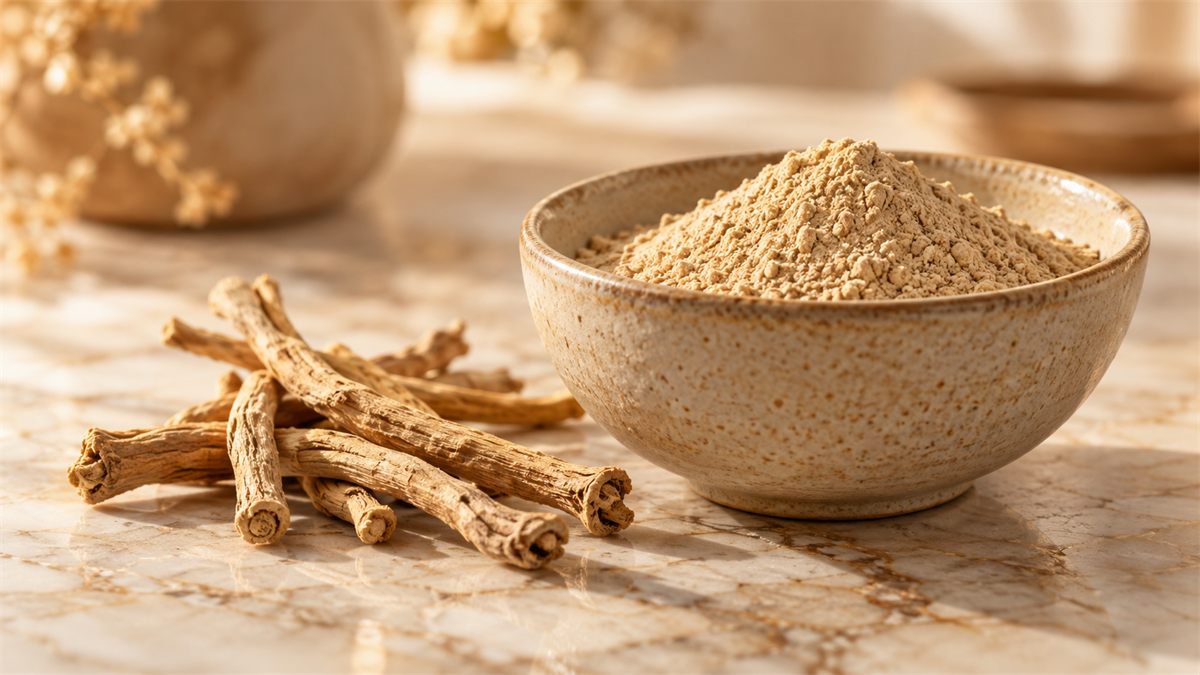
What the meta-analyses say
Three newer reviews broadly agree with Cheah 2021: a real but modest signal, built on small and varied trials.
- Anxiety and insomnia, 2024. Pooling five trials (254 people with anxiety, insomnia or both), ashwagandha improved time to fall asleep, total sleep time, sleep efficiency and sleep-quality scores, but not time awake during the night or time in bed. The authors call for larger trials. The abstract carries no funding or conflict statement (Fatima et al., 2024).
- Diagnosed mental-health conditions, 2025. Across 14 trials, mostly in anxiety disorders (median 600 mg a day for 8 weeks), sleep-quality scores improved more than with comparators. The authors say ashwagandha's role in insomnia still needs clarifying, and declared no conflicts (Marchi et al., 2025).
- Ayurvedic herbs, 2026. A review of 49 controlled studies found the most evidence for ashwagandha on stress and sleep, but limited confidence in how big the effect is, because of heterogeneity, small-study effects and patchy reporting (Baune et al., 2026).
We found no Cochrane review of ashwagandha (PubMed search, 8 October 2026). Our read: ashwagandha has the most consistent sleep data of the popular Ayurvedic herbs, at a moderate level of certainty, and the stress angle may be part of how it helps. For that side, read ashwagandha for stress and cortisol, and for the wider picture, ashwagandha benefits.
Weeks, not a night.
When to take ashwagandha for sleep
No trial has compared morning with night dosing for sleep; a PubMed search on 8 October 2026 found none. Most sleep trials split the dose: twice a day with milk or water (Langade et al., 2019), twice a day with water (Kelgane et al., 2020), or after breakfast and after dinner (Movva et al., 2026). One trial used a single daily dose (Deshpande et al., 2020).
What matters more is consistency over weeks. In the 2026 trial, time to fall asleep had dropped by week four and dropped further by week eight (Movva et al., 2026). In the 2021 meta-analysis, effects were larger in trials of eight weeks or more (Cheah et al., 2021).
Our practical suggestion, not a trial finding: pick a time you'll stick to, and give it six to eight weeks before judging. Drowsiness is a listed side effect (NCCIH), so if it makes you sleepy, take it in the evening, and don't combine it with sedatives. For dose ranges and the extract-versus-churna question, see our ashwagandha dosage guide.
Ashwagandha vs melatonin vs magnesium
Melatonin has the most trials, magnesium has one modest recent trial, and ashwagandha sits in between but takes weeks. They work in different ways, and only one trial has tested any two of them head to head. Choosing between magnesium and ashwagandha? We compare them in ashwagandha vs magnesium glycinate.
| Ashwagandha root extract | Melatonin | Magnesium (bisglycinate) | |
|---|---|---|---|
| What it is | Ayurvedic herb, studied as an adaptogen | A hormone the body makes | A mineral |
| Best human evidence | Meta-analysis of 5 trials, 400 adults | Meta-analysis of 19 trials, 1,683 people with primary sleep disorders | One trial, 155 adults with poor sleep |
| What it changed | Overall sleep: small but significant | Fell asleep about 7 min faster; slept about 8 min longer | Insomnia score fell 3.9 vs 2.3 points: a small effect |
| Time frame | Weeks; larger effects at 8+ weeks | Taken nightly; effects held with continued use | Measured over 4 weeks |
| Guideline view | Not rated by the AASM insomnia guideline | AASM suggests not using it for chronic insomnia (weak) | Not rated by the AASM insomnia guideline |
| Main cautions | Pregnancy, liver, thyroid, autoimmune, sedatives | See our melatonin safety guide | See our magnesium for sleep guide |
Melatonin. In 19 trials of people with primary sleep disorders, melatonin shortened the time to fall asleep by about 7 minutes and added about 8 minutes of sleep: modest, but the benefit didn't fade with continued use. One author's work was partly funded by a drug company's research awards (Ferracioli-Oda et al., 2013). The American Academy of Sleep Medicine suggests clinicians not use melatonin for chronic insomnia, a weak recommendation; ashwagandha isn't among the agents it rates (Sateia et al., 2017). More in is melatonin safe every night?
Head to head. The only direct comparison we found randomised 200 adults with sleep disturbance to ashwagandha root extract, melatonin 3 mg, both, or placebo for eight weeks. By week eight, time to fall asleep fell by 14.6 minutes on ashwagandha, 16.4 on melatonin, 20.9 on both and 7.2 on placebo. The authors describe ashwagandha and melatonin alone as comparable, with the combination best. It's one trial, from the same research group as most KSM-66 sleep trials (Movva et al., 2026).
Magnesium. In 155 adults reporting poor sleep, 250 mg a day of elemental magnesium as bisglycinate, taken 30-60 minutes before bed, lowered insomnia scores slightly more than placebo over four weeks (3.9 vs 2.3 points; a small effect). One author runs a contract research firm funded by nutraceutical companies (Schuster et al., 2025). We found no trial comparing ashwagandha with magnesium directly (PubMed search, 8 October 2026). For more, see magnesium for sleep, magnesium vs melatonin, and our ranking of the best sleep supplements in India.
Who should skip ashwagandha
Ashwagandha may be safe in the short term, up to about three months; there isn't enough information on long-term safety (NCCIH). According to NCCIH:
- Side effects can include drowsiness, stomach upset, diarrhoea and vomiting.
- Avoid it in pregnancy, while breastfeeding, and with hormone-sensitive prostate cancer. It's not recommended if you have an autoimmune or thyroid disorder.
- Medicines: it may interact with drugs for diabetes and high blood pressure, immunosuppressants, sedatives, anticonvulsants and thyroid hormone.
Liver injury is rare but documented. In five cases from Iceland and the US, jaundice and itching appeared 2-12 weeks after starting, and liver tests returned to normal within 1-5 months in four (Björnsson et al., 2020). An Indian series described eight people injured by single-ingredient ashwagandha products; three of them already had liver disease, developed liver failure and died (Philips et al., 2023). A 2026 review counted 25 published patients, including one liver transplant and three deaths in people with cirrhosis (McIntyre et al., 2026). If you have liver disease, avoid it. If you notice yellow skin or eyes, itching or nausea while taking it, stop and see a doctor.
Regulators differ. Denmark's food authority says it is illegal to sell products containing ashwagandha there, citing a Danish Technical University risk assessment of effects on sex hormones and reproduction (Fødevarestyrelsen). Our ashwagandha side effects guide covers all of this in depth.
When it's a doctor, not a supplement. The NHS advises seeing a GP if changing your sleep habits hasn't helped, if you've had trouble sleeping for months, or if it's affecting daily life; insomnia lasting three months or more counts as long-term, and a GP may offer cognitive behavioural therapy (NHS, Insomnia).
A wind-down drink, not a sleeping pill
SILT™ Nights is a bedtime drink that includes ashwagandha among four actives. It's built for the wind-down routine, not as a replacement for one.
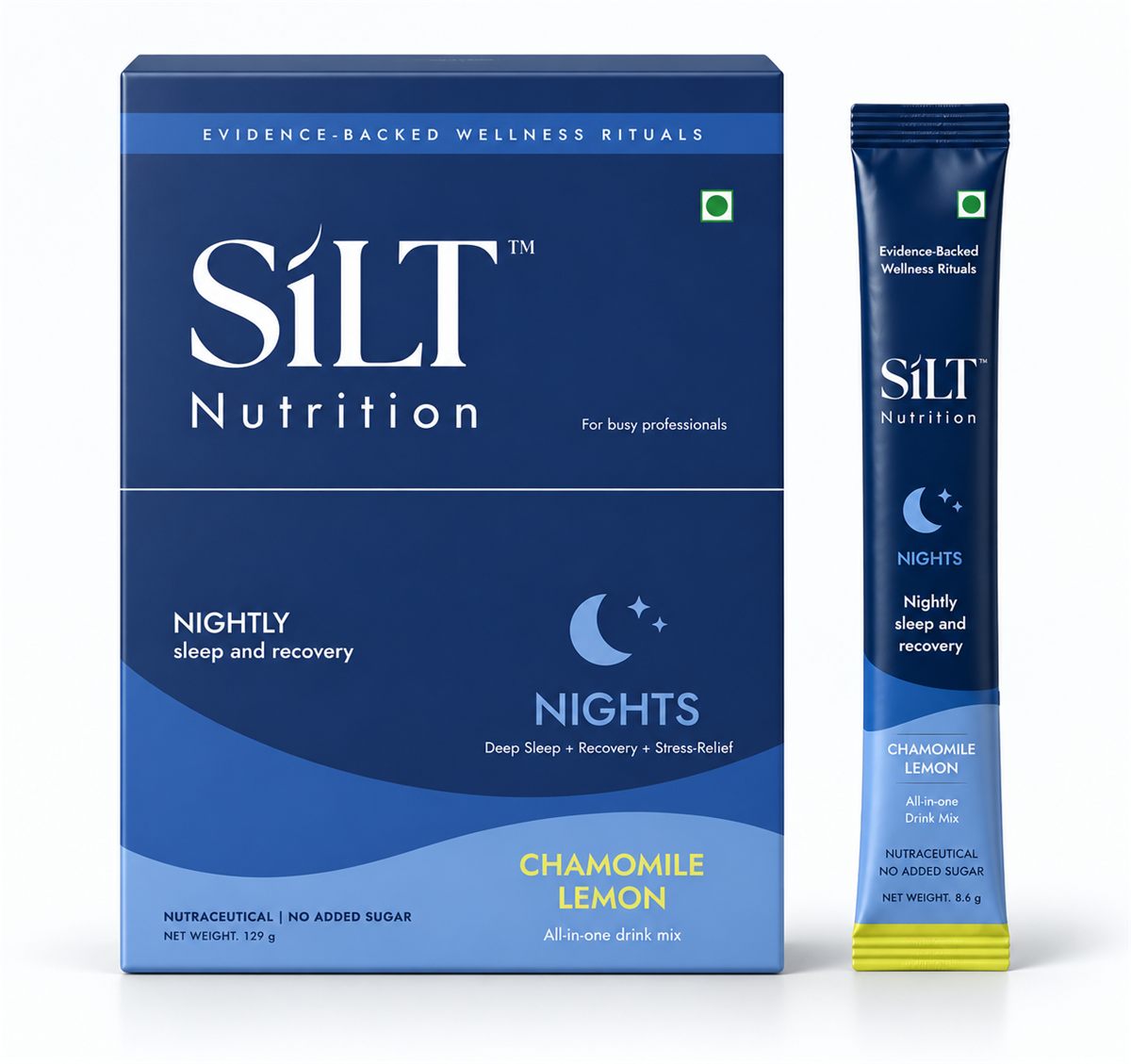
Each 8.6 g stick has 300 mg KSM-66® ashwagandha root extract, 1.8 g magnesium bisglycinate (250 mg elemental magnesium), 3 g glycine and 200 mg L-theanine; every dose is printed on the back of the pack. The pack's free-from line reads no added sugar, no maltodextrin and no melatonin, and there's no caffeine; Chamomile Lemon is the flavour. Directions on the pack: 1 stick per day, not to exceed the recommended usage level, stirred into 200-250 ml of lukewarm or cold water; do not use boiling water, because heat degrades sensitive actives. The window we recommend is 30 to 60 minutes before bed. The pack also says "For best results, use consistently for at least 3 months." Read that as advice about consistency, not a promised result: the trials above ran from 30 days to 12 weeks, and NCCIH's short-term window is about 3 months.
The honest limits: the trials above tested ashwagandha on its own, in capsules. That KSM-66 has been studied doesn't mean a drink combining it with three other actives reproduces any trial result, and we don't claim it does. Everything in the safety panel above applies to Nights too: if you have a liver or thyroid condition, are pregnant, or take regular medicines, check with your doctor first; the pack adds that it is not for medicinal use and not intended to treat, cure or prevent any disease. Every ingredient comes with a supplier certificate of analysis (the KSM-66 certificate lists the plant part as roots and shows 5.3% withanolides against a minimum of 5%; the glycine certificate shows 99.4% purity to a USP pharma-grade standard), listed on our science page; a finished-product NABL lab report is pending, and we'll publish it when it's ready. More on the extract on our ashwagandha supplement page.
MRP ₹1,125 ₹900 · 15 sticks or ₹1,500 for 30 (MRP ₹2,250)
That's ₹60 a stick, or ₹50 in the 30-stick pack.
Shop SILT NightsSlow help, not a knockout
Ashwagandha root extract has a small set of Indian, mostly maker-supplied trials showing a modest improvement in sleep, clearer in people with insomnia and after eight weeks or more. It isn't for everyone: skip it if you're pregnant or breastfeeding, have liver, thyroid or autoimmune disease, or take sedatives. Habits come first; our guide to how to sleep fast covers them. If you want to try ashwagandha, our ashwagandha supplement page explains what to look for. Evidence, not hype.
- Cheah et al., 2021. Effect of ashwagandha extract on sleep: systematic review and meta-analysis. PLoS One. pubmed.ncbi.nlm.nih.gov/34559859
- Langade et al., 2019. Ashwagandha root extract in insomnia and anxiety. Cureus. pubmed.ncbi.nlm.nih.gov/31728244
- Langade et al., 2021. J Ethnopharmacol. pubmed.ncbi.nlm.nih.gov/32818573
- Deshpande et al., 2020. Sleep Med. pubmed.ncbi.nlm.nih.gov/32540634
- Salve et al., 2019. Cureus. pubmed.ncbi.nlm.nih.gov/32021735
- Kelgane et al., 2020. Cureus. pubmed.ncbi.nlm.nih.gov/32226684
- Movva et al., 2026. Ashwagandha root extract and melatonin for sleep quality. Clocks Sleep. pubmed.ncbi.nlm.nih.gov/42029558
- Atul et al., 2020. Ayu. pubmed.ncbi.nlm.nih.gov/35370376
- Fatima et al., 2024. Hum Psychopharmacol. pubmed.ncbi.nlm.nih.gov/39083548
- Marchi et al., 2025. BJPsych Open. pubmed.ncbi.nlm.nih.gov/41140145
- Baune et al., 2026. J Integr Complement Med. pubmed.ncbi.nlm.nih.gov/42359794
- Ferracioli-Oda et al., 2013. Meta-analysis: melatonin for primary sleep disorders. PLoS One. pubmed.ncbi.nlm.nih.gov/23691095
- Sateia et al., 2017. AASM guideline: pharmacologic treatment of chronic insomnia in adults. J Clin Sleep Med. pubmed.ncbi.nlm.nih.gov/27998379
- Schuster et al., 2025. Magnesium bisglycinate in adults reporting poor sleep. Nat Sci Sleep. pubmed.ncbi.nlm.nih.gov/40918053
- NCCIH. Ashwagandha. nccih.nih.gov/health/ashwagandha
- Björnsson et al., 2020. Liver Int. pubmed.ncbi.nlm.nih.gov/31991029
- Philips et al., 2023. Hepatol Commun. pubmed.ncbi.nlm.nih.gov/37756041
- McIntyre et al., 2026. Cureus. pubmed.ncbi.nlm.nih.gov/42367407
- Fødevarestyrelsen (Danish Veterinary and Food Administration). Ashwagandha i kosttilskud og drikkevarer. foedevarestyrelsen.dk
- NHS. Insomnia. nhs.uk/conditions/insomnia
- PubMed searches, 8 October 2026: ashwagandha sleep RCTs (15), timing terms (4, none comparing dosing times), Cochrane reviews (0), magnesium (1, no head-to-head trial). pubmed.ncbi.nlm.nih.gov