


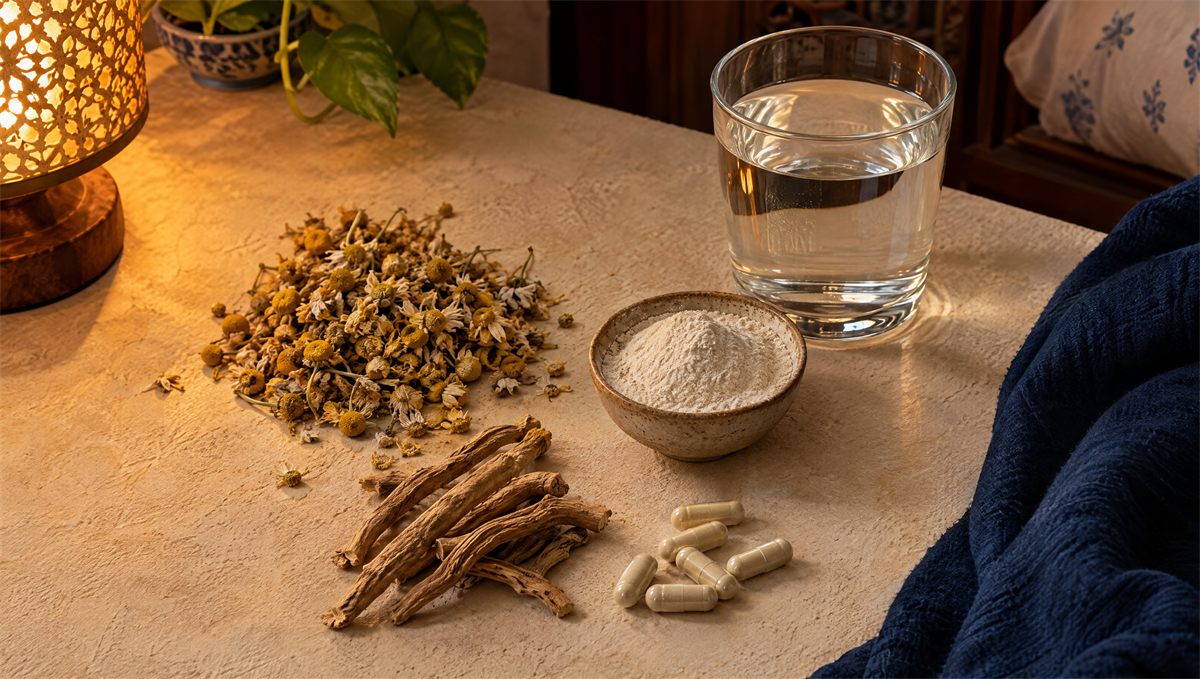
Magnesium glycinate vs ashwagandha is a choice between a mineral and a herb, and they aren't interchangeable. Ashwagandha root extract has been studied mostly for stress and stress-linked sleep. Magnesium glycinate is a dietary mineral with small, inconsistent sleep trials. No trial has compared the two directly. Below: what each does on the evidence, stress-driven vs tension-driven sleep trouble, safety and medicines, and taking both. Disclosure: we make SILT™ Nights, a sleep drink that contains both, so we say plainly where each one falls short. For either on its own, see our ashwagandha supplement and magnesium glycinate powder guides.
Quick verdict
Pick by the problem, not the hype. On the evidence cited below:
- Stress keeps you up (work worry, a racing mind): ashwagandha root extract has the more direct trials. A meta-analysis of 5 trials found a small but significant effect on sleep (Cheah et al., 2021), and stressed adults had lower cortisol, though perceived-stress results are mixed (Albalawi, 2025).
- You're wired, sleep lightly or eat few magnesium-rich foods: magnesium glycinate. Its effect is small, and in one trial's exploratory analysis people with lower dietary magnesium seemed to gain most (Schuster et al., 2025).
- You have a thyroid, liver or autoimmune condition, are pregnant or breastfeeding, or have surgery coming up: skip ashwagandha (NCCIH; BfR, 2024).
- You have kidney disease: don't start magnesium without your doctor (Yeom & Cho, 2024).
- Poor sleep for months, loud snoring or gasping at night: see a doctor before either.
Stress or tension? Name the problem first.
How they differ
Ashwagandha is a plant extract thought to act on the body's stress system. Magnesium is an essential mineral involved in the brain's calming signals. One is optional; the other you need every day, from food first.
Ashwagandha: a root extract
Ashwagandha (Withania somnifera) is an Ayurvedic herb. Supplements use the root, or sometimes root and leaf, and quality extracts are standardised to compounds called withanolides. KSM-66, for example, is a root-only extract standardised to at least 5% withanolides (Chandrasekhar et al., 2012). In one trial in stressed adults, an extract lowered morning cortisol and DHEA-S compared with placebo, which the authors read as a sign that it works through the hypothalamus-pituitary-adrenal (stress-hormone) axis (Lopresti et al., 2019).
Magnesium glycinate: a mineral, bound to glycine
Magnesium glycinate (or bisglycinate) is magnesium bound to the amino acid glycine. Magnesium is involved in GABA, the brain's main calming messenger, and in the stress-hormone axis, but much of that comes from mechanism, not sleep trials (Yeom & Cho, 2024). Read labels for the elemental figure, not the powder weight. A worked example from a pack we can check: SILT Nights prints "Magnesium Bisglycinate (13.8% elemental)" at 1.8 g, and 1.8 g × 0.138 is about 0.248 g, which the pack states as 250 mg magnesium (SILT pack). By the same sum, a front label that says "2,000 mg magnesium glycinate" hasn't told you the dose until it gives the elemental percentage; at the same 13.8%, 2,000 mg of powder would be about 276 mg of magnesium. India's RDA is 440 mg a day for adult men and 370 mg for adult women, and food counts towards it (ICMR-NIN, 2020).
What the trials show
Both have small trials and small effects. Ashwagandha's trials are closer to the "stressed and sleeping badly" question; magnesium's are mostly about sleep alone. Most ashwagandha trials ran for 8-10 weeks, many were done in India, and several used extract supplied or funded by its maker, which we note for each.
Ashwagandha: stress and stress-linked sleep
- Sleep, pooled. A meta-analysis of 5 randomised trials (400 adults) found a small but significant effect on overall sleep. The effect was larger in people diagnosed with insomnia, at 600 mg a day or more, and over 8 weeks or longer. Data on serious side effects were limited. The authors declared no competing interests (Cheah et al., 2021). A 2024 meta-analysis of 5 trials (254 people with anxiety, insomnia or both) found improvements in time to fall asleep, total sleep time, sleep efficiency and PSQI scores, and asked for larger trials (Fatima et al., 2024).
- Insomnia with anxiety (India). 60 adults took 300 mg of KSM-66 twice a day, or a placebo, for 10 weeks. By actigraphy, they took 29.0 minutes to fall asleep vs 33.9 on placebo, and sleep efficiency improved. The extract maker supplied the extract; the authors declared no competing interests (Langade et al., 2019).
- Stressed adults (India). 60 adults with Perceived Stress Scale scores above 20 took 250 mg or 600 mg a day, or a placebo, for 8 weeks. Perceived stress and serum cortisol fell at both doses, and sleep quality improved compared with placebo. KSM-66's maker gifted the extract (Salve et al., 2019).
- A different extract. 60 stressed adults took 240 mg of Shoden a day for 60 days. Scores on the Hamilton anxiety scale fell more than on placebo, a broader distress scale (DASS-21) didn't differ significantly, and morning cortisol fell. Shoden's maker funded the study (Lopresti et al., 2019).
- The caveat. A 2025 meta-analysis (488 participants) found cortisol fell by about 1.16 µg/dL across 7 studies, but perceived stress didn't change significantly across 6 (Albalawi, 2025). A 2026 dose-response meta-analysis of 22 trials reported better stress, anxiety and depression scores, and still called for higher-quality trials to settle doses and durations (Alsanie et al., 2026). Both declared no competing interests.
Magnesium glycinate: small, inconsistent effects
- Adults reporting poor sleep. In a 2025 double-blind trial, 155 adults aged 18-65 took 250 mg elemental magnesium as bisglycinate, or a placebo, daily. After 4 weeks, Insomnia Severity Index scores fell by 3.9 points vs 2.3 on placebo, a small effect (d = 0.2), with no difference in other psychological outcomes. One co-author runs a contract research organisation that receives funding from nutraceutical companies (Schuster et al., 2025).
- Older adults with insomnia. A meta-analysis of 3 trials (151 people) found they fell asleep 17 minutes faster than on placebo; total sleep time didn't change significantly, and the evidence was low to very low quality (Mah & Pitre, 2021).
- The newest review. A 2026 systematic review of 12 trials found inconsistent results and low to very low certainty, and concluded the evidence doesn't support magnesium as a routine insomnia treatment, though it may modestly help some self-reported outcomes (Lopresti et al., 2026). Its lead author is the co-author above who runs the contract research organisation; we couldn't access the review's own funding statement.
- Stress and anxiety. A review of 18 studies found the evidence "suggestive" of a benefit on self-rated anxiety in already-vulnerable groups, but of poor quality, and no study used a validated stress measure. One author sat on a drug company's consumer-health advisory board (Boyle et al., 2017).
What the clinical guideline says
A 2022 international taskforce of 31 clinicians and researchers rated ashwagandha "provisionally recommended" for anxiety disorders, as an add-on within standard medical care. It found no nutraceutical, magnesium included, with enough evidence for any anxiety-related disorder, apart from N-acetylcysteine for OCD-related disorders (Sarris et al., 2022). That's a judgement about diagnosed conditions and doctors' practice, not a reason to self-treat.
Stress-driven or tension-driven?
"Stress-driven" and "tension-driven" are our plain-language labels, not diagnoses. Stress-driven means your mind won't switch off: work replays, worry, tired but wired. Tension-driven means your body won't settle: restless, sleeping lightly, waking often. Match the option to the pattern, and see a doctor if it's been going on for months.
| Your pattern | Closer match | What the evidence says |
|---|---|---|
| Work worry or a racing mind keeps you awake | Ashwagandha root extract | Small sleep effect across 5 trials; cortisol lower, perceived stress mixed (Cheah et al., 2021; Albalawi, 2025) |
| Wired body, light sleep, few magnesium-rich foods | Magnesium glycinate | Small drop in insomnia scores at 250 mg elemental; larger in low-intake people, exploratory (Schuster et al., 2025) |
| Night-time leg cramps | Neither, on current evidence | Cochrane: magnesium unlikely to give meaningful cramp prevention in older adults (Garrison et al., 2020) |
| Thyroid, liver or autoimmune condition; pregnant or breastfeeding | Not ashwagandha; ask about magnesium | NCCIH and Germany's BfR advise against ashwagandha in these groups (NCCIH; BfR, 2024) |
| Kidney disease | Not magnesium without your doctor | High doses carry more risk with impaired kidney function (Yeom & Cho, 2024) |
| Months of poor sleep, snoring, gasping | A doctor first | These need assessment, not a supplement |
If you're weighing other options too, such as melatonin, glycine or L-theanine, our best sleep supplements in India guide compares them.
Side effects, medicines and who should avoid each
Ashwagandha's safety list is longer, and its long-term data are thinner. Magnesium's main questions are dose, your gut, your kidneys and timing around some medicines.
Ashwagandha
NCCIH says ashwagandha may be safe for up to 3 months, with not enough information on longer use. It can cause drowsiness, stomach upset, diarrhoea and vomiting. It should be avoided in pregnancy and breastfeeding, and isn't recommended before surgery or for people with autoimmune or thyroid disorders. It may interact with medicines for diabetes and blood pressure, immunosuppressants, sedatives, anti-seizure medicines and thyroid hormone. People with hormone-sensitive prostate cancer should avoid it (NCCIH).
- Liver. A case series described 5 people (3 from Iceland, 2 from the US Drug-Induced Liver Injury Network) who developed jaundice 2-12 weeks after starting ashwagandha supplements. None had liver failure, and liver tests returned to normal within 1-5 months in four; one was lost to follow-up (Björnsson et al., 2020). Stop and see a doctor if you notice yellow skin or eyes, dark urine or itching.
- Thyroid. In 50 adults with subclinical hypothyroidism, 600 mg a day for 8 weeks shifted TSH, T3 and T4 compared with placebo; the abstract gives no funding statement (Sharma et al., 2018). A 2024 case report describes painless thyroiditis in a 47-year-old man two months after starting ashwagandha, which settled after he stopped (Hayashi et al., 2024). If you take thyroid medicine, ask your doctor first.
- Regulators. In September 2024, Germany's Federal Institute for Risk Assessment advised that children, pregnant and breastfeeding women and people with acute or pre-existing liver disease should not take ashwagandha supplements, urged caution for everyone else, and said a safe intake level couldn't yet be set (BfR Communication 39/2024). In Denmark, the Veterinary and Food Administration says it is illegal to sell products containing ashwagandha, following a risk assessment by the Technical University of Denmark (Fødevarestyrelsen).
More in ashwagandha side effects.
Magnesium glycinate
The most common side effects are diarrhoea, nausea and stomach cramps, usually mild. High doses can cause more serious problems in people with impaired kidney function (Yeom & Cho, 2024). The NHS says more than 400 mg in a short time can cause diarrhoea, and 400 mg or less a day from supplements is unlikely to cause harm (NHS).
- Antibiotics. The ciprofloxacin label says to take it at least 2 hours before or 6 hours after magnesium/aluminium antacids and other multivalent-cation products (FDA label).
- Thyroid medicine. The levothyroxine label lists magnesium-hydroxide antacids among products that can reduce its absorption (FDA label).
More in magnesium glycinate side effects. If you take any regular medicine, ask your doctor or pharmacist before starting either supplement.
Can you take ashwagandha and magnesium together?
None of the sources we checked lists ashwagandha and magnesium as interacting with each other. But no trial shows the pair works better than either one alone.
We searched PubMed on 8 October 2026 for trials of ashwagandha (or Withania somnifera) with magnesium and found one randomised trial that gave both. 103 physically active adults took, for 2 weeks, a morning capsule (600 mg ashwagandha + 300 mg rhodiola), an evening capsule (magnesium L-threonate supplying 145 mg magnesium + 200 mg L-theanine + 50 mg apigenin), both, or placebos. The morning-only group improved on weekly perceived stress and some sleep measures, and its subjective sleep quality was better than the group taking both (Mastrofini et al., 2026). It used a different magnesium form, mixed several ingredients and ran briefly, so it can't tell you what ashwagandha plus magnesium glycinate does. We couldn't access its funding statement.
So treat it as two decisions. If you combine them, every caution for each one still applies, and ashwagandha's are the stricter set.
Head-to-head table
Ashwagandha vs magnesium glycinate on one screen. "Evidence" is our editorial summary of the sources on this page, not a clinical grade.
| Ashwagandha root extract | Magnesium glycinate | |
|---|---|---|
| What it is | Ayurvedic herb; root extract standardised to withanolides | Essential mineral bound to glycine |
| Thought to work via | Stress-hormone (HPA) axis | GABA and stress-hormone pathways |
| Best-studied for | Stress; stress-linked sleep | Self-reported poor sleep; insomnia symptoms in older adults |
| Evidence | Small sleep effect (5-trial meta-analysis); cortisol lower, perceived stress mixed | Small effect (d = 0.2, one trial); 12-trial review: low to very low certainty |
| Doses in the trials cited | 240-600 mg extract a day, 8-10 weeks | 250 mg elemental a day, 4 weeks (2025 trial) |
| Common side effects | Drowsiness, stomach upset, diarrhoea, vomiting | Diarrhoea, nausea, stomach cramps |
| Avoid or ask first | Pregnancy, breastfeeding, liver, thyroid or autoimmune conditions, surgery | Kidney disease |
| Medicines to check | Diabetes, blood pressure, immunosuppressants, sedatives, anti-seizure, thyroid hormone | Some antibiotics, levothyroxine |
| Long-term data | Not enough beyond 3 months (NCCIH) | A nutrient with an RDA; keep supplements to 400 mg or less a day (NHS) |
| Indian RDA | None (not a nutrient) | 440 mg men, 370 mg women (ICMR-NIN) |
SILT Nights: both, plus two more
If you want only one of these, buy that one: our magnesium glycinate powder and ashwagandha supplement guides show what to look for. SILT Nights is for people who want both in one melatonin-free drink at bedtime, and who have checked the ashwagandha cautions above.
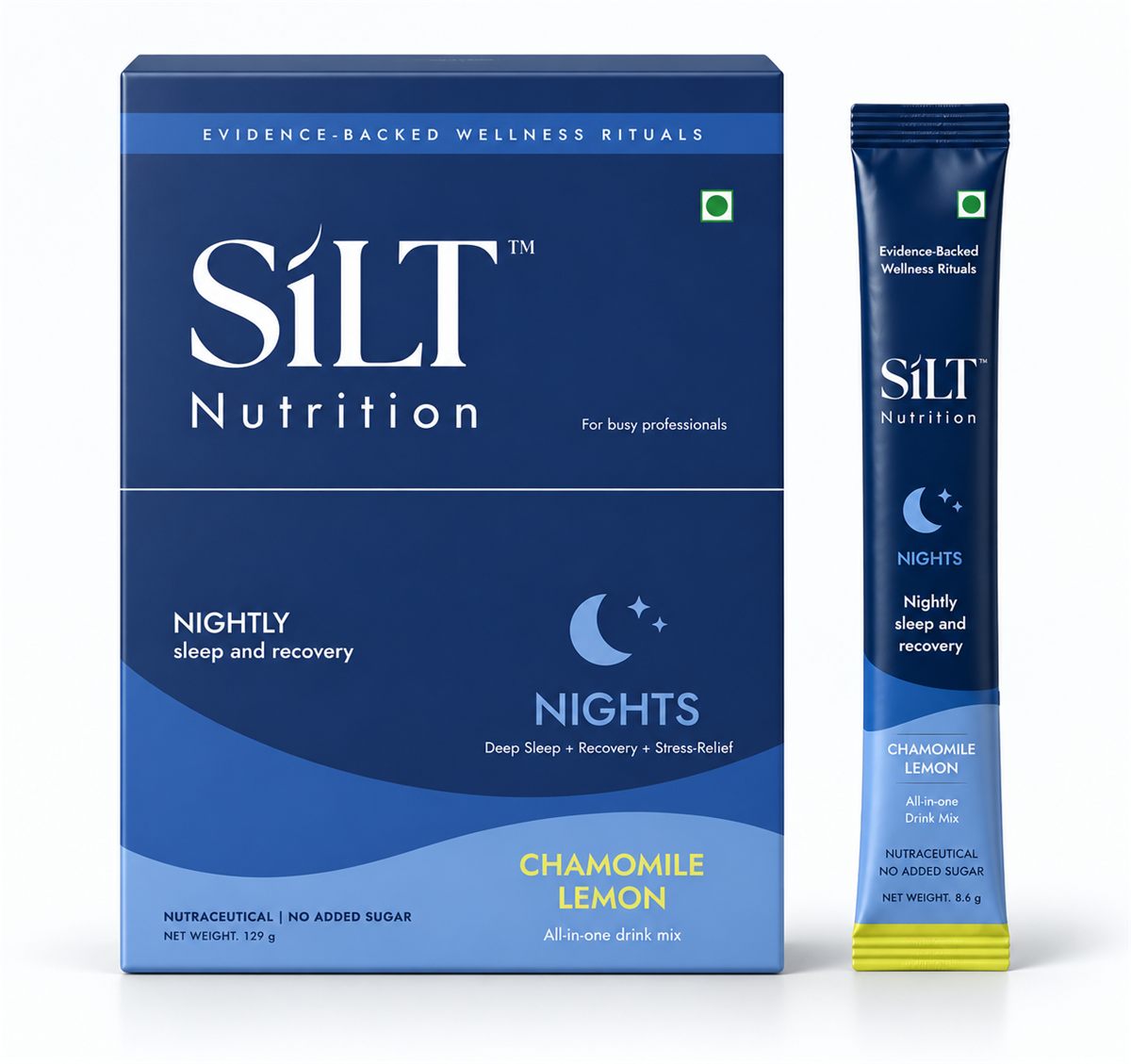
Each stick has 1.8 g magnesium bisglycinate (250 mg elemental magnesium, about 57% of the men's RDA and 68% of the women's), 300 mg KSM-66® ashwagandha root extract, 3 g glycine and 200 mg L-theanine; every dose is printed on the back of the pack. No melatonin, no caffeine, no maltodextrin and no added sugar; Chamomile Lemon is the flavour, not a dosed active. The rest of the ingredient list is taste and processing ingredients, none of them actives: citric and malic acid, cumin powder, black salt, iodised salt, silicon dioxide as an anti-caking agent and steviol glycosides (SILT pack). Directions on the pack: 1 stick per day, not to exceed the recommended usage level, stirred into 200-250 ml of lukewarm or cold water; do not use boiling water, because heat degrades sensitive actives. Drinking it 30-60 minutes before bed is the window we recommend, not a pack direction. The magnesium form and elemental dose are the ones in the 2025 trial, and KSM-66 is one of the extracts studied above, but no trial has tested this drink or this combination, and we don't claim a stick reproduces any trial's results.
Because it contains ashwagandha, everything in the safety section applies to SILT Nights too. It's a food supplement, not a medicine: if you have a liver or thyroid condition, are pregnant, or take regular medicines, check with your doctor first. Every ingredient has a supplier certificate of analysis (13 ingredients, 198 checks, none failed); the KSM-66 certificate lists the plant part as roots and shows 5.3% withanolides against a 5% minimum, and the glycine certificate shows 99.4% purity to a USP pharma-grade standard. The pack's own caution: not for medicinal use, not intended to treat, cure or prevent any disease, not a substitute for a varied diet; if you're pregnant or nursing, taking any medications or have any medical conditions, contact your healthcare practitioner. The finished-drink NABL lab test is pending, and we'll publish it when it's ready. See the formula and certificates on our science page. SILT is FSSAI compliant (FSSAI Lic. No. 12826999000631), vegetarian and made in India, and the stick is made by I Dreamz Health Care in Harohalli, Karnataka (FSSAI Lic. No. 11216325000322).
MRP ₹1,125 ₹900 · 15 sticks or ₹1,500 for 30 (MRP ₹2,250)
That's ₹60 a stick on the 15-pack, or ₹50 a stick on the 30-pack.
Shop SILT NightsSo, ashwagandha or magnesium glycinate?
If stress is what keeps you up, ashwagandha root extract has the more relevant trials, but only if none of its cautions apply to you. If your body won't settle, or your diet is light on magnesium, magnesium glycinate is the lower-risk place to start, with modest expectations. If you want both in one bedtime drink, that's what we built SILT Nights for. Our ashwagandha supplement and magnesium glycinate powder guides go deeper on each. Evidence, not hype.
MRP ₹1,125 ₹900 · 15 sticks or ₹1,500 for 30 (MRP ₹2,250)
- Cheah et al., 2021. PLoS One. pubmed.ncbi.nlm.nih.gov/34559859
- Albalawi, 2025. Nutr Health. pubmed.ncbi.nlm.nih.gov/40746175
- Schuster et al., 2025. Nat Sci Sleep. pubmed.ncbi.nlm.nih.gov/40918053
- NCCIH. Ashwagandha (last updated March 2023). nccih.nih.gov/health/ashwagandha
- Yeom & Cho, 2024. Psychiatry Investig. pmc.ncbi.nlm.nih.gov/articles/PMC11321869
- Chandrasekhar et al., 2012. Indian J Psychol Med. pubmed.ncbi.nlm.nih.gov/23439798
- Lopresti et al., 2019. Medicine (Baltimore). pubmed.ncbi.nlm.nih.gov/31517876
- ICMR-NIN, 2020. Nutrient Requirements for Indians, brief note. nin.res.in/rdabook/brief_note.pdf
- Fatima et al., 2024. Hum Psychopharmacol. pubmed.ncbi.nlm.nih.gov/39083548
- Langade et al., 2019. Cureus. pubmed.ncbi.nlm.nih.gov/31728244
- Salve et al., 2019. Cureus. pubmed.ncbi.nlm.nih.gov/32021735
- Alsanie et al., 2026. Complement Ther Med. pubmed.ncbi.nlm.nih.gov/41644067
- Mah & Pitre, 2021. BMC Complement Med Ther. pubmed.ncbi.nlm.nih.gov/33865376
- Lopresti et al., 2026. J Diet Suppl. pubmed.ncbi.nlm.nih.gov/42661485
- Boyle et al., 2017. Nutrients. pubmed.ncbi.nlm.nih.gov/28445426
- Sarris et al., 2022. WFSBP and CANMAT guidelines. World J Biol Psychiatry. pubmed.ncbi.nlm.nih.gov/35311615
- Garrison et al., 2020. Magnesium for skeletal muscle cramps. Cochrane Database Syst Rev. pubmed.ncbi.nlm.nih.gov/32956536
- BfR Communication 39/2024, 10 September 2024. Ashwagandha: food supplements with potential health risks. bfr.bund.de
- Björnsson et al., 2020. Liver Int. pubmed.ncbi.nlm.nih.gov/31991029
- Sharma et al., 2018. J Altern Complement Med. pubmed.ncbi.nlm.nih.gov/28829155
- Hayashi et al., 2024. Cureus. pubmed.ncbi.nlm.nih.gov/38559552
- NHS. Vitamins and minerals: others (magnesium). nhs.uk/conditions/vitamins-and-minerals/others
- Ciprofloxacin tablets, US prescribing information (DailyMed). dailymed.nlm.nih.gov
- Levothyroxine sodium tablets, US prescribing information (DailyMed). dailymed.nlm.nih.gov
- Mastrofini et al., 2026. J Int Soc Sports Nutr. pubmed.ncbi.nlm.nih.gov/42829807
- Danish Veterinary and Food Administration (Fødevarestyrelsen). Ashwagandha i kosttilskud og drikkevarer. foedevarestyrelsen.dk