


Ashwagandha benefits are better studied than most herbal claims, but less settled than the labels suggest. The best human evidence is for stress: small trials, mostly in India, found lower cortisol and, less consistently, lower stress scores after 8 to 10 weeks. Sleep comes next, with a small effect that was clearer in people with insomnia. Strength, testosterone, fertility and menopause results rest on a handful of small trials, several funded or supplied by extract makers. Below, each benefit is graded, with the population, dose and funder of every trial. Disclosure: we make a bedtime drink that contains ashwagandha and keep it to one short section near the end; our ashwagandha supplement guide covers products.
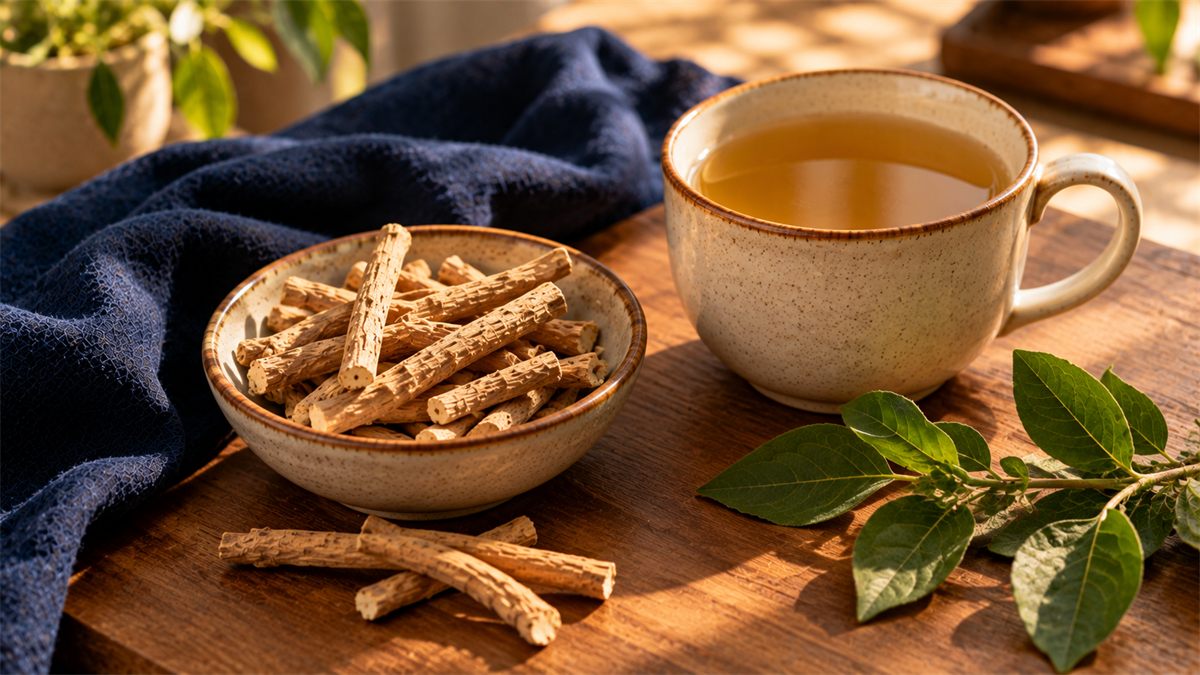
Ashwagandha benefits, graded
Stress and cortisol have the most consistent support; sleep is a reasonable second; everything else is early. "Grade" is our editorial read of the sources linked on this page, not a formal clinical rating.
| Benefit | Human evidence | Our grade | Key sources |
|---|---|---|---|
| Lower cortisol | Several small RCTs; three meta-analyses agree | Moderate | Albalawi 2025; Arumugam 2024; Fornalik 2026 |
| Feeling less stressed (questionnaires) | Positive in single trials; one 2025 meta-analysis found no significant pooled effect | Low to moderate | Arumugam 2024; Albalawi 2025 |
| Sleep | 5 RCTs, 400 adults: a small effect, clearer in insomnia | Moderate | Cheah 2021; Fatima 2024 |
| Anxiety scores | Small pooled drop; NCCIH calls the evidence unclear | Low | Arumugam 2024; NCCIH |
| Strength and endurance | 13 trials; endurance most consistent; strength of low certainty | Low | Li 2026; Lee & Heo 2026 |
| Testosterone (men) | Rose in some small trials; pooled rise in men, not in women | Low | Fornalik 2026; Morgado 2024 |
| Sperm count | One pilot trial, 46 men with low sperm counts | Very low | Ambiye 2013 |
| Perimenopause symptoms | One RCT, 100 women | Low | Gopal 2021 |
Claims you'll see elsewhere, such as immunity, blood sugar, memory and inflammation, aren't graded here because we didn't review that evidence for this page. Be wary of confident claims about them.
What ashwagandha is
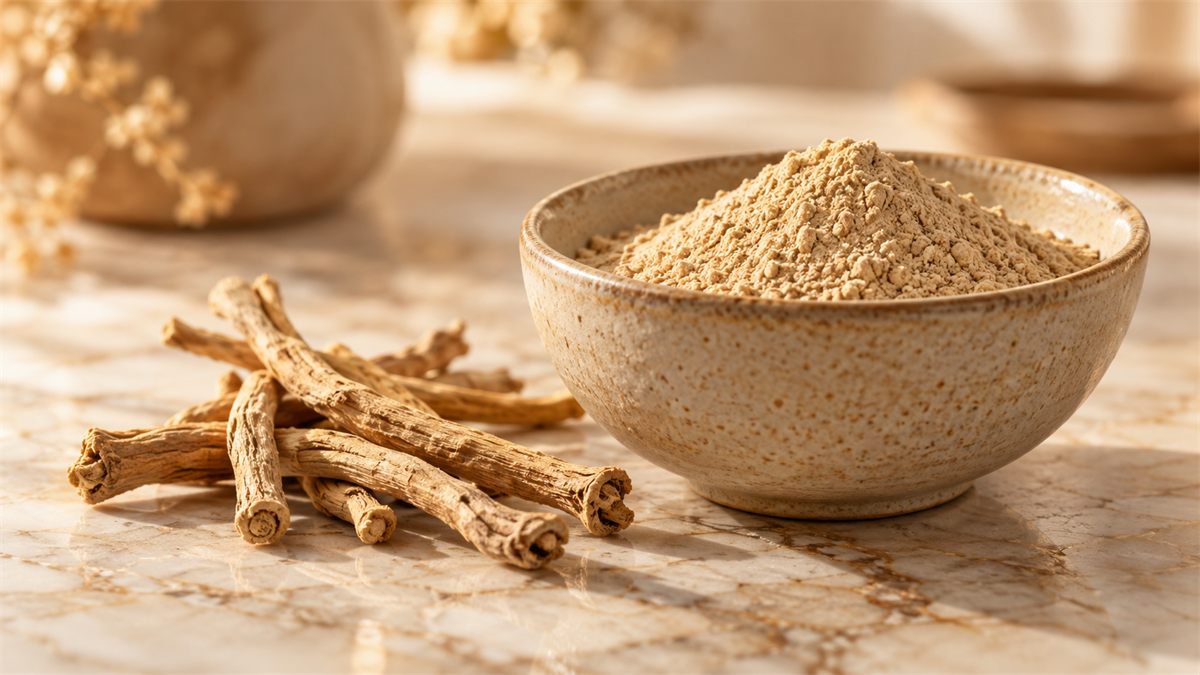
Ashwagandha (Withania somnifera) is an evergreen shrub found in parts of India, Africa and the Middle East, used for thousands of years in Ayurveda. It contains bioactive compounds called withanolides, and supplements typically use root, leaf, or root-and-leaf extracts (NCCIH, Ashwagandha).
That last point matters when you read a benefit claim. A spoon of churna (dried root powder), a root extract standardised to a withanolide percentage and a root-and-leaf extract are different materials, so a result from one doesn't automatically apply to another. Most trials on this page used root extracts, and several used KSM-66, a root-only extract standardised to at least 5% withanolides, supplied by its maker (Chandrasekhar et al., 2012; Ambiye et al., 2013).
NCCIH's summary of the field is blunt: many studies have had small samples and used a variety of preparations (NCCIH). Keep that in mind for every section below. Our ashwagandha supplement page compares extracts, churna and capsules in more detail.
Stress and cortisol
The most consistent finding is lower cortisol, the main stress hormone, after about two months; whether people feel less stressed is less certain.
- The first big KSM-66 trial. 64 adults with a history of chronic stress took 300 mg of root extract or placebo twice a day for 60 days. Scores on every stress questionnaire and serum cortisol fell more with ashwagandha (Chandrasekhar et al., 2012). The extract was supplied by its maker; the paper lists no other funding and no conflicts.
- A dose comparison. 60 stressed but healthy adults took 250 mg a day, 600 mg a day or placebo for 8 weeks (58 finished). Perceived stress and cortisol fell at both doses (Salve et al., 2019). The KSM-66 extract was made and gifted by its maker; the authors declared no competing interests.
- A different extract. 60 adults with self-reported high stress took 240 mg of a root extract (Shoden) or placebo once a day for 60 days. Morning cortisol fell more, and anxiety scores dropped; a broader stress scale only trended lower (Lopresti et al., 2019). The study was funded by Shoden's maker.
What the pooled data say. A 2024 meta-analysis of 9 trials (558 people) found lower perceived-stress scores, anxiety scores and serum cortisol than placebo (Arumugam et al., 2024). A 2025 meta-analysis (488 people, trials up to February 2024) split the picture: cortisol fell by about 1.2 µg/dL, but the pooled effect on perceived stress wasn't statistically significant (Albalawi, 2025). A 2026 meta-analysis of 23 hormone trials (1,706 people) also found lower cortisol (Fornalik et al., 2026). The 2025 and 2026 teams declared no conflicts of interest; the 2024 record carries no conflict statement.
Our read: the cortisol signal is real enough to take seriously; the "feel calmer" signal depends on which trials you pool. For what raised cortisol looks like and what else lowers it, read high cortisol symptoms and our earlier post on ashwagandha for stress and cortisol.
Lower cortisol is the signal. The rest is still being argued.
Anxiety: less clear
For anxiety, the trials point the same way but the evidence is weaker than for stress. NCCIH says the evidence on anxiety is unclear (NCCIH).
In the 2024 meta-analysis, Hamilton Anxiety Scale scores fell by about 2 points more than placebo (Arumugam et al., 2024). A separate 2024 meta-analysis of 5 trials (254 people with anxiety or insomnia) found a larger drop, about 6 points, but the trials disagreed so much with each other (heterogeneity 98%) that the size of the effect is uncertain (Fatima et al., 2024).
If anxiety is affecting your work, sleep or relationships, a doctor or counsellor is the right first step. A herb studied for a few weeks in small groups isn't a substitute.
Sleep
Ashwagandha has a small, real-looking effect on sleep, clearest in people diagnosed with insomnia.
A 2021 meta-analysis of 5 randomised trials (400 adults) found a small but significant improvement in overall sleep. The effect was stronger in adults with insomnia, at 600 mg a day or more, and when taken for 8 weeks or longer; mental alertness on waking also improved, and no serious side effects were reported (Cheah et al., 2021). The 2024 meta-analysis above found shorter time to fall asleep, longer total sleep and better sleep quality scores, though not fewer night-time awakenings (Fatima et al., 2024).
One trial behind those numbers: 60 patients with insomnia and anxiety took 300 mg of KSM-66 or placebo twice a day, with milk or water, for 10 weeks. Measured with a wrist sleep tracker, they fell asleep in about 29 minutes versus 34 on placebo, and sleep efficiency improved (Langade et al., 2019). KSM-66's maker supplied the extract; the authors declared no competing interests.
The full sleep evidence, timing and how it compares with melatonin and magnesium are in ashwagandha for sleep.
Exercise and strength
Ashwagandha may help endurance a little; the strength results look good in single trials and shakier when pooled.
The trial most often quoted gave 57 young men (18 to 50) new to weight training 300 mg of KSM-66 or placebo twice a day for 8 weeks of training. Bench-press gains were 46.0 kg versus 26.4 kg on placebo, with larger arm and chest growth (Wankhede et al., 2015). The extract was supplied by its maker; the authors declared no conflicts.
The 2026 reviews temper that. A meta-analysis of 13 trials (599 people, mostly young adults and athletes) found a moderate average improvement in exercise performance, most consistent for aerobic endurance, but the range of likely effects in a new setting crossed zero (Li et al., 2026). A second, limited to resistance-training trials, pooled 3 trials (161 people): strength gains lost statistical significance under a stricter analysis, certainty was low, and there was no reliable effect on body fat (Lee & Heo, 2026). Neither review declared a conflict of interest; the second received no external funding.
Ashwagandha benefits for men
The men's research covers muscle, testosterone and sperm counts. Each rests on a few small trials, so read them as early findings, not settled results.
Testosterone. In the training trial above, testosterone rose by 96 ng/dL with ashwagandha versus 18 ng/dL on placebo (Wankhede et al., 2015). In 57 overweight men aged 40 to 70 with mild fatigue, 8 weeks of a Shoden extract (21 mg withanolide glycosides a day) gave a 14.7% greater rise in salivary testosterone than placebo, but no difference in fatigue or vigour scores; 43 men finished both 8-week phases (Lopresti et al., 2019). That study was funded by Shoden's maker. In the stress trial using the same extract, men's testosterone rose over time but not significantly more than on placebo (Lopresti et al., 2019).
Pooled, the 2026 hormone meta-analysis found testosterone rose in men (by about 57 ng/dL) but not in women (Fornalik et al., 2026). A 2024 urology review of 27 so-called testosterone boosters concluded that most fail to raise total testosterone, and rated ashwagandha only "possibly effective" for healthy men, based on three studies (Morgado et al., 2024).
Sperm counts. In a 90-day pilot trial, 46 men with low sperm counts (under 20 million/mL) took 675 mg a day of KSM-66 in three doses or placebo. In the ashwagandha group, average sperm count went from about 9.6 to 25.6 million/mL; changes on placebo were minimal (Ambiye et al., 2013). The extract came from its maker, and the authors declared no conflicts. One pilot with 21 men on ashwagandha is a reason for more research, not a fertility plan.
If you're worried about low testosterone or fertility, see a doctor: both have causes worth testing for. NCCIH advises people with hormone-sensitive prostate cancer to avoid ashwagandha (NCCIH).
Ashwagandha benefits for women
Most stress and sleep trials above included women, so those findings apply to both sexes. Women-only trials are fewer and smaller.
- Perimenopause. 100 women with menopausal symptoms took 300 mg of root extract or placebo twice a day for 8 weeks (91 finished). Menopause rating scale scores and quality-of-life scores improved more with ashwagandha; oestradiol rose and FSH and LH fell, while testosterone didn't change (Gopal et al., 2021). The PubMed record lists no funding or conflict statement.
- Athletes. 30 professional female footballers took 600 mg a day or placebo for 28 days. Self-rated recovery and perceived sleep quality improved; the abstract doesn't report a strength advantage (Coope et al., 2025). The authors declared no conflicts.
- Sexual function. A pilot in 50 healthy women (300 mg of KSM-66 twice a day, 8 weeks) reported higher scores on a sexual-function questionnaire than placebo (Dongre et al., 2015). KSM-66's maker provided the extract and paid some of the costs.
- Hormones. Pooled across trials, ashwagandha didn't raise testosterone in women and didn't change oestradiol in either sex (Fornalik et al., 2026).
Two cautions matter more for women. Ashwagandha should be avoided in pregnancy and not used while breastfeeding (NCCIH). And it can shift thyroid hormones: in 50 adults with mildly underactive thyroid, 600 mg a day for 8 weeks moved TSH, T3 and T4 compared with placebo (Sharma et al., 2018; the record lists no funding statement), and the 2026 meta-analysis found a modest rise in T4 (Fornalik et al., 2026). If you have a thyroid condition or take thyroid medicine, ask your doctor first.
Who should skip it
Most trials report mild or no side effects over 8 to 12 weeks, but rare liver injury is documented, and some groups should avoid it.
NCCIH lists drowsiness, stomach upset, diarrhoea and vomiting as possible side effects. It says ashwagandha may be safe short term (up to 3 months), with too little data on longer use. It isn't recommended for people who are pregnant or breastfeeding, have autoimmune or thyroid disorders, have hormone-sensitive prostate cancer, or are about to have surgery, and it may interact with sedatives, anti-seizure, thyroid, diabetes, blood pressure and immune-suppressing medicines (NCCIH).
Liver. A case series described five people (three in Iceland, two from a US liver-injury network) who developed jaundice 2 to 12 weeks after starting ashwagandha supplements. None had liver failure, and liver tests returned to normal within 1 to 5 months in the four who were followed up (Björnsson et al., 2020). Stop and see a doctor if your skin or eyes turn yellow, or your urine darkens.
The largest trial so far. In 1,002 adults with stress and anxiety given 600 mg a day or placebo for 8 weeks, side effects were no more common on ashwagandha (5.6% versus 9.2% of participants on placebo), and liver and kidney tests didn't change (Pakhale et al., 2026). The study was supported by an ashwagandha extract maker, and the authors declared no conflicts. Eight weeks is still short.
The details, including drug interactions, are in ashwagandha side effects; doses and timing are in ashwagandha dosage.
A bedtime drink, not a remedy
SILT™ Nights is a bedtime drink mix, and ashwagandha is one of its four actives. We put it there because stress and sleep are where the human evidence is strongest, not for any of the other claims on this page.
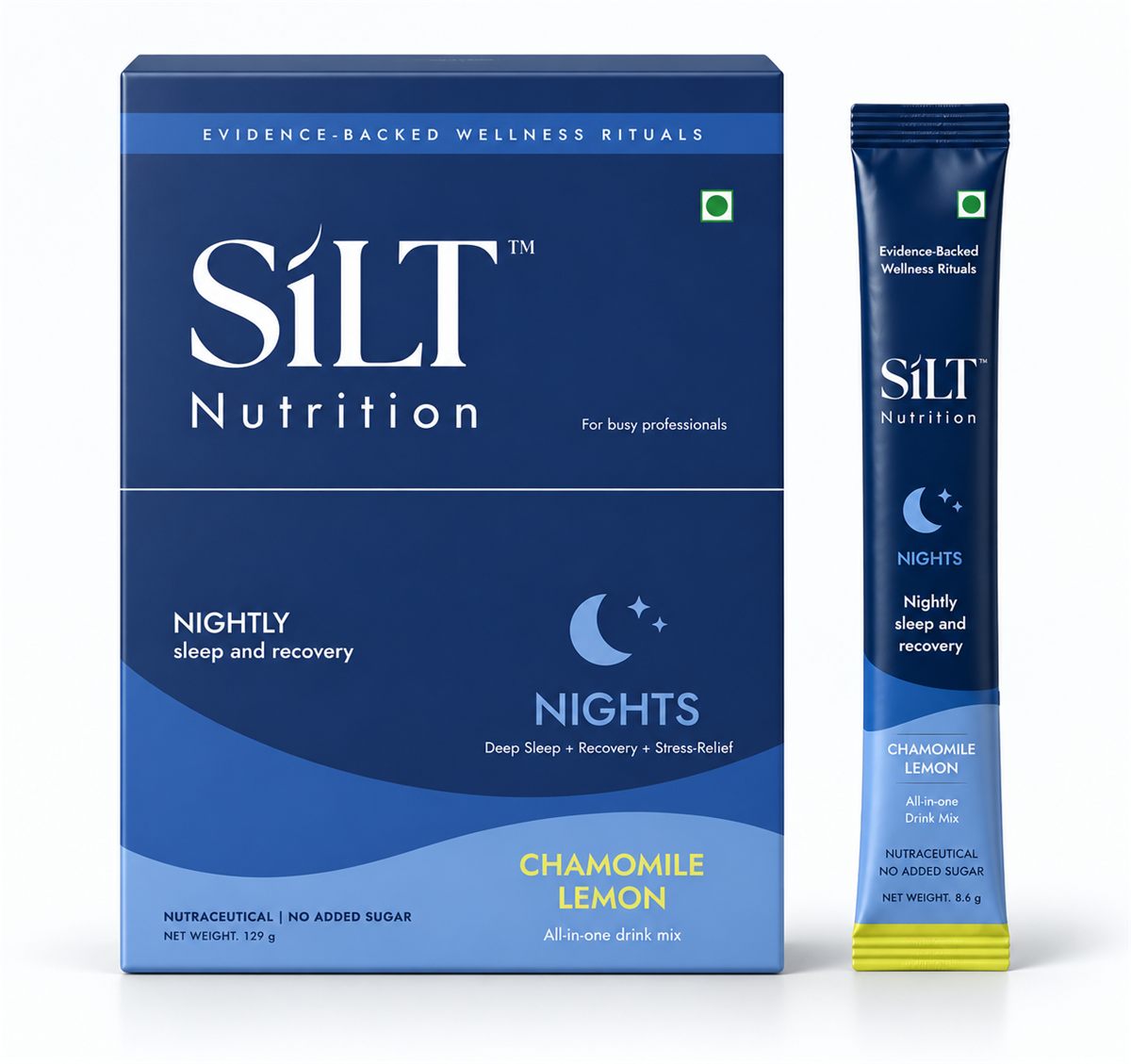
Each 8.6 g stick has 300 mg KSM-66® ashwagandha root extract, 3 g glycine, 1.8 g magnesium bisglycinate (250 mg elemental magnesium) and 200 mg L-theanine. Chamomile Lemon flavour (the chamomile is flavour only), sweetened with stevia (steviol glycosides), no added sugar, no maltodextrin, no melatonin, caffeine-free. Directions on the pack: 1 stick per day, not to exceed the recommended usage level, stirred into 200-250 ml of lukewarm or cold water; do not use boiling water, because heat degrades sensitive actives. The window we recommend is 30 to 60 minutes before bed.
The honest limits: the trials above tested ashwagandha on its own, in capsules, at their own doses and durations. We don't claim any of their results carry over to a drink that combines four actives, and we make no testosterone, fertility or menopause claim for SILT Nights. The supplier certificate for our KSM-66 lists the plant part as roots and shows 5.3% withanolides against a minimum of 5%; every ingredient's certificate is on our science page. A finished-product NABL lab report is pending, and we'll publish it when it's ready. If you have a liver or thyroid condition, are pregnant, or take regular medicines, check with your doctor first. The pack says the same in its own words: not for medicinal use, and not intended to treat, cure or prevent any disease. Product details are on our ashwagandha supplement page.
MRP ₹1,125 ₹900 · 15 sticks or ₹1,500 for 30 (MRP ₹2,250)
That's ₹60 a stick, or ₹50 in the 30-stick pack.
Shop SILT NightsGood for stress, early for the rest
Ashwagandha's best-supported benefit is lower cortisol, with a small sleep effect close behind; the men's and women's findings are interesting but thin. Give any trial 8 weeks before judging it, skip it if you're pregnant, breastfeeding, or have a liver, thyroid or autoimmune condition, and talk to a doctor about real symptoms. To compare products, read the best ashwagandha brand in India or our ashwagandha supplement guide. Evidence, not hype.
- NCCIH (US National Institutes of Health). Ashwagandha. Updated March 2023. nccih.nih.gov/health/ashwagandha
- Chandrasekhar et al., 2012. Indian J Psychol Med. pubmed.ncbi.nlm.nih.gov/23439798
- Salve et al., 2019. Cureus. pubmed.ncbi.nlm.nih.gov/32021735
- Lopresti et al., 2019. Medicine (Baltimore). pubmed.ncbi.nlm.nih.gov/31517876
- Arumugam et al., 2024. Explore (NY). pubmed.ncbi.nlm.nih.gov/39348746
- Albalawi, 2025. Nutr Health. pubmed.ncbi.nlm.nih.gov/40746175
- Fornalik et al., 2026. Planta Med. pubmed.ncbi.nlm.nih.gov/41740946
- Fatima et al., 2024. Hum Psychopharmacol. pubmed.ncbi.nlm.nih.gov/39083548
- Cheah et al., 2021. PLoS One. pubmed.ncbi.nlm.nih.gov/34559859
- Langade et al., 2019. Cureus. pubmed.ncbi.nlm.nih.gov/31728244
- Wankhede et al., 2015. J Int Soc Sports Nutr. pubmed.ncbi.nlm.nih.gov/26609282
- Li et al., 2026. Nutrients. pubmed.ncbi.nlm.nih.gov/42356302
- Lee & Heo, 2026. Nutrients. pubmed.ncbi.nlm.nih.gov/42738987
- Lopresti et al., 2019. Am J Mens Health. pubmed.ncbi.nlm.nih.gov/30854916
- Morgado et al., 2024. Int J Impot Res. pubmed.ncbi.nlm.nih.gov/37697053
- Ambiye et al., 2013. Evid Based Complement Alternat Med. pubmed.ncbi.nlm.nih.gov/24371462
- Gopal et al., 2021. J Obstet Gynaecol Res. pubmed.ncbi.nlm.nih.gov/34553463
- Coope et al., 2025. Eur J Sport Sci. pubmed.ncbi.nlm.nih.gov/39954269
- Dongre et al., 2015. Biomed Res Int. pubmed.ncbi.nlm.nih.gov/26504795
- Sharma et al., 2018. J Altern Complement Med. pubmed.ncbi.nlm.nih.gov/28829155
- Björnsson et al., 2020. Liver Int. pubmed.ncbi.nlm.nih.gov/31991029
- Pakhale et al., 2026. Phytother Res. pubmed.ncbi.nlm.nih.gov/41943502