


High cortisol symptoms come in two very different kinds. A hard week at work raises cortisol for a while, and you feel it as poor sleep, worry and tension; that's a normal stress response. Truly high cortisol over months is a medical condition, Cushing's syndrome, with physical signs such as easy bruising, wide purple stretch marks and weak thighs and upper arms. It's rare, and its most common cause is steroid medicine. Below: how to tell the two apart, why "cortisol face" isn't a diagnosis, how cortisol is tested, and what sleep, exercise and stress management actually do. Disclosure: we make a night-time drink that contains ashwagandha, and keep it to one short section near the end; our ashwagandha supplement page covers the extract in full.

Two kinds of high cortisol
Cortisol is a hormone your adrenal glands make. It helps your body respond to stress, control blood sugar and metabolism, reduce inflammation and control blood pressure. It normally peaks in the morning and is lower by late afternoon (MedlinePlus, Cortisol test). So a rise in cortisol isn't a problem in itself. The question is how high, and for how long.
- Everyday stress cortisol. Deadlines, a sick parent, a bad night's sleep: cortisol goes up, then comes back down. The symptoms people feel are mostly the symptoms of stress itself (below).
- Medical hypercortisolism (Cushing's syndrome). The body is exposed to too much cortisol over a long period of time (NIDDK, Cushing's syndrome). The most common cause is taking high-dose steroid medicine, such as prednisolone or hydrocortisone, for a long time. Less often, a non-cancerous growth in the pituitary or adrenal glands makes too much cortisol (NHS, Cushing's syndrome).
Cushing's from the body's own glands is rare: about 40 to 70 people in every million. It most often affects adults aged 30 to 50, and about three times as many women as men (NIDDK).
Symptoms of Cushing's syndrome
Cushing's symptoms usually come on gradually (NHS). The NHS lists:
- more body fat on the neck, upper back, chest and tummy
- a red, round face
- skin that bruises easily, and stretch marks
- muscle weakness, especially at the top of the arms and legs
- low sex drive, mood changes, irregular periods and extra hair growth
In children, the main signs are weight gain and being short for their age (NHS).
The catch is that weight gain, a rounder face and mood changes are common in everyone. NIDDK lists easy bruising, wide purple stretch marks, thin arms and legs and a fatty hump between the shoulders among the signs of long-term high cortisol, and says not everyone has them (NIDDK). The Endocrine Society's guideline advises testing people with several features that are getting worse, particularly the more telling ones, after first ruling out steroid medicine as the cause (Nieman et al., 2008).
| Sign | How specific to Cushing's | Source |
|---|---|---|
| Wide purple stretch marks | Listed sign; none diagnostic alone | NIDDK |
| Easy bruising | Listed sign; none diagnostic alone | NIDDK |
| Thin arms and legs | Listed sign; none diagnostic alone | NIDDK |
| Muscle weakness at the top of the arms and legs | Part of the pattern | NHS |
| Fatty hump between the shoulders | Listed sign; none diagnostic alone | NIDDK |
| Red, round face | Part of the pattern; facial swelling alone has many causes | NHS; CU Anschutz |
| Weight gain, more fat on the tummy | Part of the pattern; general sign | NHS; NIDDK |
| Mood changes | Part of the pattern; also a stress symptom | NHS |
The table is a guide to what to mention to a doctor, not a self-test.
What stress feels like instead
Most people searching for high cortisol symptoms are describing stress. The NHS lists stress symptoms in three groups (NHS, Stress):
- Physical: headaches or dizziness, muscle tension or pain, stomach problems, chest pain or a faster heartbeat, sexual problems.
- Mental: trouble concentrating or making decisions, feeling overwhelmed, constant worrying, forgetfulness.
- Behaviour: irritability, sleeping too much or too little, eating changes, avoiding people, drinking or smoking more.
These are real and worth acting on. But they don't tell you your cortisol level, and a blood test wouldn't settle it either: stress, exercise, pregnancy and some medicines, including birth control pills, all change cortisol results, and a cortisol test alone can't diagnose the cause of an abnormal level (MedlinePlus).
The grey zone
Some conditions switch on the body's stress-hormone system strongly enough to raise cortisol without any tumour. A 2025 review describes this in people with mood disorders, as "functional" activation of the stress axis (Ferrante et al., 2025; the authors declared no competing interests). Heavy drinking can produce a picture that looks like Cushing's, as a 2023 report of eight cases describes; several of its authors consult for drug companies that make Cushing's treatments (Surani et al., 2023). Telling these apart from true Cushing's is a job for an endocrinologist.
"Cortisol face" and "cortisol belly"
"Cortisol face" and "cortisol belly" are social-media labels, not diagnoses. A University of Colorado endocrinologist, Dr Christie Turin More, puts it plainly: "Cortisol face and moon face are not medical terms." The medical signs are moon facies (fat build-up in the face) and facial plethora (redness), and they matter alongside other signs such as purple stretch marks, a fatty hump or metabolic problems. Facial swelling on its own has many causes (CU Anschutz, 2024).
The same goes for the belly. Fat around the tummy is one item on the NHS Cushing's list, but it sits next to fat on the neck and upper back, a red round face, bruising and muscle weakness (NHS). A puffy face in the morning after a late night, or a bit of weight around the middle, is not a reason to diagnose yourself from a video, or to buy a "cortisol detox". If you have several of the specific signs above, see a doctor; if you don't, the useful work is on sleep and stress.
A puffy face is not a lab result.
How cortisol is actually tested
Cortisol is tested by a doctor, with timed samples, because levels swing through the day. NIDDK describes these tests for Cushing's, and notes that no one test is perfect, so doctors usually do two (NIDDK):
- Late-night salivary cortisol: saliva collected late in the evening, when cortisol should be low.
- 24-hour urinary free cortisol: all your urine over a day.
- Low-dose dexamethasone suppression test: a small dose of a steroid tablet, then a blood test to see if cortisol falls as it should.
The Endocrine Society's guideline says to rule out steroid medicine first, start with one of these accurate tests, and see an endocrinologist for a second test if the first is abnormal (Nieman et al., 2008; the task force received no corporate funding). In the NHS pathway, a GP arranges blood, urine or saliva tests, and a raised result leads to a specialist and, if needed, scans (NHS).
A single random morning blood cortisol from a lab package won't diagnose Cushing's or "stress cortisol". MedlinePlus is clear that one cortisol test alone can't diagnose the cause (MedlinePlus).
Sleep, exercise and stress: what helps
For everyday stress, the levers with evidence are sleep, movement and a regular stress-management practice. None of them is a treatment for Cushing's syndrome; that needs a doctor.
| Lever | What the studies found | Strength |
|---|---|---|
| Enough sleep | Lost sleep raised next-evening cortisol in young men | Small lab studies |
| Mindfulness and relaxation | Lowered cortisol in non-patient groups | Meta-analysis of 58 trials |
| Exercise | Raises cortisol briefly during hard sessions; the NHS lists it as a stress buster | Small lab study; NHS advice |
| Ashwagandha | Lower cortisol, no clear change in perceived stress | Meta-analysis of 7 small trials |
Sleep: protect the evening
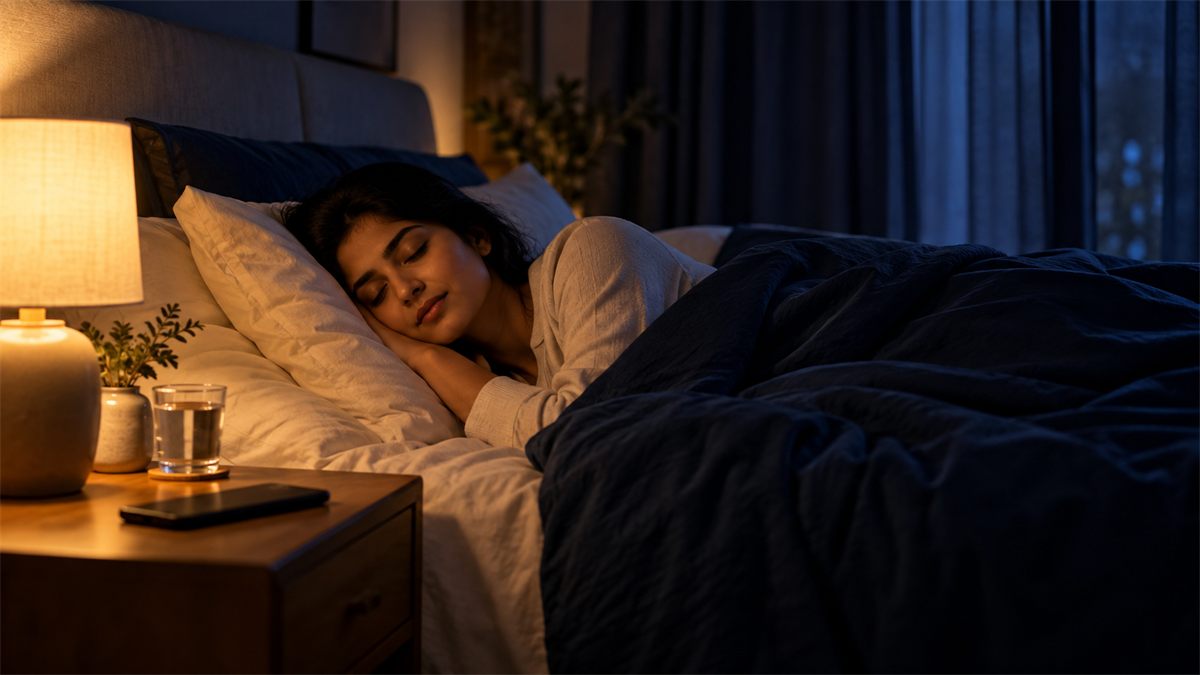
In a lab study of normal young men, cutting a night's sleep raised cortisol the following evening by 37% (partial sleep loss) to 45% (a full night awake), and delayed the evening fall in cortisol by at least an hour (Leproult et al., 1997). When 11 young men slept only 4 hours a night for 6 nights, their evening cortisol was higher than after 6 nights of long recovery sleep (Spiegel et al., 1999). Both are small studies in men, but the direction is consistent: short nights keep evening cortisol up. Our guide on how to sleep fast covers the practical steps.
Exercise: a short spike is normal
Exercise raises cortisol while you do it, and that's expected. In 12 trained men, 30 minutes at 60% and 80% of maximal oxygen uptake (VO2max) raised cortisol by about 40% and 83%, while 40% barely moved it (Hill et al., 2008). That's a short, normal response, not "high cortisol". The NHS lists exercise among its stress busters (NHS, Stress). If evenings are when you're most wired, a walk or easy session may sit better than a hard late workout; that's our practical suggestion, not a trial finding.
Stress management: mindfulness and relaxation
A 2024 meta-analysis pooled 58 randomised trials (3,508 people in non-patient groups) and found that stress-management programmes lowered cortisol compared with controls (g = 0.28, a small-to-moderate effect). Mindfulness and relaxation did best (g ≈ 0.35 each) (Rogerson et al., 2024; the authors declared no interests). The NHS adds breathing exercises, time management, talking to people you trust, and not leaning on alcohol or cigarettes to cope (NHS, Stress).
Stress also shows up in the gut for many people (the NHS lists stomach problems among stress symptoms). If that's you, our guide on how to improve gut health is a good next read.
What about ashwagandha?
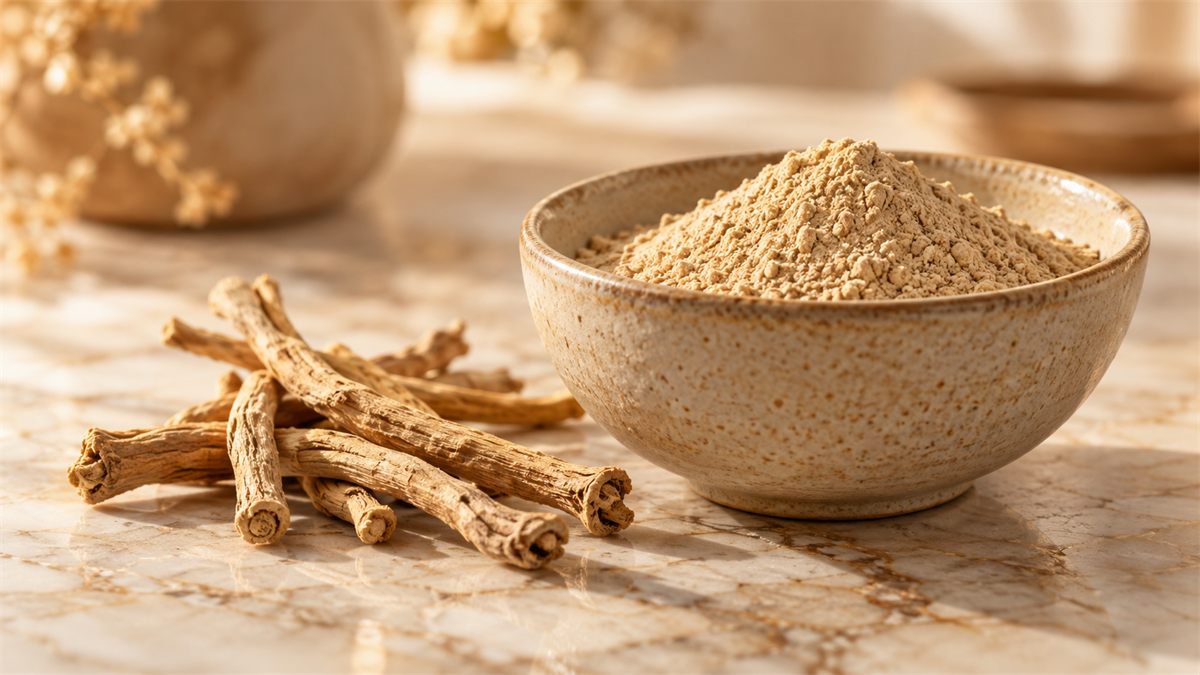
Ashwagandha is the supplement most often sold for "cortisol". A 2025 meta-analysis of randomised trials found that ashwagandha lowered cortisol (by 1.16 µg/dL on average, across 7 trials) but made no significant difference to perceived stress scores (6 trials; 488 participants across the review). Risk of bias was generally moderate, and the author declared no conflicts (Albalawi, 2025). A lab number moving while people don't feel less stressed is a reason for modest expectations. It is not a treatment for Cushing's syndrome or any medical cause of high cortisol, and it isn't for everyone: read ashwagandha side effects first. We go through the individual trials in ashwagandha for stress and cortisol and the wider evidence in ashwagandha benefits.
When to see a doctor
See a doctor if you have symptoms of Cushing's syndrome, particularly if you take steroid medicine (NHS). NIDDK lists weight gain, weak muscles and mood changes among the possible features (NIDDK).
Don't stop steroid medicine on your own. The NHS says not to stop taking steroid medicine without talking to your doctor first, as stopping some steroids suddenly can cause symptoms such as extreme tiredness, nausea and dizziness (NHS, Steroids).
For stress: see a doctor if the things you've tried aren't helping (NHS, Stress). In India, Tele-MANAS, the government's tele-mental-health service, offers 24x7 counselling on the toll-free number 14416 (PIB, 4 April 2025).
A wind-down drink, not a cortisol fix
SILT™ Nights is a bedtime drink for people whose stress shows up at night. It does not lower cortisol, it isn't a treatment for Cushing's syndrome or any other condition, and nothing on this page shows that it does.
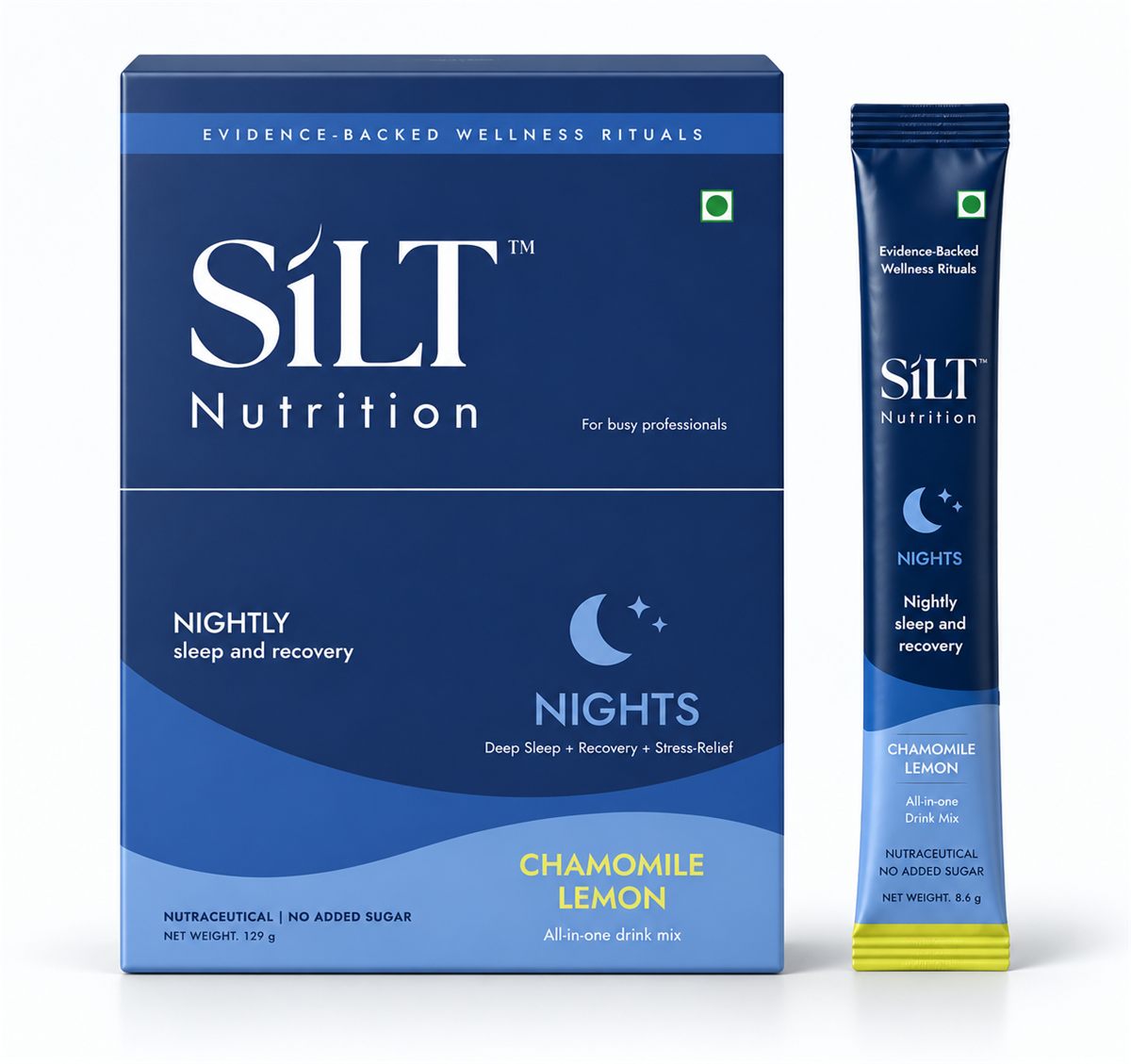
Each 8.6 g stick has 300 mg KSM-66® ashwagandha root extract, 3 g glycine, 1.8 g magnesium bisglycinate (250 mg elemental magnesium) and 200 mg L-theanine. No melatonin, no maltodextrin, no added sugar, caffeine-free, sweetened with stevia; Chamomile Lemon is the flavour only. In plain terms, the pack lists L-theanine as "supports evening calm", and magnesium contributes to normal muscle and nervous system function. Stir one stick into 200-250 ml of lukewarm or cold water (no boiling water, because heat degrades sensitive actives, as the pack says); we recommend drinking it 30 to 60 minutes before bed.
The pack's nutrition panel (approximate values per 8.6 g stick) is below.
| Nutrient | Per stick | %RDA |
|---|---|---|
| Energy | 33.10 kcal | 1.66% |
| Protein | 5.00 g | 9.26% |
| Carbohydrate | 1.75 g | Not established |
| Total sugars | 0.63 g | Not established |
| Added sugars | 0 g | 0% |
| Dietary fibre (AI) | 0.65 g | 2.2% |
| Total fat | 0.66 g | 1.0% |
| Saturated fat | 0.47 g | 2.14% |
| Trans fat | <0.1 g | 0% |
| Cholesterol (NMT) | <1.0 mg | Not established |
| Sodium | 88.75 mg | 4.44% |
| Calcium | 6.48 mg | 0.65% |
%RDA basis printed on the pack: ICMR 2020 (men); FSS (Labelling and Display) Regulations 2020. AI = adequate intake; NMT = not more than.
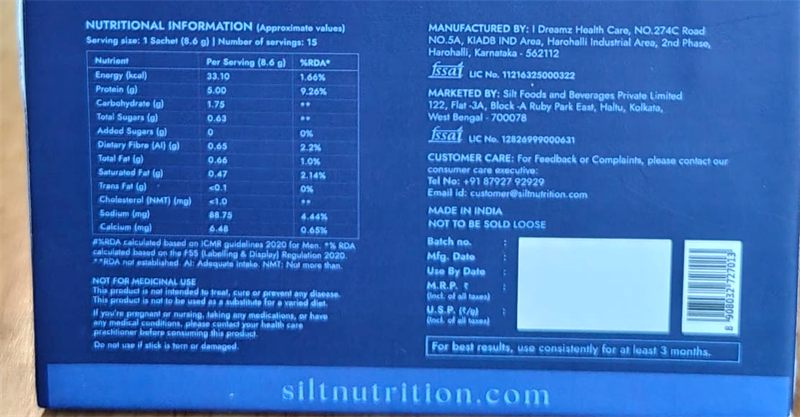
The 0.63 g of total sugars is why we say "no added sugar" and not "sugar-free". The full ingredient list also names cumin powder, black salt and iodised salt, which are there for taste and processing, not as actives.
The honest limits: ashwagandha extracts have been studied for stress, as above, but we don't claim that any trial result applies to this drink. If you have a liver or thyroid condition, are pregnant or nursing, or take regular medicines, check with your doctor first; the pack says the same for any medical condition, and that it is not for medicinal use and not intended to treat, cure or prevent any disease. Every ingredient comes with a supplier certificate of analysis (see our science page); a finished-product NABL lab report is pending, and we'll publish it when it's ready. SILT is for everyday energy, gut and sleep. It doesn't treat medical conditions. More on the extract on our ashwagandha supplement page.
MRP ₹1,125 ₹900 · 15 sticks or ₹1,500 for 30 (MRP ₹2,250)
Stress is common. Cushing's is rare.
Most "high cortisol symptoms" are stress symptoms: real, but not a hormone disease. Sleep, regular movement and a stress-management habit have the evidence. Wide purple stretch marks, easy bruising, thin arms and legs, a fatty hump, or weakness at the tops of the arms and legs, especially with steroid use, mean a doctor and proper tests, not a supplement. For the next step, read ashwagandha for stress and cortisol or our ashwagandha supplement guide. Evidence, not hype.
- NIDDK. Cushing's syndrome. niddk.nih.gov/health-information/endocrine-diseases/cushings-syndrome
- NHS. Cushing's syndrome (reviewed 19 March 2025). nhs.uk/conditions/cushings-syndrome
- MedlinePlus. Cortisol test. medlineplus.gov/lab-tests/cortisol-test
- NHS. Stress (reviewed 6 March 2026). nhs.uk/mental-health/feelings-symptoms-behaviours
- Nieman et al., 2008. The diagnosis of Cushing's syndrome: an Endocrine Society Clinical Practice Guideline. J Clin Endocrinol Metab. pubmed.ncbi.nlm.nih.gov/18334580
- Ferrante et al., 2025. Who and how to screen for endogenous hypercortisolism in patients with mood disorders. J Endocrinol Invest. pubmed.ncbi.nlm.nih.gov/39531206
- Surani et al., 2023. Alcohol-induced Cushing syndrome: report of eight cases and review of the literature. Front Endocrinol. pubmed.ncbi.nlm.nih.gov/37409223
- University of Colorado Anschutz Medical Campus, 25 November 2024. Cortisol face (interview with Dr Christie Turin More). news.cuanschutz.edu
- Leproult et al., 1997. Sleep loss results in an elevation of cortisol levels the next evening. Sleep. pubmed.ncbi.nlm.nih.gov/9415946
- Spiegel et al., 1999. Impact of sleep debt on metabolic and endocrine function. Lancet. pubmed.ncbi.nlm.nih.gov/10543671
- Hill et al., 2008. Exercise and circulating cortisol levels: the intensity threshold effect. J Endocrinol Invest. pubmed.ncbi.nlm.nih.gov/18787373
- Rogerson et al., 2024. Effectiveness of stress management interventions to change cortisol levels: a systematic review and meta-analysis. Psychoneuroendocrinology. pubmed.ncbi.nlm.nih.gov/37879237
- Albalawi, 2025. Dual impact of Ashwagandha: significant cortisol reduction but no effects on perceived stress. Nutr Health. pubmed.ncbi.nlm.nih.gov/40746175
- Press Information Bureau, 4 April 2025. Update on National Tele Mental Health Programme. pib.gov.in
- NHS. Steroids. nhs.uk/conditions/steroids/