


A good sleep drink mix is one where you can read every dose, and most sleep drink mixes sold in India don't let you. This guide opens the labels of five sleep powders on sale in India, explains what each ingredient is and what amounts human studies used, and lists the red flags worth checking before you buy. Labels and prices were checked on 10 October 2026. Disclosure: we make a melatonin-free sleep drink of our own, and we keep it out of the comparison until a short section near the end. For the magnesium label maths, see our magnesium glycinate powder guide.
What makes a good sleep drink mix?
A sleep drink mix is a powder you stir into water, usually built from some of magnesium, glycine, L-theanine, ashwagandha and herbs, and sometimes melatonin. The studies behind these ingredients are small and the effects modest, so the label matters more than the marketing. Look for:
- A printed dose for every active. Of the five Indian pages we read, one printed an amount for any active, and only for magnesium.
- A clear answer on melatonin. Two of the five list it with no amount.
- An elemental magnesium figure, not just the weight of the compound.
- A sweetener and sugar line you're happy with, since they sit in the same powder as the actives.
- No promise to fix your sleep. Poor sleep that lasts for months is a job for a doctor.
What's inside a sleep drink mix
Most sleep powders draw on the same short list. The table shows what the human studies we opened actually used, for each ingredient in general, so you can judge any label against it. These are not instructions, and a study's dose is not a recommendation for you.
| Ingredient | Amount used in the study | Who, and for how long | Caveat |
|---|---|---|---|
| Magnesium bisglycinate | 250 mg elemental magnesium a day | 155 adults reporting poor sleep, 4 weeks | Small effect (d = 0.2); a co-author's firm is funded by nutraceutical companies |
| Glycine | 3 g before bed | Healthy volunteers, 3 nights of sleep cut by 25% | First author at an amino-acid maker; outcomes were next-day fatigue and alertness |
| L-theanine | 200 mg a day | 30 healthy adults, 4 weeks, crossover | Two authors work for the supplier of the L-theanine |
| Ashwagandha root extract | 300 mg twice a day in the Indian trial; effects larger at 600 mg a day or more in a meta-analysis | 60 adults with insomnia and anxiety, 10 weeks; 5 trials, 400 people pooled | Long-term safety data limited; liver injury case reports |
| Melatonin | Varied by trial; higher doses and longer trials showed larger effects | 19 studies, 1,683 people with diagnosed sleep disorders | About 7 minutes faster sleep onset on average |
Magnesium
Magnesium has the most recent placebo-controlled trial of the ingredients here. In a 2025 double-blind trial, 155 adults aged 18 to 65 who reported poor sleep took 250 mg of elemental magnesium as bisglycinate, or a placebo, every day. After 4 weeks, Insomnia Severity Index scores fell by 3.9 points on magnesium and 2.3 on placebo (p = 0.049). The authors call the effect small and the benefit modest (Schuster et al., 2025). One co-author is managing director of a contract research organisation funded by nutraceutical companies.
For scale, India's ICMR-NIN 2020 recommended dietary allowance for magnesium is 440 mg/day for adult men and 370 mg/day for adult women (ICMR-NIN, 2020). The UK's NHS says supplements providing 400 mg a day or less are unlikely to cause harm, and that more than 400 mg a day can cause diarrhoea (NHS, Vitamins and minerals). More on the label maths in our magnesium glycinate powder guide.
Glycine
Glycine is an amino acid with small trials. In healthy volunteers whose sleep was cut by 25% for three nights, 3 g of glycine before bed was linked to less fatigue the next day and better scores on a vigilance test than placebo (Bannai et al., 2012). The first author works at an amino-acid maker, and the setting was short-term sleep loss, not insomnia. Our deeper read is in glycine for sleep.
L-theanine
L-theanine is an amino acid from tea. In a 4-week crossover trial, 30 healthy adults took 200 mg a day. Pittsburgh Sleep Quality Index scores fell, and the sub-scores for sleep latency and sleep disturbance improved against placebo (Hidese et al., 2019). Two authors are employees of the company that supplied the L-theanine. See L-theanine: calm by night, focus by day for more.
Ashwagandha
Ashwagandha root extract has a small set of randomised sleep trials. A 2021 meta-analysis of 5 trials (400 people) found a small but significant effect on overall sleep. The effect was more prominent in adults with insomnia, at 600 mg a day or more, and over 8 weeks or longer (Cheah et al., 2021). In one Indian double-blind trial, 60 adults with insomnia and anxiety took a root extract, 300 mg twice a day, for 10 weeks. Time to fall asleep was 29.0 minutes against 33.9 on placebo; the authors declared no competing interests (Langade et al., 2019).
Safety deserves a straight line. A case series of five people reported liver injury linked to ashwagandha supplements, appearing after 2 to 12 weeks, and four recovered within 1 to 5 months (Björnsson et al., 2020). An Indian series of 8 patients with single-ingredient ashwagandha products found five had existing chronic liver disease, and the three who presented with acute-on-chronic liver failure died (Philips et al., 2023). If you have a liver condition, skip it. Our ashwagandha for sleep guide covers the trials.
Melatonin
Melatonin is a hormone, and in a meta-analysis of 19 studies (1,683 people with primary sleep disorders) it cut the time to fall asleep by about 7 minutes and added about 8 minutes of sleep. The authors call the effects modest (Ferracioli-Oda et al., 2013). For a drink mix, the issue is disclosure. A lab analysis of melatonin supplements found content ranging from 83% below to 478% above the label, with more than 71% off by over 10% (Erland & Saxena, 2017). A 2023 test of 25 melatonin gummies found 22 inaccurately labelled, with measured melatonin from 74% to 347% of the label (Cohen et al., 2023). Neither paper set out to test Indian sleep powders, but they show why a listed melatonin with no amount is a question to ask. See is melatonin safe every night? before taking it nightly.
Herbs and milk-style bases
Some Indian mixes are built on herbs, golden-milk spices or chocolate rather than isolated nutrients. These can taste good, but a list of herbs with no amounts can't be checked against any study. For the evidence on valerian, chamomile and the rest, see our guide to the best sleep supplements in India, which also covers capsules, strips and melatonin tablets.
Sleep drink mixes sold in India, compared
We looked for powders and sticks sold in India with a sleep claim and read what each page prints. The list is not exhaustive, and strips, capsules and gummies sit outside it. "Not stated" means the page was silent. Prices change often.
| Product type (checked 10 Oct 2026) | Format and how you take it | Actives named | Doses stated | Melatonin | Sweeteners and sugar | Listed price |
|---|---|---|---|---|---|---|
| Mouth-dissolve sleep stick, 2 g | 2 g stick, tear and take in the mouth, about 30 min before bed | L-theanine, magnesium gluconate, inulin, L. reuteri | None stated | Listed, amount not stated | Sorbitol, xylitol; sugar not stated | MRP ₹679 for 15 sticks |
| Ashwagandha drinking chocolate, 20 g serving | 20 g serving in 150 ml hot or cold milk | Ashwagandha, L-theanine | None stated | Listed, amount not stated | Erythritol, stevia extract | ₹585 for 200 g (MRP ₹650) |
| Triple-magnesium drink stick, 300 mg elemental | Stick in 250 ml water, before bedtime or after dinner | Magnesium bisglycinate, citrate and aspartate; L-theanine; L-glycine; zinc | Magnesium only: 300 mg elemental | Not in the ingredient list | Stevia (INS 960a); page says zero sugar, no maltodextrin | ₹800 a pack; page shows ₹53.33 a serving |
| Herbal sleep powder (online pharmacy listing) | Half a teaspoon in warm water or milk | Chamomile, jatamansi, schisandra, cinnamon, turmeric and others | None stated | Described as melatonin free | Monk fruit listed; sugar not stated | ₹672 for 60 g |
| Imported KSM-66 sleep sachet (Indian reseller listing, made in the USA) | Pack of 20; format and directions not stated | KSM-66 ashwagandha, L-glycine, magnesium glycinate, Maizinol | None stated | Not listed | Not stated | ₹9,465 for 20 sachets (MRP ₹11,358), about ₹473 a sachet |
Sources: brand pages for the first three products, an online pharmacy listing for the herbal powder and a reseller listing for the imported sachet. Three patterns stand out. Only one of five pages gives a dose for any active. Two list melatonin and don't say how much. And the formats differ more than the ingredients do: a stick taken straight from the packet, a milk-based chocolate, a herbal powder taken by the half-teaspoon and a water-stirred magnesium powder are four different formats. Where a page gave no per-ingredient amount, you can't compare it with the studies above. Our science page shows how we print ours.
Red flags on a sleep drink mix label
Six things to catch in under a minute. None proves a product is bad, but each is a reason to ask the brand a question first.
- A blend with one total weight. If the label gives a single weight for several actives, you can't tell how much of each you get.
- Melatonin with no amount, or hidden in the marketing. The test results above show why a stated number is worth having. Two of the five pages we read list it without one.
- Compound weight instead of elemental. "Magnesium glycinate 2,000 mg" tells you the weight of the compound, not the mineral. Look for a line such as "300 mg elemental magnesium", as one page in our table prints.
- A big base and no active amounts. With a 20 g serving of drinking chocolate and no active amounts printed, you can't tell how much of the scoop is the active ingredients.
- Sugar and sweeteners left unexplained. Check the nutrition panel's added sugars line. One page we read lists two sugar alcohols and states nothing about sugar.
- Claims with no source. "Proven to work", or a deficiency percentage with no citation, are worth ignoring until the brand shows the paper.
How to choose a sleep drink mix
Run any product through these seven questions. If the page can't answer them, move on.
- Is every active listed with a dose per serving?
- Is magnesium given as elemental milligrams?
- Does it say plainly whether melatonin is in or out?
- Does it name the form, such as ashwagandha root extract and its standardisation?
- Is the sweetener and added sugar line clear?
- Does the price per serving make sense for the doses you can see?
- Does it carry a caution for pregnancy, medicines and medical conditions?
When to see a doctor instead
The NHS advises seeing a GP if changing your sleep habits hasn't helped, if you've had trouble sleeping for months, or if it's hard to cope with daily life. Long-term insomnia means lasting 3 months or more. It also says to check with a doctor before taking anything for sleep problems (NHS, Insomnia).
Check first if you're pregnant or breastfeeding, take regular medicines, or have a liver or thyroid condition. Ashwagandha has the liver reports above, and a drink mix is no substitute for a diagnosis of snoring, gasping or breathing pauses at night. Our how to sleep fast guide covers what to try before a supplement.
SILT Nights against the checklist
We built SILT™ Nights as a melatonin-free drink mix for a nightly routine. Here is how it answers the seven questions. Each 8.6 g stick has 3 g L-glycine, magnesium bisglycinate (13.8% elemental), 1.8 g = 250 mg magnesium (SILT pack), 300 mg KSM-66® ashwagandha root extract and 200 mg L-theanine. Every dose is printed on the back of the pack, and there is no proprietary blend.
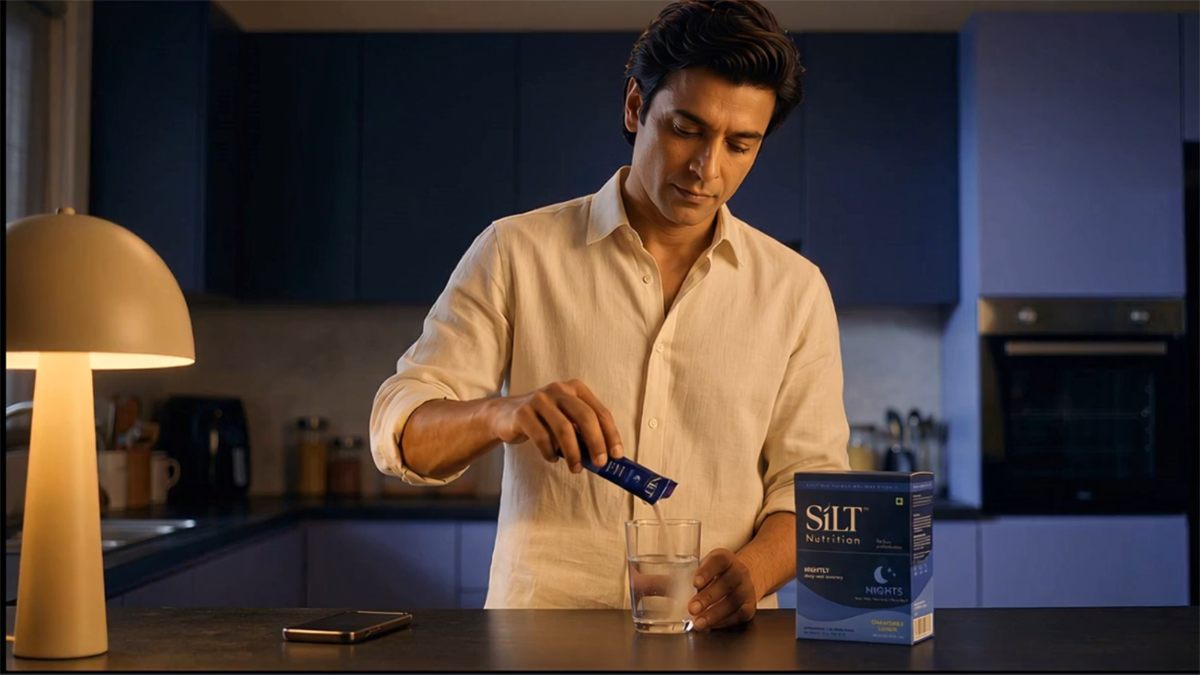
It has no melatonin, no caffeine, no added sugar and no maltodextrin; the pack prints "no added sugar, no maltodextrin, no melatonin". Chamomile Lemon is the flavour, not a dosed active, and the sweetener is stevia. Per stick, the nutrition panel lists 33.10 kcal, 5.00 g protein, 0.63 g total sugars and 0 g added sugars. The pack says one stick a day in 200 to 250 ml of lukewarm or cold water, not boiling. We suggest 30 to 60 minutes before bed; that window is our recommendation, not printed on the pack. The pack also says "For best results, use consistently for at least 3 months", which is about consistency, not a promised result.
What it doesn't have: a finished-product NABL lab report, which is pending, so we haven't published one. Every ingredient has a supplier certificate of analysis (see our science page); the KSM-66 certificate reads 5.30% withanolides, the glycine 99.4% (USP pharma grade) and the L-theanine a 100.0% assay. It isn't a sleeping pill or a replacement for a doctor. If you're pregnant or nursing, take medications or have a medical condition, contact your healthcare practitioner first; with a liver or thyroid condition or regular medicines, check with your doctor. SILT is FSSAI compliant (FSSAI Lic. No. 12826999000631), vegetarian and made in India.
MRP ₹1,125 ₹900 · 15 sticks or ₹1,500 for 30 (MRP ₹2,250)
Read the label. That's the whole pitch.
Sleep drink FAQs
What is in a sleep drink?
Usually a mix of magnesium, an amino acid such as glycine or L-theanine, and an herb such as ashwagandha, in a sweetened base. Some add melatonin. Of the five Indian pages we read, only one gave an amount for any active.
What kind of drink makes you sleep?
No drink is a proven fix: the trials behind these ingredients are small and the effects modest. The NHS adds that pharmacy sleeping aids may help for 1 to 2 weeks and should not be taken longer (NHS, Insomnia).
What is the best sleep drink before bed?
There's no single best one. Pick a mix that prints every dose, states whether it has melatonin and fits your medicines and health, then use the checklist above. Compare it with other formats in the best sleep supplements in India, or weigh the two main options in magnesium vs melatonin.
So, which sleep drink mix?
Choose the one you can read. Most Indian sleep powders we checked name their actives but not their amounts, so you can't weigh them against any study. If you want a melatonin-free drink with every dose printed, that's what we made our own sleep drink for. Evidence, not hype.
- Schuster et al., 2025. Nat Sci Sleep. pubmed.ncbi.nlm.nih.gov/40918053
- Bannai et al., 2012. Front Neurol. pubmed.ncbi.nlm.nih.gov/22529837
- Hidese et al., 2019. Nutrients. pubmed.ncbi.nlm.nih.gov/31623400
- Cheah et al., 2021. PLoS One. pubmed.ncbi.nlm.nih.gov/34559859
- Langade et al., 2019. Cureus. pubmed.ncbi.nlm.nih.gov/31728244
- Björnsson et al., 2020. Liver Int. pubmed.ncbi.nlm.nih.gov/31991029
- Philips et al., 2023. Hepatol Commun. pubmed.ncbi.nlm.nih.gov/37756041
- Ferracioli-Oda et al., 2013. PLoS One. pubmed.ncbi.nlm.nih.gov/23691095
- Erland & Saxena, 2017. J Clin Sleep Med. pubmed.ncbi.nlm.nih.gov/27855744
- Cohen et al., 2023. JAMA. pmc.ncbi.nlm.nih.gov/articles/PMC10130950
- NHS. Insomnia. nhs.uk/conditions/insomnia
- NHS. Vitamins and minerals: others (magnesium). nhs.uk/conditions/vitamins-and-minerals/others
- ICMR-NIN, 2020. Nutrient Requirements for Indians: brief note, Tables 3 and 4. nin.res.in/rdabook/brief_note.pdf
- Product labels and prices, opened 10 October 2026: brand pages for the first three products in the table, an online pharmacy listing for the herbal powder and a reseller listing for the imported sachet. None are linked.